What are industrial soldering stations and what are their primary applications in professional electronics manufacturing?
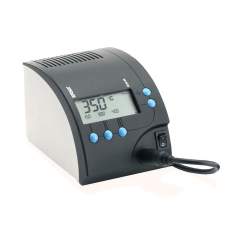
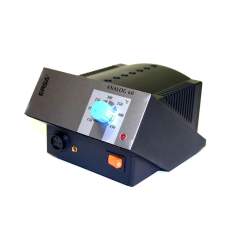
Industrial soldering stations are precision temperature-controlled systems designed for professional electronics assembly, repair, and rework operations. These stations feature ESD-safe design with antistatic properties and multi-channel configurations like the Ersa VARIO4 MK2 4-channel systems that enable simultaneous soldering and hot air operations. Primary applications include SMD component placement in automotive electronics, medical device manufacturing, telecommunications equipment assembly, and precision repair work in aerospace industries where temperature stability within ±1°C is critical for component integrity.
What are the key technical selection criteria when choosing between different soldering station power ratings and tool configurations?
Technical selection criteria center on power output matching component thermal mass, with systems ranging from 40W CHIP-TOOL vario for small SMD work to 250W i-Tool HighPower for heavy ground planes and large connectors. Multi-channel capability like the VARIO4 MK2 enables parallel operations with different tools including 150W i-TOOL for standard soldering, 200W AIR-TOOL for hot air rework, and integrated vacuum systems for component removal. Temperature recovery time under 10 seconds and ESD compliance with resistance values below 10^6 ohms ensure professional-grade performance across diverse component geometries.
Which international standards and certifications apply to professional-grade ESD soldering stations?
Professional soldering stations must comply with IEC 61340-5-1 for ESD protection with surface resistance measurements between 10^6 to 10^9 ohms, and EN 61010-1 for electrical safety in measurement and laboratory equipment. Temperature control accuracy follows IEC 60068-2-14 thermal testing standards, while EMC compliance adheres to EN 55011 Class B for electromagnetic emissions in industrial environments. The Ersa VARIO series incorporates CE marking indicating conformity with EU safety directives, and antistatic design meeting DIN EN 61340 standards for electrostatic discharge protection in electronics manufacturing environments.
What are the main differences between Ersa VARIO2 MK2 and VARIO4 MK2 soldering station configurations?
The Ersa VARIO2 MK2 provides 2-channel operation suitable for standard soldering and desoldering tasks, while the VARIO4 MK2 offers 4-channel capability enabling simultaneous operation of multiple tools including i-TOOL, CHIP-TOOL vario, X-TOOL vario, and AIR-TOOL configurations. VARIO4 systems support higher throughput production environments with integrated vacuum functionality, whereas VARIO2 HP variants deliver concentrated power up to 250W through single high-power tools. Both series feature Auto-Standby functionality and ESD-safe design, but VARIO4 configurations provide greater operational flexibility for complex rework procedures requiring multiple simultaneous heating sources.
What are the installation requirements and system compatibility considerations for multi-channel soldering stations?
Multi-channel soldering stations require 230V AC power supply with dedicated 16A circuit protection and proper earth grounding for ESD compliance. Installation demands adequate ventilation with minimum 150mm clearance around air intakes and exhaust ports, plus stable work surface supporting station weight up to 15kg for VARIO4 configurations. System compatibility encompasses tool interface standardization allowing hot-swappable tool heads, vacuum pump integration requiring 0.8 bar operating pressure, and fume extraction connectivity through standard 75mm diameter ducting connections for workplace safety compliance.
What safety ratings and operating conditions apply to professional ESD soldering stations?
Professional soldering stations typically operate within ambient temperature ranges of 10°C to 40°C with relative humidity up to 80% non-condensing, maintaining tip temperature stability from 150°C to 450°C with ±2°C accuracy. ESD safety ratings require surface resistance between 10^6 to 10^9 ohms with ground leakage current below 2mA per IEC 61010-1 standards. Operating altitude limitations extend to 3000m above sea level, while thermal protection circuits prevent overheating with automatic shutdown at 500°C tip temperature and power supply isolation meeting Class II double insulation requirements for operator protection.
What maintenance schedules and service life expectations apply to industrial soldering station systems?
Industrial soldering stations require monthly calibration verification using certified temperature measurement devices accurate to ±1°C, with annual professional calibration certification for quality system compliance. Preventive maintenance includes weekly cleaning of air filters in hot air tools, quarterly inspection of ESD ground connections measuring below 1 megohm resistance, and semi-annual replacement of heating elements in high-usage applications exceeding 8 hours daily operation. Typical service life extends 8-10 years under normal industrial conditions with proper maintenance, while consumable components like soldering tips require replacement every 200-500 operating hours depending on temperature settings and solder alloy chemistry.
How do vacuum-integrated soldering stations improve component removal efficiency in electronics repair workflows?
Vacuum-integrated soldering stations like the Ersa VARIO systems with built-in vacuum functionality enable single-operator component removal by simultaneously heating solder joints and extracting components through controlled suction. Operating vacuum pressure of 0.6-0.8 bar provides sufficient holding force for components up to 15mm square while preventing damage to adjacent components through precise airflow control. The integrated approach eliminates manual handling during thermal cycling, reducing component stress and improving placement accuracy during rework operations, particularly critical for BGA and fine-pitch SMD components where mechanical disturbance can compromise solder joint integrity in multilayer PCB assemblies.
What power management features distinguish professional soldering stations from consumer-grade equipment?
Professional soldering stations incorporate Auto-Standby functionality that automatically reduces tip temperature to 200°C after predetermined idle periods, extending tip life while maintaining rapid thermal recovery within 15 seconds of activation. Power management systems feature individual channel control allowing simultaneous operation of different wattage tools like 150W i-TOOL and 200W AIR-TOOL without thermal interference or voltage sag. Advanced temperature algorithms maintain ±1°C stability under varying thermal loads, while programmable power profiles enable storage of up to 10 different temperature settings optimized for specific solder alloys, flux systems, and component thermal characteristics in production environments.
Which tool combinations in modular soldering stations optimize productivity for different PCB assembly and rework tasks?
Modular configurations like the Ersa VARIO4 MK2 with i-TOOL 150W, CHIP-TOOL vario 2x40W, X-TOOL vario, and AIR-TOOL 200W provide comprehensive capability for diverse assembly tasks from 0201 chip components to large connector assemblies. The CHIP-TOOL vario dual 40W configuration enables simultaneous heating of small component terminations, while X-TOOL vario 150W handles standard through-hole and SMD work with interchangeable tips from 0.4mm to 4.8mm widths. AIR-TOOL 200W hot air capability with focused airflow patterns supports BGA removal, plastic component heating, and heat shrink applications, creating complete rework capability without external equipment dependencies or operator tool changes during complex procedures.