
Pneumatics
Pneumatics on esd.equipment covers compressed-air components from leading manufacturers for industrial automation. The range extends from complete brand lines (SMC, Aventics, Festo, Nitto Kohki) through cylinders, valves, ball valves, pressure regulators, couplings and tube connectors to threaded fittings and blow guns, complemented by Jun-Air compressors. Pneumatic systems transmit actuation forces through compressed air, enabling fast, clean and low-maintenance linear drives in assembly and process engineering.
Categories
All areas for Pneumatics
Pick an area to see its products and filters.
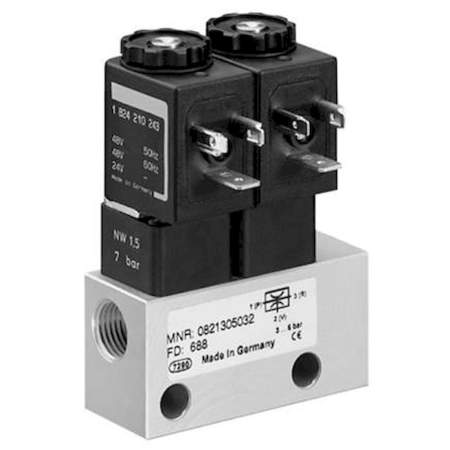 Aventics PneumaticsISO standard cylinders, valves, vacuum technology, sensors, Easy2CombineView →
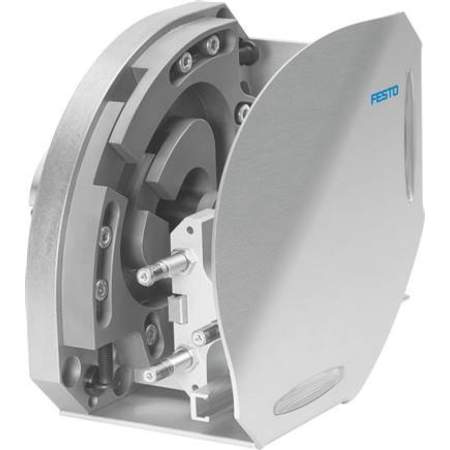 Festo pneumaticsCylinders, valves, handling modules, air preparation from Festo22,391 items →
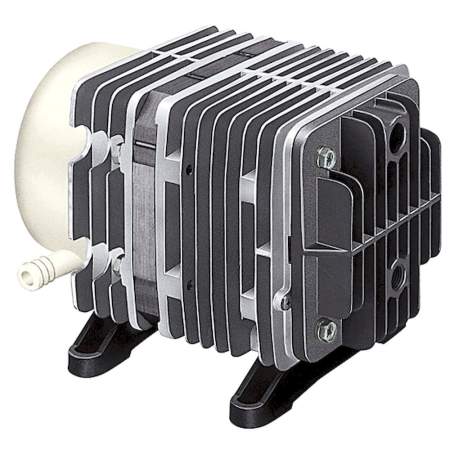 Nitto Kohki Pneumatic SolutionsCouplings, connectors, vacuum valves from Nitto Kohki2,027 items →
 CylinderStandard, compact, guided and round cylinders cross-brand217 items →
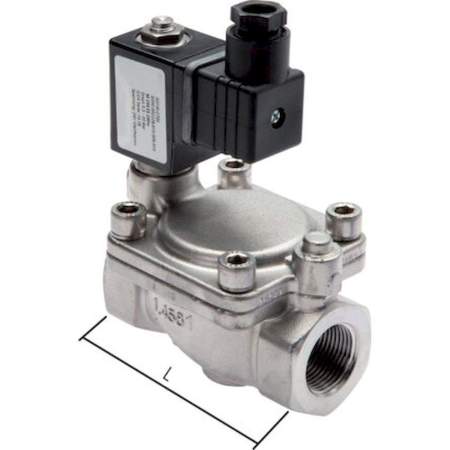 ValvesDirectional, check and solenoid valves cross-brand19 items →
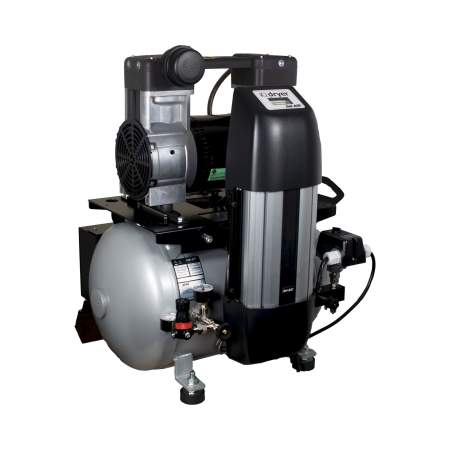 CompressorsJun-Air compressors, oil-free and lubricated, for laboratory use158 items →
Advantages
Technical overview
The key technical properties at a glance.
Brands SMC, Aventics, Festo, Nitto Kohki - complete manufacturer lines with original spare parts and accessories
Complete compressed air installation - from compressor through filter/regulator to cylinder and valve from one source
Jun-Air laboratory compressors - oil-free, low noise, for medical and laboratory applications
Couplings and connectors - Nitto Kohki quick-release couplings, various tube connector types
Wide range - cylinders, valves, couplings, ball valves, pressure regulators, blow guns
In detail
Selection guide by application
The key data in table form.
| Task | Product group |
|---|---|
| Linear actuation | Pneumatic cylinders (SMC, Aventics, Festo) |
| Flow control | Valves, ball valves, pressure regulators |
| Line connection | Tube connectors, threaded fittings, couplings |
| Compressed air generation | Jun-Air compressors (oil-free) |
| Cleaning / blow-off | Blow guns & air tools |
| Complete brand solution | SMC / Aventics / Festo / Nitto Kohki |
Applications
Typical applications
Where these products are typically used.
- Assembly automation and handling (cylinders, valves, vacuum technology)
- packaging machinery (directional valves, pressure regulators, sensors)
- laboratory and medical technology (Jun-Air compressors, oil-free)
- maintenance of pneumatic systems (original parts from SMC/Aventics/Festo)
- workshop and production (blow guns, couplings)
- and fluid system installations (ball valves, fittings, manifolds)
FAQ
Frequently asked questions about Pneumatics
What are pneumatic systems and their primary industrial applications?
Pneumatic systems are compressed air-powered automation solutions that convert pressurized air energy into mechanical motion through cylinders, valves, and actuators. These systems are extensively deployed in automotive manufacturing for assembly line automation, packaging industries for high-speed filling and sealing operations, and food processing where clean compressed air meets hygiene standards. Pneumatic components like the Festo DAPS series rotary actuators provide precise angular positioning from 90 degrees up to multi-turn rotation, making them ideal for material handling, valve control, and robotic applications where rapid cycling and consistent force delivery are critical.
What are the key technical selection criteria for pneumatic components?
Pneumatic component selection requires matching operating pressure range typically between 1.5 to 10 bar, bore diameter for force requirements, and stroke length for application geometry. The Festo DAPS-4000 series operates with torque outputs suitable for medium-duty applications while DAPS-8000 units provide higher torque capacity for demanding industrial processes. Port thread sizes like M5, G1/8, or G1/4 must align with existing compressed air distribution systems, and actuator response time depends on air flow capacity and internal volume. ISO 15552 standard cylinders like the TM 320/2000 model with 320mm bore diameter and 2000mm stroke demonstrate the importance of dimensional standardization for interchangeable mounting and connection compatibility.
Which international standards and certifications apply to industrial pneumatic systems?
Industrial pneumatic systems must comply with ISO 4414 for compressed air system safety, EN 983 for pneumatic fluid power safety requirements, and ISO 5599 for valve mounting interface standardization. The ISO 15552 standard defines metric cylinder dimensions and mounting configurations, ensuring global interchangeability as demonstrated by the TM 320/2000 cylinder model. ATEX certification becomes mandatory for pneumatic equipment operating in potentially explosive atmospheres, particularly in chemical processing and grain handling facilities. Additional compliance with machine directive 2006/42/EC and pressure equipment directive 2014/68/EU ensures pneumatic systems meet European safety and performance requirements for industrial automation applications.
What are the differences between pneumatic actuator variants like the Festo DAPS series?
The Festo DAPS series differentiates primarily by torque output and rotation angle capability, with DAPS-2880 providing lower torque for light-duty applications while DAPS-8000 delivers maximum torque for heavy industrial loads. Model designations like RS1, RS2, RS3, and RS4 indicate different rotation angles from 90 degrees to 270 degrees, allowing engineers to match actuator travel to specific application requirements. The numerical prefix indicates nominal torque rating, with DAPS-4000 offering mid-range performance and the F16 or F25 suffix denoting different mounting flange sizes for mechanical integration. Port thread variations and integrated sensor mounting options like T6 designation provide additional customization for position feedback and system monitoring requirements.
What are the installation requirements and system compatibility considerations for pneumatic components?
Pneumatic system installation requires compressed air quality meeting ISO 8573-1 standards with maximum particle size of 40 microns, pressure dew point at least 10°C below ambient temperature, and oil content below 1 mg/m³ to prevent component damage. The Festo DAPS actuators require G1/4 or M5 compressed air connections depending on model size, with supply pressure regulated between 2 to 8 bar for optimal performance and service life. Mounting surfaces must provide adequate rigidity to handle reaction forces, particularly for high-torque applications using DAPS-8000 series units. Electrical connections for position sensors and valve control typically require 24V DC supply with IP65 protection rating to withstand industrial environments and moisture exposure during operation.
What safety ratings and operating conditions apply to industrial pneumatic equipment?
Industrial pneumatic components typically feature IP65 ingress protection rating for dust-tight construction and protection against water jets, essential for harsh manufacturing environments. Operating pressure ranges from 1.5 to 10 bar with maximum system pressure not exceeding 16 bar to maintain safety margins and component integrity. Ambient temperature limits generally span -20°C to +80°C for standard applications, though specialized sealing materials extend this range for extreme conditions. The Festo DAPS series actuators incorporate integrated pressure relief and exhaust throttling to prevent overpressure conditions, while fail-safe spring return options ensure safe positioning during power loss or air supply interruption in critical safety applications.
What maintenance schedules and service life expectations apply to pneumatic systems?
Pneumatic components require quarterly inspection of air preparation equipment including filters, regulators, and lubricators to maintain ISO 8573-1 air quality standards and prevent contamination-related failures. The Festo DAPS actuator series typically achieves 10 million cycles under standard operating conditions with 6 bar supply pressure, though service life varies significantly with cycle frequency, load conditions, and air quality maintenance. Annual replacement of pneumatic seals and O-rings prevents performance degradation, while semi-annual calibration of pressure regulators and flow control valves ensures consistent system performance. Predictive maintenance using vibration analysis and pressure monitoring can extend component life by 25-30% compared to reactive maintenance approaches, particularly important for critical production line applications where unplanned downtime costs exceed component replacement expenses.