
Collapsible crate or rigid container - which pays off?
Collapsible transport crates save up to 80 % volume when empty and cut the cost of returning empties. This guide compares collapsible and rigid containers by volume savings, folding mechanism and stacking load, and shows when each design pays off.
View transport cratesCollapsible or rigid - where is the difference?
The key difference shows up when the box is empty. A collapsible crate folds down to a flat stack and needs only a quarter to a fifth of its transport volume on the return trip. A rigid container keeps its volume constant, whether it is full or empty.
So the logistics chain decides. With long empty returns, frequent shipping and tight storage space, the collapsible crate plays to its strengths. Where containers stay in one place or carry heavy continuous loads, the rigid container is often tougher and cheaper per use.
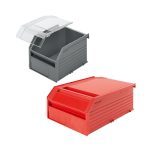
How much does a collapsible crate save on empty returns?
The saving comes from the fold ratio - the ratio of erected to folded height. Common large load carriers in the 1200 x 800 mm format reach 4:1 to 5:1, while compact small load carriers in the 600 x 400 mm euro size often exceed 5:1.
In reusable loops between plant and supplier this adds up fast. Anyone returning empties weekly halves the number of return trips at 5:1, or frees storage space for other goods. The higher price of the crate usually pays back through the freight it saves.
- Short in-house loops: benefit is often small, a rigid container is enough.
- Long external returns: the crate saves freight and floor space.
- Seasonal peaks: empty crates take almost no room in the overflow store.
- Footprints to EN 13626 / VDA small load carrier keep the system stackable and compatible.
What to check on folding mechanism and stacking load?
The folding mechanism is the weak point of every collapsible crate. Hinges and wall latches are stressed on each cycle, so the rated number of fold cycles and the stability of the erected walls matter. Check whether the crate folds single or double walled and how securely the latch engages.
The second figure is the stacking load: the static load an erected crate may carry permanently in a stack. Good collapsible crates reach 300 to 800 kg, but they depend more on wall guidance than rigid containers, which carry the load directly through continuous walls.
- Double-walled bases raise the supportable stacking load.
- Latched lids make crates stackable and dust-tight.
- Material grade: PP stays impact-resistant in the cold, HDPE is especially tough.
Frequently asked questions
How much volume does a collapsible crate really save?
When empty, usually 60 to 80 %, depending on the fold ratio. At 5:1, five empty crates fit in the space of one erected box, which clearly cuts return trips and storage area.
Are collapsible crates as strong as rigid containers?
On stacking load, good collapsible crates reach 300 to 800 kg static. Rigid containers carry the load more directly through continuous walls and are tougher under very high continuous load or rough handling.
When is a collapsible crate not worth it?
In short internal loops without long empty returns, folding brings little benefit. There the simpler and often cheaper rigid container is usually the better choice.
What should I check on the folding mechanism?
The rated cycle count, a securely engaging wall latch and the material quality of the hinges. These points decide the service life in reusable use.
Looking for a collapsible or rigid crate?
We supply collapsible transport crates and rigid reusable containers in standard euro footprints - with a durable folding mechanism and documented stacking load.
Standard sizes
Euro and VDA footprints for compatible stacking.
Rated load
Static and dynamic stacking load documented.
Long service life
Folding mechanism with high cycle count in reuse.
Selection help
We help you choose the right products; technical details are clarified with the manufacturer.