C-Parts Management - which model pays off when?
C-parts account for up to 80 percent of purchasing transactions but only around 20 percent of spend value. This guide compares the replenishment models from two-bin Kanban and eKanban to consignment stock and shows when each concept pays off.
View storage systemsWhat are C-parts and why do they cost so much?
C-parts are low-value consumables and standard items such as screws, seals, ESD gloves, cleaning wipes or terminals. In an ABC analysis they stand out through a low unit value combined with high item variety: they tie up little capital but generate the bulk of procurement transactions.
The real cost driver is not the purchase price but the process effort. Requisition, order, goods receipt, invoice check and posting quickly add up to 30 to 100 euros per transaction - whether the screw costs 2 cents or 20 cents.
- A-parts: high value, few items - tightly managed, individual ordering.
- B-parts: medium value and quantity - classic materials planning.
- C-parts: low value, very many items - ideal for automatic replenishment systems.
Which replenishment models exist?
The models differ mainly in who triggers replenishment and when ownership of the goods passes. From the simple two-bin principle to consignment stock, the degree of automation rises - and with it the relief for purchasing.
When does each model pay off?
The choice depends on demand stability, item variety and capital tie-up. The more even the demand and the larger the volume, the more it pays to shift control to the supplier (VMI) or to defer ownership transfer until withdrawal (consignment).
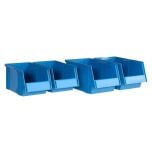
- Fluctuating demand, manageable range: two-bin Kanban - robust and cheap.
- Many withdrawal points, high frequency: eKanban with scales, RFID or scan trigger.
- Stable ongoing demand, little time for planning: VMI, the supplier refills on its own.
- High stock values, avoid tying up capital: consignment stock - paid only on withdrawal.
- Very broad catalogue range: electronic OCI/punchout link into the ERP.
 Plan procurement
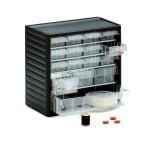
Sort the C-parts range with an ABC analysis and choose the right model.
To the guidesHow do you introduce C-parts management?
The start begins with an ABC analysis and the definition of reorder points. Bin sizes, minimum stock and lead time are derived from historical consumption, then the replenishment principle is set per item group.
Frequently asked questions
What does the two-bin principle mean?
Each item has two bins. When the first runs empty it is released for reorder while work continues from the second. Replenishment is always on its way without anyone counting.
When does consignment stock pay off?
With high, stable volume and when you want to reduce capital tie-up. The goods sit at your site but remain the supplier's property and are paid only on withdrawal.
What is the difference between Kanban and eKanban?
Classic Kanban signals demand via an empty bin and visual check. eKanban automates the signal via scales, RFID or scan and transmits it directly to the ERP or supplier.
How much does C-parts management cut costs?
The lever lies in process costs. Bundled, automatic replenishment can often reduce procurement process costs by 50 to 70 percent.
Introduce C-parts management?
We supply storage bins, shelving and Kanban concepts from the two-bin principle to supplier integration - matched to your range.
Right system
From simple Kanban to consignment for any volume.
Lower process costs
Automatic replenishment instead of single orders.
Analysis first
ABC classification and demand assessment as the basis.
Selection help
We help you choose the right products; technical details are clarified with the manufacturer.