
Storing hazardous materials - which safety cabinet is required?
Anyone storing flammable liquids or other hazardous materials needs a tested safety cabinet, suitable spill sumps and a segregation concept. This guide explains the fire resistance types under EN 14470-1, the basics of TRGS 510 and how to plan containment volume and co-storage correctly.
View storage equipmentWhich safety cabinet does EN 14470-1 require?
Flammable liquids may only be stored in work areas inside safety cabinets to EN 14470‑1. The standard grades cabinets by fire resistance into types 15, 30, 60 and 90 - the number is the minutes for which the interior temperature stays below the critical value in a fire.
In practice Type 90 is the standard, because in many facilities it allows storage without a dedicated fire compartment. Type 90 keeps the contents below roughly 180 °C for at least 90 minutes, giving people and the fire brigade enough time and delaying fire spread.
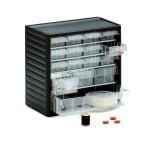 Storage on the shop floor
How to plan racking, cabinets and small-parts storage sensibly.
View productsWhy are spill containment sumps mandatory?
Spill sumps retain leaking liquids so they cannot reach the floor, drains or watercourses. They are effectively always required when storing water-polluting and flammable liquids and are part of the basic equipment of every hazardous material store.
The containment volume depends on the quantity stored. As a rule of thumb the sump must hold at least 10 % of the total stored volume or the volume of the largest single container - whichever is greater. Water protection zones demand stricter figures, up to 100 %.
- Steel sump: robust and resistant to flammable liquids and solvents.
- PE sump (polyethylene): corrosion-resistant for acids and alkalis.
- Containment volume at least 10 % of the stored quantity or the largest container.
- A grating platform keeps containers dry above any captured liquid.
- Inspect regularly for tightness, corrosion and residues.
What does TRGS 510 say about segregation?
TRGS 510 is the central technical rule for storing hazardous materials in transportable containers. It governs quantity thresholds, organisational measures and above all segregation - which substances may be stored together and which must be kept apart.
The basic principle: substances that can react dangerously with each other must not be stored together. Oxidising materials do not belong next to flammables, acids not next to alkalis, toxic substances not next to food. To this end TRGS 510 sorts hazardous materials into storage classes (LGK) and provides a segregation table.
Frequently asked questions
Do I need a Type 90 cabinet for every hazardous material?
For flammable liquids in work areas a safety cabinet to EN 14470‑1 is required, usually Type 90. Other hazardous materials such as acids, alkalis or gas cylinders have their own cabinet types with suitable lining and ventilation.
How large must the spill sump be?
It must retain at least 10 percent of the total stored volume or the volume of the largest single container - whichever is greater. In water protection zones up to 100 percent may be required.
What exactly does TRGS 510 regulate?
It governs the storage of hazardous materials in transportable containers: quantity thresholds, protective measures and segregation by storage class. That answers which substances may be stored together and which must be kept apart.
Does a hazardous material cabinet need ventilation?
Yes, flammable and fuming substances require technical extraction, often with at least ten air changes per hour. This prevents a dangerous build-up of vapours inside the cabinet.
Setting up a safe hazardous material store?
We supply safety cabinets to EN 14470-1, steel and PE spill sumps and labelling - aligned with TRGS 510.
Standard-tested
Cabinets to EN 14470-1, Type 90 available.
Fully contained
Spill sumps with verified volume.
TRGS-compliant
Segregation planned by storage class.
Selection help
We help you choose the right products; technical details are clarified with the manufacturer.