
IP Rating for Sensors - which class do you need?
The IP rating tells you how well a sensor is protected against dust and water. This guide explains the digits under IEC 60529, clarifies IP69K washdown resistance and shows which class humid, dusty and cleaning environments actually require.
View industrial sensorsWhat do the two digits of an IP rating mean?
The IP rating (Ingress Protection) under IEC 60529 uses the letters IP followed by two digits. The first digit (0‑6) rates protection against solid objects and dust, the second (0‑9) against water. A sensor rated IP67 is therefore dust-tight and survives temporary immersion.
The higher the digit, the tighter the housing. An X in either position (for example IPX7) means that aspect was not tested or is not relevant. For industrial sensors, combinations from IP65 upward matter most.
Which IP class fits which environment?
The right choice depends on humidity, dust and the kind of cleaning involved. The overview below matches the common classes to concrete industrial environments.
- IP65: protection against water jets from any direction, ideal for dusty but not wet areas.
- IP67: dust-tight and suitable for temporary immersion up to 1 m for 30 minutes.
- IP68: permanently waterproof per manufacturer spec (depth and duration are defined by the maker).
- IP69K: tested to ISO 20653, withstands high-pressure and steam-jet cleaning.
When do you need IP69K washdown resistance?
In food, beverage and pharmaceutical production, lines are cleaned daily with high pressure and hot water. The IP69K test to ISO 20653 uses water at around 80 °C, 80 to 100 bar of pressure and defined jet angles - conditions that quickly overwhelm ordinary IP67 housings.
The connector is another weak point: a sensor can be IP69K, yet an open or badly tightened M12 connection lowers the rating of the whole assembly. Potted cable outlets or screwed, sealed connectors are the safe choice here.
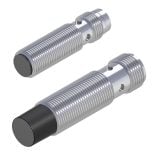 Hygienic design
Sensors and accessories for cleaning environments in the food industry.
Read the guideFrequently asked questions
What is the difference between IP67 and IP69K?
IP67 protects against dust and temporary immersion up to 1 m for 30 minutes. IP69K instead tests resistance to high-pressure and steam-jet cleaning at around 80 °C and 80‑100 bar. They are separate tests; one does not upgrade the other.
Does a higher second digit always mean more protection?
No. The water digits are not fully cumulative. IP69K does not cover immersion per IP68. To get both you need a combined marking such as IP68/IP69K.
Is IP65 enough for humid manufacturing?
IP65 protects against water jets but not against immersion or prolonged coolant mist. In humid halls or where cutting fluid is present, aim for at least IP67.
What determines the IP rating of the whole assembly?
The weakest point. An IP69K sensor with an open or loosely fitted connector loses its protection. Seals, glands and cable entries must all meet the same class.
Looking for a sensor with the right rating?
We supply inductive, capacitive and optical sensors from IP65 to IP69K - as well as sealed connectors and hygienic-design versions.
Standard-tested
Ratings verified to IEC 60529 and ISO 20653.
Washdown-proof
IP69K sensors for high-pressure and steam-jet cleaning.
Matched to you
We map your environment to the correct class.
Selection help
We help you choose the right products; technical details are clarified with the manufacturer.