What are ESD tweezers and what industrial applications require their use?
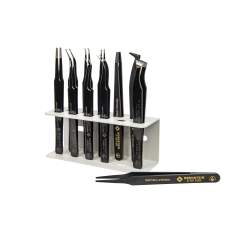
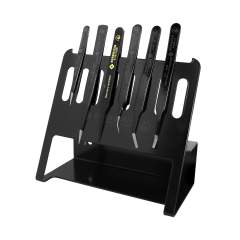
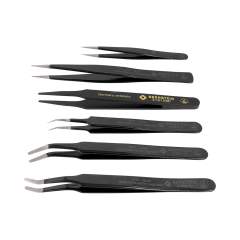
ESD tweezers are precision instruments manufactured with dissipative materials that safely discharge static electricity to prevent component damage during handling of sensitive electronics. These specialized tools are essential in semiconductor manufacturing, PCB assembly, microsystem technology, and precision instrument repair where static discharge can destroy components worth thousands of euros. Industries including automotive electronics, medical device manufacturing, telecommunications equipment production, and aerospace systems integration rely on ESD tweezers for safe manipulation of integrated circuits, surface-mount devices, and micro-components. The Bernstein 5-170 and 5-190-V series exemplify professional-grade ESD tweezers designed for these critical applications.
What technical criteria should guide ESD tweezer selection for precision electronic work?
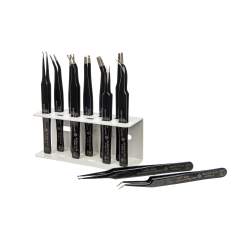
ESD tweezer selection requires evaluating tip geometry, material conductivity, and ergonomic design to match specific handling requirements. Surface resistance values between 10^6 and 10^9 ohms ensure proper static dissipation without creating current paths that could damage sensitive components. Tip configurations include straight, angled, curved, and specialty shapes like the geoMetric designs in Bernstein's 5-170-G series for accessing confined spaces on densely populated circuit boards. Handle length typically ranges from 110mm to 140mm for optimal control, while tip precision down to 0.1mm enables manipulation of components as small as 0201 resistors. Material composition using carbon-filled polymers or metal alloys with controlled conductivity ensures consistent ESD protection across temperature ranges from -10°C to +80°C.
Which international standards govern ESD tweezers for electronic manufacturing environments?
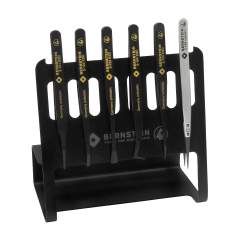
ESD tweezers must comply with IEC 61340-5-1 standard for electrostatic discharge control in electronic manufacturing, which defines surface resistance limits and discharge performance requirements. DIN EN 100015 specifies testing methods for ESD protective equipment including tweezers, establishing measurement protocols for resistance values and discharge decay times. ISO 8090 covers ergonomic requirements for handheld precision tools, ensuring operator comfort during extended use periods. Additional compliance with ANSI/ESD S20.20 standard is required for facilities serving aerospace and defense sectors, while IPC-A-610 acceptance criteria reference proper ESD tool usage during electronic assembly operations. These standards collectively ensure that ESD tweezers like the Bernstein 5-060 series provide reliable component protection in regulated manufacturing environments.
How do Bernstein's different ESD tweezer series compare in terms of functionality and application focus?
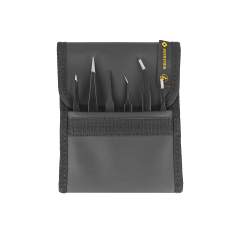
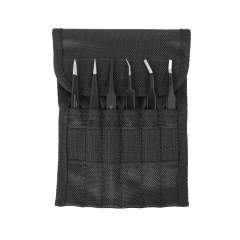
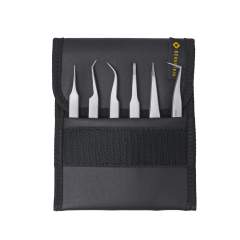
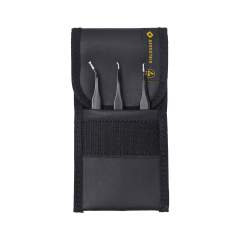
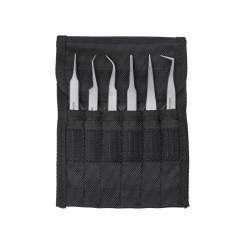
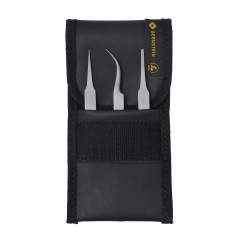
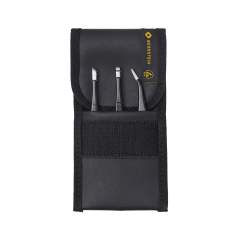
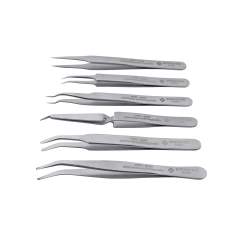
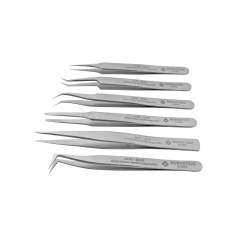
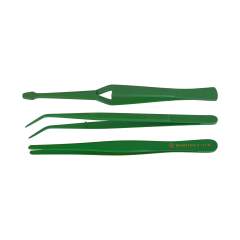
Bernstein's ESD tweezer portfolio divides into specialized series addressing distinct precision handling requirements in electronic manufacturing. The 5-170 series features 11-piece SMD sets with holders specifically designed for surface-mount device manipulation, while the geoMetric 5-170-G variant includes angled and curved tips for accessing components in tight spaces on multilayer PCBs. The 5-190-V plastic tweezers offer enhanced chemical resistance for applications involving flux cleaning or corrosive environments, maintaining ESD protection while preventing metal contamination. Standard 5-060 series provide six-piece configurations optimized for general electronic assembly work, with tip geometries covering straight, bent, and pointed profiles. The Vario 5-060-V series extends functionality with interchangeable tip systems, allowing technicians to adapt tool configuration without purchasing complete sets.
What installation and compatibility requirements apply to ESD tweezer workstation integration?
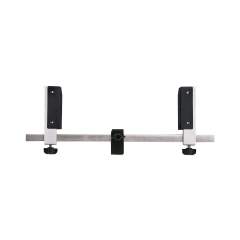
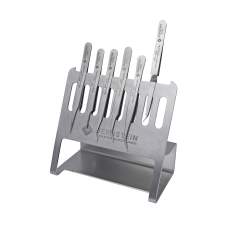
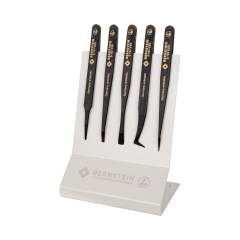
ESD tweezer integration requires workstation grounding systems maintaining electrical continuity through wrist straps, heel straps, or conductive flooring connected to earth ground via 1-megohm resistors. Tweezer storage solutions must provide conductive or dissipative materials preventing charge accumulation, with rack systems typically manufactured from carbon-filled plastics or metal with appropriate surface treatments. Compatibility with existing ESD protocols demands verification that tweezer resistance values align with facility-wide grounding schemes, ensuring discharge paths operate within 10^6 to 10^9 ohm ranges. Workstation humidity control between 40-60% RH supports consistent ESD performance, while temperature stability within ±5°C prevents material property variations. The Bernstein 5-170 series includes dedicated holders that integrate seamlessly with standard ESD workbench configurations meeting IEC 61340-5-1 requirements.
What safety ratings and environmental specifications define professional ESD tweezer performance?
Professional ESD tweezers operate within surface resistance ranges of 10^6 to 10^9 ohms to ensure safe static discharge without component damage, with resistance stability maintained across temperature ranges from -10°C to +80°C. Material specifications typically include carbon-filled polymers or specialized metal alloys providing consistent conductivity under varying humidity conditions between 12% and 98% relative humidity. Mechanical durability testing per ISO 8090 ensures tip alignment accuracy within ±0.05mm after 100,000 actuation cycles, while corrosion resistance meets Class 3 requirements for industrial environments. Operating voltage safety limits prevent discharge currents exceeding 0.1 microamps during component handling, protecting sensitive devices rated below 100V human body model ESD threshold. The Bernstein ESD series maintains these performance parameters throughout their operational life, ensuring reliable component protection in critical manufacturing environments.
What maintenance procedures and service intervals ensure optimal ESD tweezer performance?
ESD tweezer maintenance requires quarterly resistance testing using calibrated megohmmeters to verify surface resistance values remain within 10^6 to 10^9 ohm specifications throughout the tool's operational life. Weekly visual inspection protocols examine tip alignment, surface contamination, and handle integrity, with immediate replacement required if resistance measurements drift outside acceptable ranges or physical damage compromises ESD protection. Cleaning procedures using isopropyl alcohol and lint-free cloths remove flux residues and contamination that could affect conductivity, while ultrasonic cleaning baths provide deep cleaning for heavily contaminated tools. Service life typically extends 2-3 years under normal industrial usage with proper maintenance, though high-volume production environments may require annual replacement to maintain precision tolerances. Documentation requirements include resistance test records, calibration certificates, and replacement schedules to support ISO 9001 quality management systems in regulated manufacturing facilities.