What are CNC systems and their primary industrial applications?
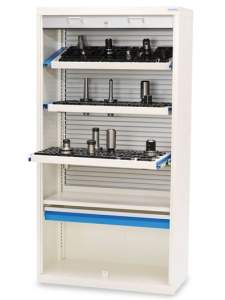
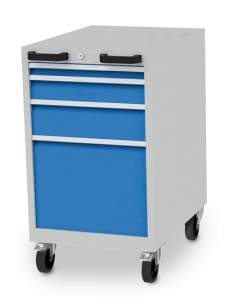
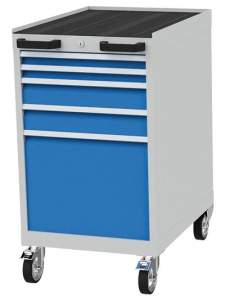
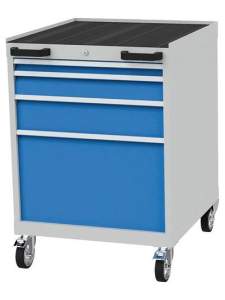
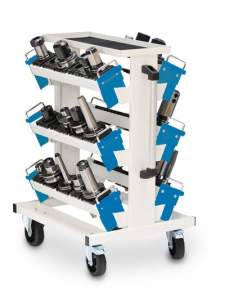
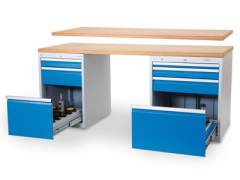
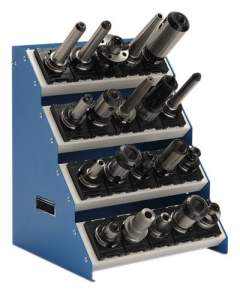
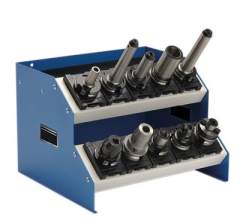
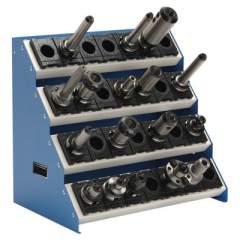
CNC systems are comprehensive tool management and storage solutions designed specifically for computer numerical control machining environments, integrating mobile tool trolleys, stationary cabinets, and mounting blocks for cutting tools. These systems serve automotive manufacturing, aerospace precision machining, medical device production, and general mechanical engineering where tool organization directly impacts cycle times and production efficiency. Bedrunka+Hirth CNC systems include mobile drawer cabinets with depths up to 736mm, roller shutter cabinets with multiple tool holder frames, and specialized transport trolleys for 600mm tool carriers. The modular design accommodates HSK-A, VDI, and SK tool holder standards while maintaining systematic tool identification and quick changeover capabilities essential for unmanned machining operations.
What are the key technical selection criteria for CNC tool management systems?
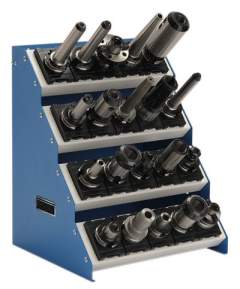
CNC system selection depends on tool holder compatibility, drawer load capacity ratings, cabinet dimensions, and mobility requirements for the specific machining center configuration. Bedrunka+Hirth systems accommodate standard tool holders including HSK-A 63/80/100, VDI50, and SK50 with dedicated steel and aluminum mounting blocks rated for precise tool positioning. Mobile units like the R 18-24 and R 24-24 series offer 3 to 5 drawer configurations with 736mm depth for extended tool lengths, while stationary roller shutter cabinets provide 3-frame capacity with integrated shelf storage. Selection criteria include tool inventory size, floor space constraints, required mobility between machining centers, and integration with existing tool identification systems for automated tool management.
Which standards and certifications apply to industrial CNC tool management systems?
CNC tool management systems must comply with DIN EN ISO 12100 for machinery safety, ISO 14001 environmental management standards, and workplace ergonomics requirements under EN 1005 for manual handling operations. Industrial tool storage systems require conformity with EN 14073 for mobile storage units and DIN 4109 for noise emission limits in production environments. ESD-compliant versions of Bedrunka+Hirth CNC systems meet IEC 61340-5-1 electrostatic discharge protection standards essential for electronics manufacturing and precision instrument production. Additional certifications include CE marking for European market compliance and adherence to local occupational safety regulations governing tool handling procedures and workspace organization in automated manufacturing facilities.
What are the main differences between CNC drawer cabinets and roller shutter systems?
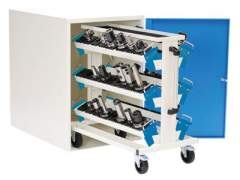
CNC drawer cabinet systems provide individual compartmentalized access with load-rated slides supporting heavy cutting tools, while roller shutter cabinets offer full-width access to tool holder frames and bulk storage compartments. Bedrunka+Hirth drawer units like the 02.2580.4RVB mobile cabinet feature 4 drawers with R 18-24 capacity and 736mm depth for extended tooling, whereas roller shutter models such as 02.95.01.01 include 3 tool holder frames plus shelf and drawer combination storage. Mobile drawer cabinets excel in point-of-use tool delivery between multiple machining centers, while stationary roller shutter systems maximize storage density for tool preparation areas and central tool cribs. The choice depends on access frequency, tool changeover patterns, and integration requirements with automated tool management protocols.
What are the installation requirements and system compatibility for CNC tool storage systems?
CNC tool storage systems require level concrete floors with minimum 2.5kN/m² loading capacity, adequate clearance for drawer extension and door operation, and proximity to machining centers within standard tool transport distances. Bedrunka+Hirth mobile units feature industrial casters rated for continuous movement over smooth surfaces, while stationary cabinets require anchor point installation per DIN EN 1991 seismic loading requirements. System compatibility extends to tool holder interfaces including HSK-A, VDI, and SK standards with corresponding mounting block configurations, plus integration capabilities with barcode scanning and RFID tool identification systems. Electrical connections for automated retrieval systems require 24VDC control voltage with standard industrial connector types conforming to IEC 60947 switching device standards.
What safety ratings and environmental specifications apply to CNC systems?
Industrial CNC tool management systems typically operate within temperature ranges of -5°C to +40°C with relative humidity up to 85% non-condensing, meeting IP40 ingress protection for standard manufacturing environments. Bedrunka+Hirth systems incorporate safety features including soft-close drawer mechanisms, anti-tip stabilization for mobile units, and rounded corner profiles complying with EN ISO 14121 risk assessment standards. Load capacity ratings range from 50kg per drawer for standard configurations up to 100kg for heavy-duty applications, with structural integrity tested per DIN EN 15635 storage equipment standards. ESD-compliant versions maintain surface resistance values between 10^6 and 10^9 ohms per IEC 61340-5-1 requirements, while fire resistance properties meet DIN EN 13501-1 classification for industrial storage applications.
What maintenance schedules and service life expectations apply to CNC tool storage systems?
CNC tool storage systems require quarterly inspection of drawer slide mechanisms, annual calibration of load-bearing components, and semi-annual verification of ESD properties where applicable per IEC 61340-5-1 testing protocols. Bedrunka+Hirth systems feature maintenance-free ball bearing drawer slides with 100,000 cycle ratings and powder-coated steel construction designed for 15-year service life under normal industrial conditions. Preventive maintenance includes monthly cleaning of tool holder mounting surfaces, quarterly lubrication of mobile caster assemblies, and annual inspection of structural integrity per DIN EN 15635 storage equipment standards. Documentation requirements include maintenance logs, load capacity verification records, and ESD compliance testing certificates for quality management systems conforming to ISO 9001 manufacturing standards and automated production environment requirements.