What are Bosch Rexroth strut profiles Nut 8 R30 and what industrial applications do they serve?
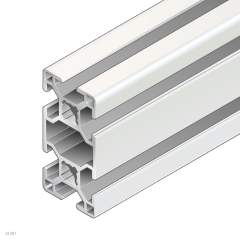
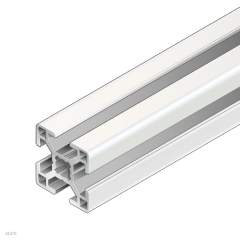
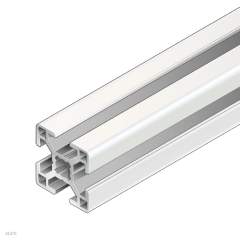
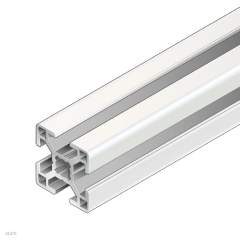
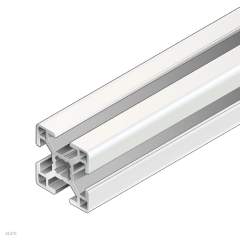
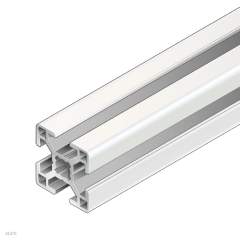
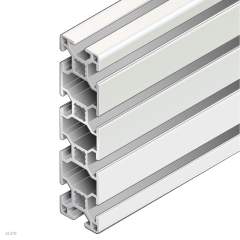
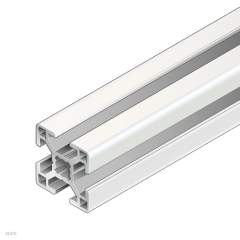
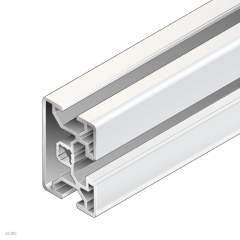
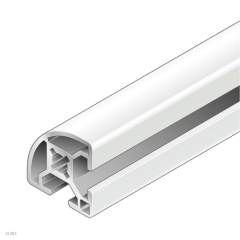
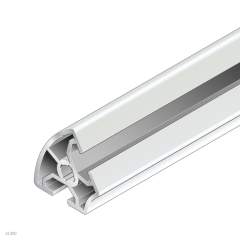
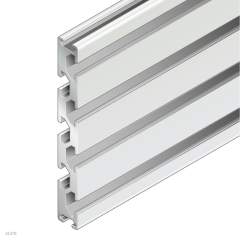
Bosch Rexroth strut profiles Nut 8 R30 are precision-engineered aluminum structural components featuring 8mm groove systems with 30mm spacing for modular assembly frameworks. These profiles serve as primary structural elements in ESD workstations, assembly automation systems, machine guards, and material handling equipment across automotive, electronics manufacturing, and mechanical engineering industries. The R30 raster system enables standardized connections through T-slot nuts and fasteners, providing dimensional accuracy within ±0.1mm tolerances. Applications include cleanroom workbenches, production line frameworks, robotic cell enclosures, and custom industrial furniture requiring rapid reconfiguration capabilities.
What technical specifications should engineers consider when selecting Bosch Rexroth strut profiles for load-bearing applications?
Critical selection parameters for Bosch Rexroth strut profiles include cross-sectional dimensions ranging from 11x20mm to 60x60mm profiles, aluminum alloy grade EN AW-6060 T66 providing 160 N/mm² tensile strength, and groove compatibility with M8 fastening systems. Load capacity varies significantly with profile geometry, where 30x60mm profiles support approximately 800N in bending applications while 60x60mm sections handle structural loads exceeding 1500N. Standard lengths include 1000mm, 2000mm, 3000mm, 5600mm, and 6070mm variants, with custom cutting available for specific dimensional requirements. Surface treatment options include natural anodized finish or ESD-compliant coatings for electrostatic discharge protection in sensitive manufacturing environments.
Which DIN and ISO standards apply to Bosch Rexroth aluminum strut profile systems?
Bosch Rexroth strut profiles comply with DIN EN 755-2 for aluminum alloy specifications and dimensional tolerances, ensuring consistent material properties and geometric accuracy across production batches. The aluminum alloy EN AW-6060 T66 meets ISO 6362-1 standards for structural aluminum applications, providing corrosion resistance Class C3 according to EN ISO 12944-2. Profile groove dimensions conform to DIN 6885-1 for keyway standards, enabling standardized fastener compatibility throughout the modular system. Manufacturing quality follows ISO 9001:2015 certification requirements, while surface treatments comply with DIN EN 12373-1 for anodizing specifications where applicable.
How do different Bosch Rexroth strut profile variants like 30x60 4N and 60x60 8N differ in structural capabilities?
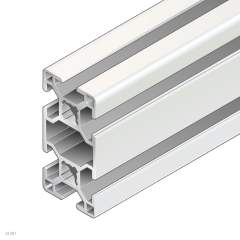
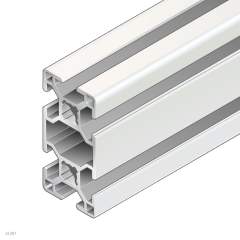
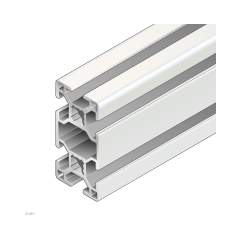
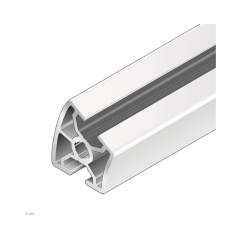
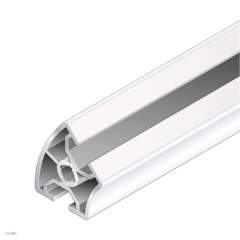
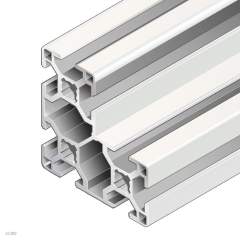
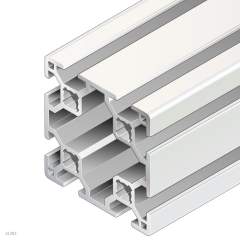
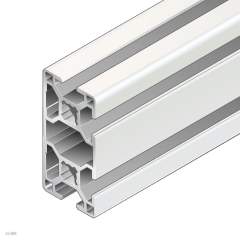
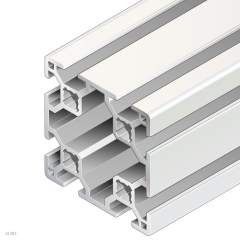
The 30x60 4N profile features four groove channels providing moderate structural strength suitable for lightweight assembly applications with maximum spans up to 1200mm, while the 60x60 8N variant offers eight groove positions delivering significantly higher load capacity for heavy-duty frameworks exceeding 2000mm spans. Groove designation numbers indicate available connection points, where 4N provides limited fastening flexibility compared to 8N configurations enabling complex multi-directional assemblies. Cross-sectional moment of inertia increases substantially from 30x60mm profiles at approximately 45 cm⁴ to 60x60mm sections reaching 180 cm⁴, directly impacting deflection resistance under equivalent loading conditions. Specialized variants like 30x60X60 profiles incorporate additional structural geometry for corner applications requiring enhanced torsional rigidity.
What installation requirements and connection methods are used with Bosch Rexroth R30 strut profile systems?
Bosch Rexroth R30 strut profiles utilize T-slot groove systems accepting M8 hex socket cap screws, T-nuts, and angle brackets for secure mechanical connections without welding or specialized tooling. Installation requires standard metric tools including 6mm hex keys, torque wrenches calibrated to 12-15 Nm for M8 fasteners, and measuring equipment ensuring 30mm grid alignment accuracy. Profile cutting demands carbide-tipped saw blades maintaining square cuts within ±0.2mm tolerance, while end caps and corner connectors provide finished appearances and structural continuity. The modular design enables rapid assembly and reconfiguration, with connection strength typically exceeding 2000N tensile force when proper fastener engagement depths of minimum 15mm are maintained through appropriate T-nut positioning.
What are the operating temperature ranges and environmental ratings for Bosch Rexroth aluminum strut profiles?
Bosch Rexroth aluminum strut profiles operate continuously within temperature ranges from -40°C to +80°C, maintaining structural integrity and dimensional stability across typical industrial environments. The EN AW-6060 T66 aluminum alloy exhibits thermal expansion coefficient of 23.6 x 10⁻⁶/K, requiring expansion joint considerations for assemblies exceeding 3000mm length in temperature-variable applications. Natural anodized surfaces provide corrosion resistance equivalent to IP54 protection against dust and moisture ingress when properly sealed with appropriate gaskets and end caps. Chemical compatibility includes resistance to most industrial solvents, lubricants, and cleaning agents, though exposure to strong alkaline solutions above pH 9.5 or acidic environments below pH 4.0 requires specialized surface treatments or protective coatings.
What maintenance intervals and inspection requirements apply to Bosch Rexroth strut profile assemblies?
Bosch Rexroth aluminum strut profile assemblies require quarterly visual inspections for fastener loosening, surface corrosion, and structural deformation, with torque verification of critical connections performed annually using calibrated tools to maintain 12-15 Nm specifications. Service life typically exceeds 20 years in standard industrial environments when proper installation procedures are followed and periodic maintenance schedules are maintained. Inspection protocols include checking T-nut engagement depths, verifying profile alignment within ±1mm tolerance, and examining groove channels for wear or contamination affecting connection integrity. Preventive maintenance involves cleaning groove surfaces with compressed air, applying thread-locking compounds to high-vibration connections, and replacing worn fasteners showing signs of thread damage or corrosion exceeding surface oxidation limits.