What are MediChair ergonomic saddle stools and what industrial applications require them?
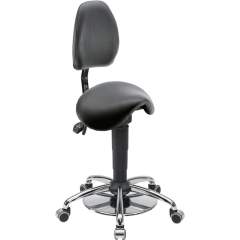
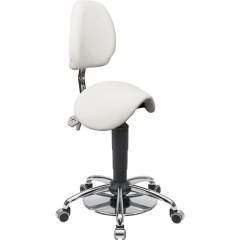
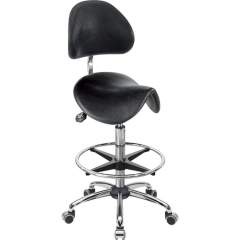
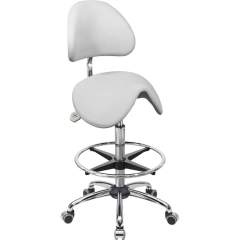
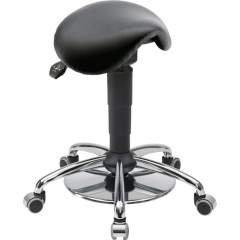
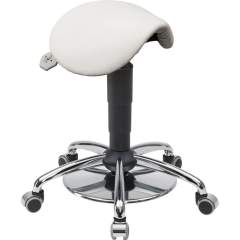
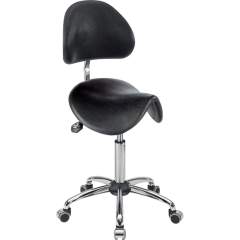
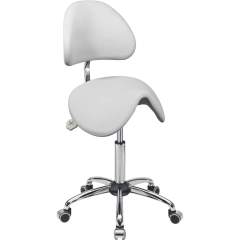
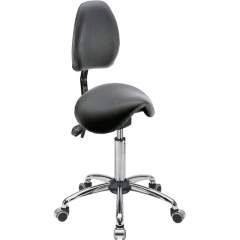
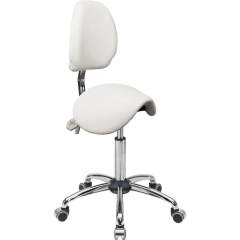
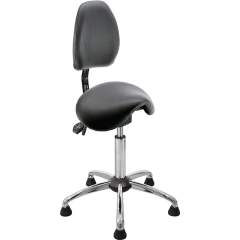
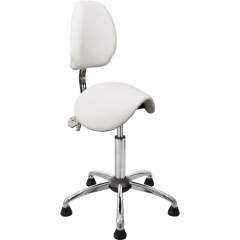
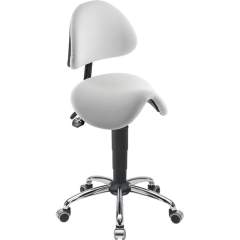
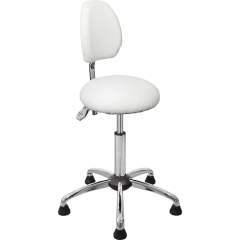
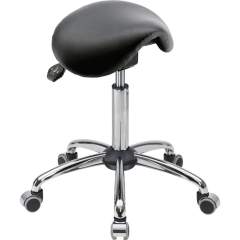
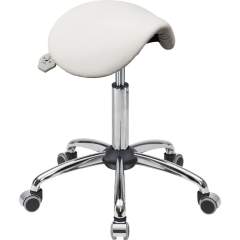
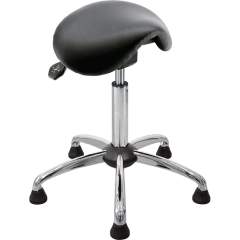
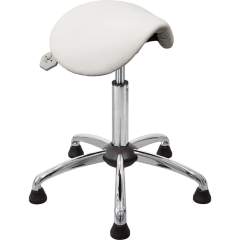
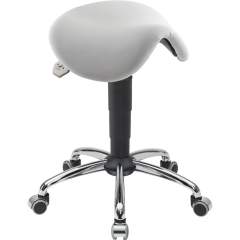
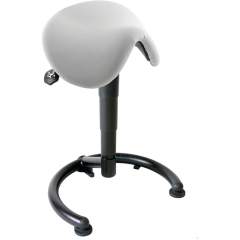
MediChair ergonomic saddle stools are specialized seating solutions designed for medical facilities, laboratories, clean rooms, and industrial workstations where precise positioning and hygiene are critical. The Sattelhocker Assistent models feature saddle-shaped seats that promote natural spinal alignment and reduce lower back strain during extended work periods. These chairs are specifically engineered for applications requiring frequent position changes, such as microscopy work, dental procedures, laboratory analysis, and precision assembly tasks where traditional office chairs would compromise ergonomic positioning or contamination control protocols.
What are the key technical selection criteria for MediChair saddle stools with specific measurements?
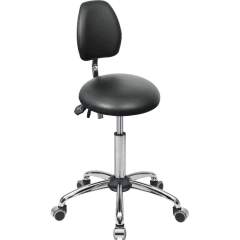
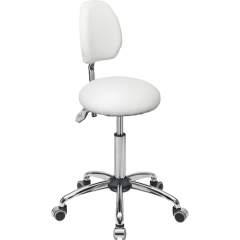
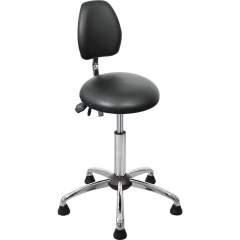
MediChair saddle stool selection depends on height adjustment range, with models like the A4R-MED-TR-KL2-FG offering foot-controlled pneumatic adjustment typically ranging 11-38 cm for precise positioning without hand contact. Material selection between PU polyurethane and KL2 artificial leather determines chemical resistance and cleanability requirements. The A1R Allround models provide broader base stability for general laboratory use, while A4R Assistent variants offer enhanced mobility with swivel mechanisms. Footrest integration varies by model, with some featuring fixed rings and others offering retractable foot controls for contamination-sensitive environments.
Which international standards and certifications apply to MediChair medical seating systems?
MediChair saddle stools comply with DIN EN 1335 ergonomic office seating standards for postural support and mechanical safety requirements. Medical and laboratory variants meet ISO 14155 clinical investigation standards and ISO 13485 medical device quality management requirements where applicable. The artificial leather upholstery materials conform to EN 71-3 safety standards for chemical migration limits and REACH regulation compliance for workplace chemical exposure. ESD-compatible models when specified meet IEC 61340-5-1 electrostatic discharge protection standards with surface resistance measurements between 10^6 and 10^9 ohms for electronics manufacturing environments.
What are the main differences between MediChair Sattelhocker Standard and foot-controlled variants?
MediChair Sattelhocker Standard models like the A4R-MED-HR-PU-FR5 feature manual height adjustment mechanisms suitable for single-user applications, while foot-controlled variants such as the A4R-MED-TR-KL2-FG enable hands-free height changes during sterile procedures. The foot-controlled models incorporate pneumatic cylinders operated by foot pedals, eliminating hand contact with adjustment mechanisms during critical work phases. Standard models typically cost 15-20% less but require manual lever operation, making them ideal for dedicated workstations, whereas foot-controlled versions are preferred in medical environments where maintaining sterile hand positioning is essential throughout the work cycle.
What installation requirements and workspace compatibility factors apply to MediChair systems?
MediChair saddle stools require minimum workspace clearance of 1.2 meters diameter for full swivel operation and safe ingress-egress during height adjustment cycles. The five-star base design with standard 11mm gas cylinder mounting accepts replacement cartridges meeting DIN 4550 specifications for load capacity up to 120kg. Floor surfaces must provide adequate stability for caster wheels, with hard flooring requiring polyurethane wheels and carpet installations using hard plastic varieties. Installation involves inserting the gas cylinder into the base mechanism and mounting the seat assembly, with initial height calibration recommended at 60-65cm for average user anthropometric requirements.
What safety ratings and operating environmental limits apply to MediChair medical seating?
MediChair saddle stools maintain operational safety within temperature ranges of -5°C to +40°C with relative humidity up to 80% non-condensing for standard laboratory environments. The gas cylinder mechanisms are rated for 100,000 adjustment cycles under normal loading conditions with safety factors meeting DIN EN 1335-2 stability requirements. Artificial leather surfaces resist common laboratory chemicals including isopropanol, ethanol, and mild detergents while maintaining structural integrity. Load capacity specifications typically range from 100-120kg depending on model variant, with the five-star base providing stability margins exceeding 150% of rated capacity during dynamic loading conditions.
What maintenance schedule and service life expectations apply to MediChair ergonomic seating systems?
MediChair saddle stools require quarterly inspection of gas cylinder operation, caster wheel rotation, and upholstery condition for optimal performance in medical environments. The pneumatic height adjustment mechanism should undergo annual lubrication service with food-grade lubricants suitable for cleanroom applications, while caster wheels require replacement every 18-24 months under continuous use conditions. Expected service life ranges 8-12 years for gas cylinders and 5-7 years for upholstery materials depending on chemical exposure frequency. Daily cleaning protocols using hospital-grade disinfectants help maintain material integrity, with deep cleaning recommended monthly using pH-neutral solutions to prevent premature degradation of synthetic leather surfaces.
The MediChair ESD work chair series is engineered for electrostatic discharge-safe seating in cleanroom, laboratory, and electronics assembly environments. Built to meet IEC 61340-5-1 and DIN EN 61340-5-2 requirements, MediChair models deliver a verified seat-to-ground resistance in the 10⁵-10⁹ Ω range, ensuring continuous ESD protection across EPA-compliant workstations. Ergonomic seat height adjustment from 450 to 640 mm, a gas-lift stroke of up to 190 mm, and a rated load capacity of 120 kg make these chairs suitable for demanding industrial and medical production lines.
esd.equipment supplies 30 MediChair variants covering static-dissipative vinyl, antistatic fabric, and cleanroom-compatible upholstery options - all fully certified and ready for immediate dispatch. The MediChair range complements ESD workstation setups from Treston, Karl, and Bedrunka+Hirth, providing a complete EPA solution from surface to seating.
↕ 450-640 mm seat height - gas-lift adjustment, up to 190 mm stroke
🛠 120 kg load capacity - robust steel base with overload protection
⚙ EPA-compatible grounding - conductive castors and footring for continuous dissipation
🛡 IEC 61340-5-1 / DIN EN 61340-5-2 - certified upholstery and base materials
✓ 30 variants in stock - vinyl, antistatic fabric, and cleanroom upholstery options
Typical application areas:
Electronics PCB assembly and SMT rework (IEC 61340-5-1, IPC-A-610), semiconductor wafer handling (SEMI S1/S2), medical device manufacturing (ISO 13485), automotive electronics production (IATF 16949, VDA 6.3), laboratory and quality inspection benches (DIN EN ISO 9001), cleanroom workstations class ISO 5-8
30 Variants in StockVinyl, fabric, and cleanroom upholstery - ready for immediate dispatch
🛡
Full EPA System CompatibilityPairs with Treston, Karl, and Bedrunka+Hirth ESD workstations for complete grounded setups
This website uses cookies to improve your experience. By clicking “Accept”, you consent to the use of ALL the cookies. However you may visit Cookie Settings to provide a controlled consent.