
Digital or Analog Caliper - Which One Should You Buy?
Whether digital, dial or a classic vernier, the caliper is the standard tool for length measurement in any workshop. This guide compares reading accuracy, IP protection and calibration to DIN 862 to help you choose.
View calipersDigital, Dial or Vernier - What Is the Difference?
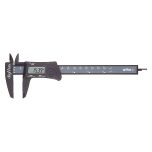
Calipers come in three types: the digital caliper with an LCD display, the dial caliper with a rotating face, and the classic vernier caliper. All measure outside, inside and depth dimensions, but they differ clearly in reading, ruggedness and price.
The digital caliper shows the measurement directly, zeroes at any point with one button and switches between millimetres and inches. The vernier caliper needs no battery and shrugs off coolant, but reading its auxiliary scale takes a little practice.
How Accurate Is a Caliper Really?
The permissible error of a caliper is defined by DIN 862 and depends on the measuring length. For a 150 mm caliper the error limit is typically around 0.03 mm, and it rises for longer measuring ranges.
A caliper is a versatile tool, but not a precision instrument for the micrometre range. If you need to verify tolerances below 0.01 mm reliably, reach for a micrometer. For most workshop jobs from 0.1 to 0.05 mm the caliper is ideal.
- Keep the measuring force constant - many calipers have a thumb roller or knurled screw for this.
- Place the workpiece clean and free of burrs, or debris will falsify the reading.
- Mind the temperature: 20 °C is the reference state, warm parts read oversize.
- Always measure in the rear third of the jaws, not at the tips (Abbe error).
IP Rating and Calibration - What Matters in the Workshop?
In the workshop chips, coolant and oil are everywhere. A digital caliper rated IP67 is dust-tight and survives brief immersion - the right choice for rough use at the machine. Basic models without IP protection belong on a sheltered measuring bench.
To keep the readings dependable, a caliper must be calibrated regularly. It is checked against gauge blocks or setting pins of known length, and the result is recorded on a calibration certificate. Typical intervals are 12 months, shorter with heavy use.
Frequently asked questions
Digital or analog - which is better for the workshop?
Digital is faster and less error-prone to read, with a zero function and data output. Analog (vernier) is battery-free, coolant-proof and rugged. For tough machine use a digital caliper rated IP67 is recommended.
How accurate is a caliper to DIN 862?
The permissible error depends on the measuring length and is around 0.03 mm for a 150 mm caliper. The display resolution - about 0.01 mm on digital - must not be confused with accuracy.
What does IP67 mean on a caliper?
IP67 means dust-tight and protected against temporary immersion. Such calipers tolerate coolant, oil and chips and are ideal for measuring directly at the machine.
How often must a caliper be calibrated?
Intervals of 12 months are common, shorter under heavy use. Calibration is done against gauge blocks with a documented, traceable calibration certificate.
Looking for the right caliper?
We supply digital and analog calipers to DIN 862 - with IP67 protection and a calibration certificate on request.
Standard-tested
Calipers to DIN 862 with documented error limits.
Calibratable
Traceable calibration certificate to ISO/IEC 17025 available.
Workshop-proof
IP67 models for coolant, oil and chips.
Selection help
We help you choose the right products; technical details are clarified with the manufacturer.