
How to clean an ESD workbench without ruining the resistance
The wrong cleaner leaves an insulating or waxy film on dissipative surfaces and shifts the resistance by orders of magnitude. This guide shows how to clean mats, floors and tools without ruining the values required by IEC 61340-5-1.
View ESD cleanersWhy do the wrong cleaners destroy the resistance?
Dissipative surfaces drain charge through fine conductive paths at the surface. Household and glass cleaners leave a thin, often silicone- or wax-based film that insulates those paths. The resistance to ground then climbs from around 10⁷ Ω to 10¹¹ Ω or more - the surface looks clean but is electrically dead.
Conversely, heavy surfactant or damp residue can push the resistance temporarily too low. Either way the workstation ends up outside the 10⁶ to 10⁹ Ω window that IEC 61340‑5‑1 sets for dissipative working surfaces.
- Glass cleaner, furniture polish and car care: almost always silicone or wax based - forbidden.
- Neat alcohol (isopropanol) degreases aggressively and can leach plasticiser from vinyl mats, making them brittle.
- Scouring cream and abrasive cloths scratch the thin dissipative top layer.
Which cleaners are safe for ESD surfaces?
Use only cleaners declared dissipative or ESD-safe. They are silicone- and wax-free and often leave a slightly conductive protective film that actually stabilises the target resistance. For daily wiping a damp cloth with a little water is usually enough.
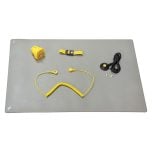 Caring for the table mat
Structure, resistance and correct cleaning of the working surface.
View products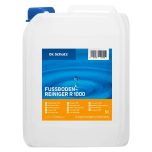
How do you clean mat and floor step by step?
Clean with the bench switched off and de-energised, and do not permanently disconnect the ground. Apply the cleaner to the cloth, not in a flood directly onto the surface, and wipe in overlapping passes. Let the surface dry completely before you rely on it to drain charge again.
- Remove coarse dirt and solder spatter first, dry or with a soft brush.
- Put ESD cleaner onto a soft, low-lint cloth - do not soak the surface.
- Wipe in even passes, avoid circular scrubbing.
- Damp-mop the floor rather than flooding it; avoid standing water.
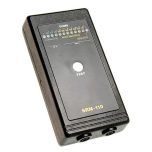
- Let it dry, then spot-check the resistance to ground.
Frequently asked questions
Can I use ordinary glass cleaner on the ESD mat?
No. Glass cleaners usually contain silicone or surfactants that form an insulating film and drive the resistance above 10⁹ Ω. Use only ESD-safe cleaners.
Is isopropanol allowed on ESD surfaces?
For short, targeted degreasing of tools, yes. On vinyl mats only sparingly, because neat IPA leaches out plasticisers and makes the mat brittle and cracked over time.
How often should an ESD workbench be cleaned?
Table mats typically once a week and whenever visibly dirty; floors follow the site cleaning schedule. The key point is regular measurement so the resistance stays in the target window.
How do I tell that a cleaner has destroyed the resistance?
The surface looks glossy or feels slick, and the meter reads above 10⁹ Ω. Only thorough removal of the film with an ESD cleaner and re-measuring will fix it.
Looking for ESD cleaners and test gear?
We supply silicone-free ESD cleaners for mats and floors plus resistance meters - all matched to IEC 61340-5-1.
Silicone-free
Our ESD cleaners leave no insulating film.
Resistance kept
Values stay inside the 10⁶-10⁹ Ω window.
Standard-compliant
Care documented per IEC 61340-5-1.
Selection help
We help you choose the right products; technical details are clarified with the manufacturer.