
Which cleaner is right for stainless steel surfaces?
Stainless steel only stays corrosion resistant while its protective passive layer remains intact. This guide explains which cleaners are suitable, why chlorides and abrasives are off limits, and how to avoid scratches and flash rust for good.
View cleaning productsWhy is the passive layer so important?
Stainless steel does not rust on its own because a passive layer of chromium oxide (Cr₂O₃) only a few nanometres thick forms on the surface. This layer builds up spontaneously as soon as chromium reacts with oxygen and protects the material from corrosion. It requires a chromium content of at least 10.5 %.
If the passive layer is damaged mechanically or attacked chemically, it can re-form in clean air. However, if residues, fingerprints or foreign rust remain on the surface, this self-healing is blocked and pitting corrosion sets in.
- A chromium content of at least 10.5 % is required for the passive layer.
- The layer is only 2‑5 nm thin but self-healing in clean air.
- Foreign rust and chlorides prevent the self-healing.
- After grinding or welding the surface should be actively passivated.
Which cleaners are suitable?
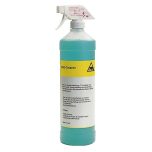
For daily care, mild pH-neutral water-based cleaners, warm water with a little dish soap or dedicated stainless steel care products work best. For stubborn soiling there are stainless steel cleaners with re-oiling agents that also repel fingerprints.
Why are chlorides so dangerous?
Chlorides are the worst enemy of stainless steel. Chloride ions break through the passive layer locally and trigger pitting corrosion that spreads beneath the surface. That is why chlorine bleach, hydrochloric acid and many bathroom or disinfectant cleaners should never touch stainless steel.
- Do not use chlorine-based cleaners, bleach or hydrochloric acid.
- No steel wool or abrasive scouring pads - they leave foreign iron behind.
- No silver or chrome polish intended for other metals.
- Use microfibre cloths or soft, non-scratching pads.
- After every clean, rinse with clear water and wipe dry.
How do I avoid scratches when cleaning?
Scratches almost always come from the wrong tool or the wrong direction. Stainless steel surfaces often have a visible grain. Always wipe with the grain, never across it, so fine wipe marks stay invisible and the surface remains even.
Frequently asked questions
Can I use glass cleaner on stainless steel?
Many glass cleaners contain ammonia or alcohol and are safe for stainless steel as long as they are chloride-free. Check the ingredients and wipe with the grain afterwards.
What helps against fingerprints on stainless steel?
A thin coat of stainless steel care oil forms an invisible film that repels fingerprints and water spots. Apply with the grain and buff with a dry microfibre cloth.
Why does my stainless steel still rust?
It is usually flash rust from foreign iron off steel wool, tools or chloride-containing cleaners. Remove the foreign rust with a passivation gel and protect the surface afterwards.
Is vinegar suitable for cleaning stainless steel?
Diluted vinegar or citric acid removes limescale gently and does not attack the passive layer. Avoid concentrated acids and long contact times, and always rinse thoroughly.
Looking for the right stainless steel cleaner?
We supply chloride-free cleaners, care oils and passivation gels that clean stainless steel gently while preserving the passive layer.
Protects the passive layer
Chloride-free formulas without aggressive acids.
Scratch-free
Guidance on gentle cloths and technique.
Residue-free
Cleaners evaporate or rinse away cleanly.
Selection help
We help you choose the right products; technical details are clarified with the manufacturer.