
Flux remover after soldering - which one fits?
After soldering, flux residues remain on the board and must be removed depending on the flux type. This guide shows which flux remover suits no-clean, water-soluble or rosin flux and which cleaning method gives the best result.
View flux removersWhat residues does soldering leave behind?
Flux removes oxides and improves wetting, but it leaves residues. The right cleaner depends on the flux type: no-clean, water-soluble (OA) or rosin (RA/RMA). Each type behaves differently and needs a different solvent.
No-clean fluxes are designed to leave few active residues that may, in theory, stay on the board. Water-soluble fluxes contain organic acids (OA) and must always be removed, because their residues are corrosive and electrically conductive.
Which flux remover fits each type?
Rule of thumb: resinous and no-clean residues dissolve in solvent-based cleaners (isopropanol, alcohol-ester blends), while aqueous OA residues need water-based systems using deionised water or a saponified cleaner.
- No-clean: alcohol-ester flux remover as spray or bath, good grease-cutting power.
- Water-soluble (OA): aqueous cleaning with deionised water, optionally a saponifier, then rinse thoroughly.
- Rosin (RA/RMA): isopropanol (IPA) at least 99.7 % or a dedicated rosin solvent.
- Lead-free residues: often harder, plan longer dwell time or ultrasonic cleaning.
- Always use dissipative, lint-free ESD wipes instead of paper.
 Set up your soldering station
Clean joints start with the right temperature - this avoids charred, baked-on residues.
Read the guideSpray, dip or ultrasonic?
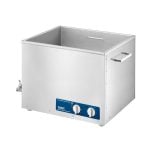
The method depends on quantity and access. Spot rework needs only a spray and brush, while batches justify a dip bath or ultrasonic tank. Rinsing and full drying are always essential.
- Respect the dwell time, do not wipe dry immediately - that smears residue.
- Work from the cleanest area toward the dirtiest.
- Ensure ventilation and do not inhale solvent vapours.
How do you verify cleanliness?
After cleaning, the board should be free of visible residue, sticky films and deposits. For safety-critical assemblies, ionic cleanliness is measured; a value below 1.56 µg/cm² NaCl equivalent is a common reference.
 Set up an ESD workstation
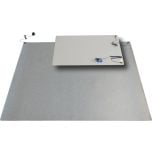
Cleaning belongs in a controlled ESD environment - build the bench to standard.
View productsFrequently asked questions
Do you need to remove no-clean flux at all?
Not necessarily, the residues are non-corrosive. But at high packing density, for cosmetic reasons or before a protective coating, cleaning is recommended.
Is isopropanol enough as a flux remover?
For rosin and no-clean residues on small areas, yes. For stubborn or lead-free residues alcohol-ester blends are stronger, and water-soluble OA residues need aqueous cleaning.
Why are water-soluble flux residues dangerous?
They contain organic acids that are corrosive and electrically conductive. Left on the board they cause corrosion, leakage currents and failures, so they must be removed.
Can I clean different fluxes with the same cleaner?
No. Solvent cleaners dissolve resinous residues but poorly remove aqueous OA residues, and vice versa. Match the cleaner to the flux type.
Looking for the right flux remover?
We supply solvent- and water-based flux removers, IPA and ESD wipes for every flux type - matched to your cleaning method.
For every type
Cleaners for no-clean, water-soluble and rosin.
Residue-free
Formulations dry without harmful residue.
Standard-based
Cleanliness per IPC-A-610 as reference.
Selection help
We help you choose the right products; technical details are clarified with the manufacturer.