
Selective Soldering vs Wave Soldering - Which Pays Off?
A selective soldering system solders THT components point by point, while wave soldering runs the whole board over a solder wave. This guide shows when the selective system pays off and which nozzle and process parameters determine a clean solder joint.
View solderingHow does selective soldering differ from wave soldering?
In wave soldering a standing solder wave sweeps the entire underside of the board, wetting all THT leads in a single pass. A selective soldering system instead moves one or more miniature nozzles under program control only to the joints that actually need solder.
The key advantage: already mounted SMD parts, connectors or heat-sensitive components stay untouched, because they never contact the full wave. Selective soldering is therefore more precise, uses less solder and needs no elaborate masking pallet as wave soldering often does.
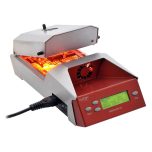 Reflow and soldering
How reflow, wave and selective soldering complement each other in production.
View productsAt what volume does a selective system pay off?
Economics depend less on raw volume than on the ratio of THT joints to SMD population and on product variety. Selective soldering wins for medium runs, high mixed-technology content and frequent product changes, because no solder pallet has to be built per variant.
- Many product variants in small lot sizes clearly favour selective soldering.
- Large volumes of few types with many THT joints stay cheaper on the wave.
- Heat-sensitive or already mounted SMD neighbours often force the selective route.
- Shorter setup times and eliminated pallet costs improve the selective business case.
Which nozzle and process parameters matter?
The result stands or falls with the nozzle. Inner diameter, wetting height and nozzle service life must match the pad layout. Typical mini-wave nozzles range from 1 to 6 mm inner diameter: small nozzles for single pins on tight pitch, wider nozzles for connector rows and ground planes.
Preheating is mandatory: too large a temperature gap between board and solder causes poor hole fill and cold joints. Nitrogen (N₂) at the nozzle displaces oxygen, keeps the solder surface bright and clearly improves wetting, especially with high-tin lead-free alloys.
- Match nozzle inner diameter to the tightest pitch and the largest pads.
- Set lead-free solder temperature typically 20‑40 °C higher than tin-lead.
- Choose preheat so the delta-T between board and solder stays small.
- N₂ inerting reduces dross and bridging on closely spaced pins.
- Clean nozzles regularly and monitor service life, as wear degrades wetting.
Frequently asked questions
When is selective soldering superior to wave soldering?
Whenever much SMD is combined with few THT joints, heat-sensitive parts sit nearby, or many variants run in small lots. Then solder pallets are eliminated and heat input stays locally confined.
What solder temperature does a selective system need?
Typically 260 to 320 °C, toward the upper end for lead-free alloys. The value is set together with preheat and dwell time to secure reliable hole fill.
Why solder under nitrogen?
Nitrogen displaces oxygen at the solder nozzle, prevents oxidation of the solder surface and improves wetting. This reduces bridges and dross, especially with lead-free alloys.
How do I choose the right nozzle diameter?
Small nozzles from about 1 mm for single pins on tight pitch, wider nozzles up to 6 mm for connector rows and large ground planes. Pitch and pad size are decisive.
Looking for a selective soldering system or accessories?
Selective and wave soldering systems, mini-wave nozzles, flux and nitrogen inerting match your mounting mix. Questions? Send us a message.
Per IPC-A-610
Processes tuned to 75 % hole fill and a clean fillet.
Process know-how
Guidance on temperature, preheat and dwell time.
N₂ technology
Nitrogen inerting for best wetting.
Selection help
We help you choose the right products; technical details are clarified with the manufacturer.