What are Bernstein cutting tools and what industrial applications do they serve?
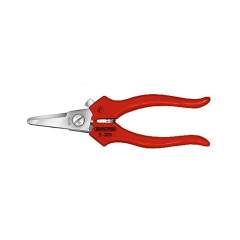
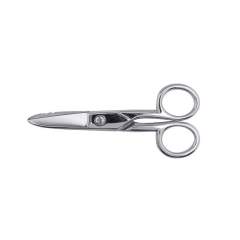
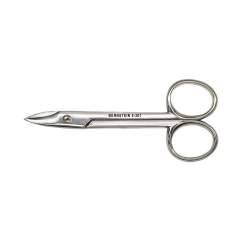
Bernstein cutting tools are precision instruments designed for electronics manufacturing, semiconductor assembly, and fine mechanical work requiring ESD protection. These tools serve electronics technicians, repair specialists, and precision assembly workers who handle sensitive components where electrostatic discharge must be prevented. The product range includes ceramic blade trimmers with PH000 Phillips heads, precision scissors from 140mm to 180mm lengths, scalpel handles with interchangeable blades, and specialized clamping shears with serrated gripping jaws for secure material handling.
What are the key technical selection criteria for Bernstein cutting tools?
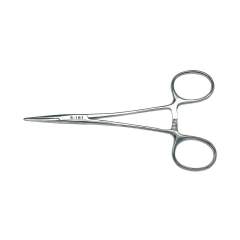
Selection criteria focus on blade material composition, cutting edge geometry, and handle ergonomics for specific applications. Ceramic blades like the 3x0.7x32mm slot trimmer provide non-conductive cutting for live circuit work, while hardened steel scissors offer blade lengths from 140mm for precision work to 180mm for general cutting tasks. Serrated edge variants provide enhanced grip on soft materials, and specialized jaw configurations like the Model 5-161 clamping shears deliver both cutting and gripping functionality in a single tool.
Which standards and certifications apply to Bernstein cutting tools?
Bernstein cutting tools comply with IEC 61340-5-1 standards for electrostatic discharge control in electronics manufacturing environments. The ESD-safe variants meet ANSI/ESD S20.20 requirements for surface resistance values between 10⁶ and 10⁹ ohms, ensuring safe operation around sensitive electronic components. Manufacturing quality follows ISO 9001 certification standards, while cutting blade hardness specifications align with DIN EN ISO 4957 tool steel requirements for consistent performance and edge retention.
What are the main differences between Bernstein cutting tool variants?
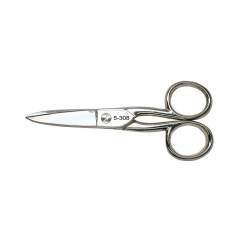
The product line divides into ceramic blade trimmers for non-conductive applications, precision scissors with various edge configurations, and surgical-grade scalpel systems. Ceramic trimmers like Models 1-764 and 1-758 provide electrically insulated cutting for live circuits, while steel scissors range from fine-serrated Model 5-308 for delicate materials to coarse-serrated Model 5-302 for tougher substrates. The Model 2-102 scalpel system uses interchangeable blades including No. 10, 10A, and 11 profiles for different cutting geometries and material thicknesses.
What are the installation and compatibility requirements for Bernstein cutting tools?
These hand tools require no installation but must integrate into ESD-controlled workstations with proper grounding protocols. Ceramic blade trimmers connect to standard precision screwdriver handles with 4mm hex retention systems, while scalpel handles use universal blade mounting compatible with standard surgical blade specifications. Work surfaces must maintain 10⁶ to 10⁹ ohm resistance levels, and operators require ESD wrist straps or heel grounders to complete the static discharge path during component handling operations.
What safety ratings and operating conditions apply to Bernstein cutting tools?
Bernstein cutting tools operate safely in ambient temperatures from -10°C to +60°C with relative humidity up to 95% non-condensing. The ESD-safe variants maintain surface resistance specifications across this temperature range while preventing static buildup during cutting operations. Ceramic blade tools provide electrical isolation up to 1000V DC for safe operation on powered circuits, and all cutting edges feature rounded corners to prevent accidental puncturing of ESD protective packaging materials.
What maintenance and service life requirements apply to Bernstein cutting tools?
Bernstein cutting tools require monthly resistance testing using a surface resistance meter to verify ESD compliance within the 10⁶ to 10⁹ ohm range. Ceramic blades typically provide 2000-3000 cutting cycles before replacement, while steel scissors maintain sharpness for 12-18 months under normal electronics assembly use. Scalpel blades should be replaced after 20-30 cuts or when cutting force increases noticeably, and all tools require visual inspection for edge damage or handle cracking every 90 days to maintain precision cutting performance.
Bernstein professional cutting tools are engineered for precision work in electronics assembly, PCB handling, and fine mechanics - delivering clean, burr-free cuts on wire gauges from 0.1 mm to 6 mm dia., with cutting forces calibrated to DIN ISO 5745 blade geometry standards. Induction-hardened cutting edges (58-62 HRC) retain sharpness through 50,000+ cutting cycles, while anti-magnetic and ESD-safe handle variants meet IEC 61340-5-1 requirements for use in controlled EPA environments.
As an authorised Bernstein distributor, esd.equipment stocks 20 cutting tool references - diagonal cutters, side cutters, cable knives, and precision scissors - all traceable to DIN EN ISO 9001 quality assurance and available for same-day dispatch from European warehouse stock.
Key technical advantages - Bernstein Cutting Tools at a glance
🔍 58-62 HRC blade hardness - induction-hardened, DIN ISO 5745 geometry
🛠 0.1-6 mm cutting range - wire, cable, component leads, plastic lacing
⚙ 50,000+ cutting cycles - validated service life under continuous workshop use
🛡 Anti-magnetic steel - safe for sensitive components near magnetic-sensitive PCBs
✓ DIN EN ISO 9001 certified - full traceability, authorised Bernstein distribution
Typical application areas:
Electronics manufacturing and SMT rework (IPC-A-610, IEC 61340-5-1), PCB assembly and wire preparation (DIN EN 60068), precision mechanical assembly, medical device production (ISO 13485), automotive electronics (IATF 16949), laboratory and R&D environments requiring ESD-controlled hand tools.
European Warehouse StockSame-day dispatch on stocked items - fast delivery across EU
🛡
EPA-Ready Tool QualityESD-safe and anti-magnetic variants for IEC 61340-5-1 controlled environments
This website uses cookies to improve your experience. By clicking “Accept”, you consent to the use of ALL the cookies. However you may visit Cookie Settings to provide a controlled consent.