
Adhesive Dispensing: from Hand Gun to Volumetric System
The right dispensing technology drives accuracy, scrap and cycle time when bonding. This guide compares the hand cartridge gun, the time-pressure dispenser and the volumetric dispensing system by accuracy, throughput and adhesive viscosity.
View dispensing systemsWhat dispensing methods exist?
Adhesives are applied with three classes of method depending on the demands: the manual cartridge gun, the time-pressure dispenser and the volumetric dispensing system. The key difference is repeatability and how independent the dose stays from viscosity and temperature.
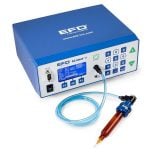
A hand cartridge gun pushes the medium out of the cartridge purely mechanically or pneumatically - cheap and flexible, but the amount depends on the operator. A time-pressure dispenser applies a defined air pressure for a set time and delivers reproducible dots and beads. A volumetric system (piston, auger or gear dispenser) meters an exactly defined volume, independent of pressure fluctuations.
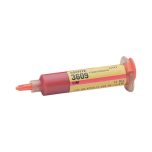
Comparing accuracy, throughput and viscosity
Three parameters decide the choice: the required dispensing accuracy, the needed throughput in parts per hour and the viscosity of the adhesive. Low-viscosity cyanoacrylates behave completely differently from thick-paste silicones or filled epoxies.
- Low viscosity (1‑1000 mPa·s): cyanoacrylates, solvent adhesives - time-pressure or gear dispenser, avoid needles with a large inner bore.
- Medium viscosity (1000‑100000 mPa·s): many epoxies and UV adhesives - time-pressure with suck-back to stop dripping.
- High viscosity and paste (above 1M mPa·s): silicones, MS polymers, filled pastes - piston or auger dispenser, often with a follower-plate drum pump.
- Two-component (2K): static or dynamic mixer, keep the mix ratio constant (e.g. 1:1 to 10:1).
- Determine throughput first: cycle time per part decides whether hand application is enough or an automated system is needed.
Using needles, cartridges and 2K mixers correctly
Even the best dispenser only delivers clean results with the right accessories. The dispensing needle, the cartridge size and, on a 2K system, the mixer determine the dot shape, stringing and repeatability.
- Select dispensing needles by inner diameter (gauge); tapered plastic needles reduce stringing with cyanoacrylate.
- Cartridges from 3‑55 ml and drum pumps for large containers - de-aerate bubbles before dispensing.
- Suck-back on the time-pressure dispenser prevents after-flow at low viscosity.
- Mix 2K statically: choose the mixer per the maker's element count and replace it after the pot life.
- Protect UV adhesives from light; use light-tight cartridges and needles.
Frequently asked questions
When is a volumetric system worth it over time-pressure?
As soon as tight tolerances (±1‑3 %) are required or viscosity drifts with temperature. Volumetric systems meter a fixed volume and therefore stay stable regardless of pressure and temperature.
Which dispensing method suits high-viscosity silicones?
Piston or auger dispensers, with a follower-plate drum pump for large containers. Pure time-pressure dispensers reach their limits with paste media above 100000 mPa·s.
How do I avoid dripping with low-viscosity adhesive?
A suck-back function on the dispenser pulls the medium back slightly after each dot. Tapered needles with a small inner bore also help against stringing.
What matters when dispensing 2K adhesives?
The mix ratio must stay constant and the static or dynamic mixer must match the ratio. Replace the mixer once the pot life has elapsed, otherwise the medium cures inside it.
Looking for the right dispensing technology?
From the hand cartridge gun to the volumetric dispensing system - questions about accuracy, throughput or the viscosity of your adhesive? Send us a message.
For every viscosity
Solutions from low viscosity to paste above 1M mPa·s.
Reproducible
Time-pressure and volumetric systems for constant amounts.
Safe 2K dosing
Static and dynamic mixers for constant ratios.
Selection help
We help you choose the right products; technical details are clarified with the manufacturer.