
ESD access gate: how do you test people at the EPA entrance?
The personnel and test gate checks at the EPA entrance whether wrist strap and ESD footwear sit inside the correct resistance window. This guide explains the ground tester, the limits under DIN EN 61340-5-1, the coupled access control and the correct daily personnel test procedure.
View test gatesContents
What does an ESD access gate do?
An ESD access gate is a test station at the EPA entrance where every person measures their resistance to ground through wrist strap and ESD footwear before entering the protected area. Only someone inside the allowed resistance window counts as correctly grounded and may pass.
At its core is a ground tester with two separate measuring circuits: a finger contact plate and a foot plate measure the resistance from hand to shoe sole against ground. A green LED signals a valid result, a red LED shows a value that is too high or too low.
Which limits apply to strap and footwear?
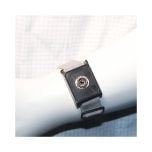
The gate compares the measured resistance with the windows of DIN EN 61340‑5‑1. For the wrist strap the usual range is 7.5x10⁵ to 3.5x10⁷ Ω including the built-in 1 MΩ safety resistor. For personnel grounding through ESD footwear the permitted range is normally 10⁵ to below 10⁸ Ω.
- A value that is too high means charge cannot flow away - often a loose strap or insulating socks.
- A too-low reading at the strap is prevented by the 1 MΩ safety resistor in series.
- Shoes are usually tested left and right separately so a faulty shoe cannot slip through.
- Exact limits are adjustable on the device and must be recorded in the EPA test plan.
How does the access control work?
Higher-end test gates couple the measurement result directly to a physical access barrier - usually a turnstile, a barrier or an electric door release. Only a passed test unlocks the passage; a failed test keeps it locked.
An RFID or badge reader lets the test be logged per person. The system records who entered when and with which result, delivering the auditable proof that an ESD control program under DIN EN 61340‑5‑1 requires.
- Standalone tester: LED display only, manual logging in the test book.
- Gate with turnstile: mechanical barrier, no entry without a green result.
- Networked version: results go to software with time stamp and person ID.
- Visitor release: separate procedure for guests with heel strap and loan footwear.
How is the personnel test done correctly?
The test is done at the start of the shift, in full ESD clothing, with the wrist strap fitted and ESD footwear worn. Only then does the tester measure the real system of person, strap and shoe that must be effective later at the workstation.
- Hands clean and slightly moist - dry skin falsely raises the resistance.
- No insulating gloves or socks during the measurement.
- Calibrate the test unit yearly and cross-check with a reference standard.
- Record limits and test frequency in the ESD control plan.
Frequently asked questions
How often must the personnel test be done?
At least once daily at the start of the shift, before the person enters the EPA. Many operations also test after any longer break to reliably prove dissipation.
Why are strap and footwear measured separately?
They protect differently: the strap at the seated workstation, the shoes when walking on dissipative floor. Separate measuring circuits reveal which of the two systems is out of specification.
What does a red result mean?
The resistance is outside the window of DIN EN 61340‑5‑1 - too high means no dissipation, too low means missing personal safety. Fix the cause and retest, only then enter.
Does every EPA need a gate with a turnstile?
No. What is required is the documented personnel test, not the mechanical barrier. A turnstile enforces it technically and makes sense with high footfall or a strict audit.
Looking for a test gate for your EPA entrance?
We supply ground testers and access gates with access control and logging - tested to DIN EN 61340-5-1.
Standard tested
Limits per DIN EN 61340-5-1 are adjustable.
Auditable
Results with time stamp and person ID.
Strap and shoe
Separate measuring circuits for both systems.
Selection help
We help you choose the right products; technical details are clarified with the manufacturer.