
ESD test instruments: how do you verify an EPA?
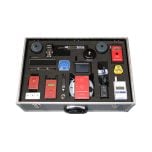
Verifying an EPA to DIN EN 61340-5-1 calls for a surface resistance meter with electrodes, a wrist-strap and footwear tester, a walking test kit and an electrostatic field meter. Each instrument measures a different quantity against defined thresholds.
Browse ESD instrumentsWhich instruments do you need to verify an EPA?
Verifying an EPA per DIN EN 61340‑5‑1 typically uses five instruments: a resistance and resistivity meter with electrodes, a combined wrist-strap and footwear tester, a walking test kit, an electrostatic field meter, and simple continuity or ground checkers. Each covers a different measured quantity.
What does each instrument measure and which thresholds apply?
The resistance meter checks whether surfaces and floors dissipate charge (resistance-to-ground typically below 1 GΩ). The strap tester covers 1 to 35 MΩ, the walking test caps body voltage below 100 V, and the field meter reveals residual fields. Your ESD control program sets the exact limits.
- Worksurfaces and floors: resistance-to-ground usually below 1 GΩ (10^9 Ω), measured with defined electrodes and test voltage.
- Wrist straps: person-strap-ground system resistance in the 1 to 35 MΩ (10^6 Ω) range; daily function test recommended.
- ESD footwear and floor together: resistance plus walking test, body voltage below 100 V.
- Field strength: keep conductive objects field-free, avoid insulators in the EPA or neutralise them with ionisation.
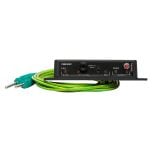
- Grounding: continuity of ground points and bonds kept low-ohmic, typically below 1 Ω.
How often must an EPA be verified?
Verification intervals follow the compliance verification plan: wrist straps are tested every working day, fixed elements such as floors and worksurfaces periodically (often yearly or half-yearly), and the instruments themselves must stay calibrated. All results are documented.
- Daily: wrist-strap test by the operator before starting work (tester or continuous monitoring).
- Periodic: resistance-to-ground of floors, worksurfaces, seating and shelving per the test plan.
- Yearly: calibration or verification of the measuring instruments themselves.
- Event-driven: re-measure after refit, cleaning with wrong agents or new materials.
Frequently asked questions
Is a single instrument enough for the whole EPA?
No. A resistance meter covers surfaces and floors; people need strap and footwear testers; charge needs a field meter. Only the combination verifies the complete EPA.
How do you test a wrist strap correctly?
A strap tester or continuous monitor measures the person-strap-ground system resistance. It should fall in the 1 to 35 MΩ range; the test is done every working day with the strap worn.
Why is the walking test important?
The walking test measures the actual body voltage generated in the shoe-floor system while walking. It shows in practice whether charge dissipates below 100 V, which pure resistance readings alone cannot capture.
ESD measurement gear for your EPA
From resistance meters to field meters - we equip your EPA verification to the standard.
Standard-compliant
Instruments and thresholds per DIN EN 61340-5-1.
Calibrated
Only verified and calibrated instruments give reliable values.
Complete
Resistance, people, field strength and grounding from one source.
Selection help
We help you choose the right products; technical details are clarified with the manufacturer.