
Single, Batch or Zone Picking - Which Method Fits?
The right picking method decides your warehouse's travel time, throughput and error rate. This guide compares single, batch and zone picking and shows how to choose the best fit from your order structure and product range.
View storage systemsWhy does the picking method matter so much?
In a manual warehouse, order picking is the single most expensive process. Up to 50 to 65 percent of picking time is spent purely on travel, while the actual grabbing of items is only a small share. Choosing the right method targets exactly that travel time.
There are three basic organisational forms: single order picking (one order per tour), batch picking (several orders bundled together) and zone picking (the warehouse split into fixed areas). All three follow the picker-to-parts principle.
- Order structure: many small orders or a few large ones?
- Lines per order: single items or long pick lists?
- Product range: a narrow assortment or tens of thousands of SKUs?
- Time window: a steady flow or sharp order peaks?
How do single, batch and zone picking differ?
In single order picking, one worker completes an entire order in a single tour. It is simple, transparent and low-error, but it creates a lot of travel when orders contain only a few lines.
Batch picking bundles several orders into one combined list. Each location is visited only once and the quantity for all orders is picked together. This saves travel but requires a downstream sorting step (split) back into individual orders.
In zone picking, the warehouse is divided into fixed areas and each worker only picks within their zone. Orders move from zone to zone by tote or conveyor (pick-and-pass) or are consolidated at the end. This enables parallel work in large warehouses.
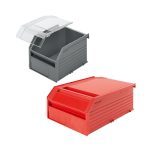 Storage & Small Parts
Shelving, bins and small-parts systems for the right storage layout.
View productsWhich method fits my warehouse?
The choice comes down to two figures: the number of lines per order and the order volume. As a rule of thumb, the smaller the orders and the higher their number, the greater the advantage of batch and zone picking.
- Few, large orders: single picking, ideally with route optimisation.
- Many small orders (1‑3 lines): batch picking with a sorting stage.
- Large warehouse with a wide range: zone picking to keep each person's travel short.
- Seasonal peaks: a flexible combination (zone-batch), scalable by adding staff per zone.
- High accuracy needs: single picking or pick-by-light/voice to cut errors.
Supporting technologies such as pick-by-light, pick-by-voice or mobile scanners lower the error rate and combine with any of the three methods. What matters is reviewing the method regularly against real order data and adapting it when the structure changes.
Frequently asked questions
What is the difference between batch and zone picking?
In batch picking one worker bundles several orders into a single tour. In zone picking the warehouse is split into fixed areas and each worker only picks within their zone. Both can be combined as zone-batch picking.
When is single order picking worthwhile?
When orders contain many lines or the order volume is low. It is simple, transparent and low-error, and delivers ship-ready orders without a downstream sorting step.
How much time does batch picking save?
Because each location is visited only once, travel time drops sharply. With many small orders, throughput gains of two to three times are possible, less the effort for the sorting stage.
Do you need a large warehouse for zone picking?
It shows its advantage mainly in large warehouses with a wide range, where parallel work and short zone paths matter most. In small warehouses the coordination effort often outweighs the benefit.
Structuring your warehouse right?
We supply shelving, visual storage bins and small-parts systems to implement your picking strategy efficiently.
Right storage media
Shelving and bins for every picking method.
Less travel
Layouts that noticeably cut travel time.
Selection help
We help you choose the right products; technical details are clarified with the manufacturer.
Scalable
Solutions for small to large warehouses.