
How to set up a packing station that works
A well-planned packing station decides the speed and error rate of your shipping. This guide shows how to plan work height, roll holders, a scale, a label printer and the material flow so every reach is short and returns go down.
View packing stationsWhat work height and table size are right?
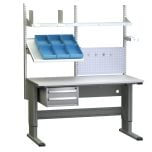
A packing station is a standing workplace where the operator reaches, lifts and turns. Standing work height is typically 95 to 110 cm, and a height-adjustable frame per DIN EN 527 matches the table to the person.
The worktop should measure at least 160 x 80 cm so that carton, goods and void fill sit side by side. A rounded front edge relieves the forearms, while a rugged multiplex or solid-core top resists sharp edges and tape.
- Standing work height: 95‑110 cm, adjustable per EN 527.
- Top depth at least 80 cm for carton plus goods plus void fill.
- Load capacity of 150 kg or more for heavy shipments.
- Non-slip, wipeable surface for fast turnaround.
Placing roll holder, scale and label printer
The three core components are the roll holder, the shipping scale and the label printer. They belong in the reach zone so no walking is needed: paper and air cushion from above, scale right at the packing point, printer within reach of its output.
How do you organise the material flow?
A good packing station follows the movement of goods: incoming on the left, packing in the middle, finished shipment on the right. This left-to-right flow avoids crossing paths and keeps the packing point clear.
- Zone 1 left: delivered goods, order slip, checking.
- Zone 2 middle: pack, weigh and label in the reach zone.
- Zone 3 right: finished parcels, staging area, pickup.
- Store consumables in compartments below or above the top.
- Drop waste through an opening or a bag right at the table.
Frequently asked questions
How high should a packing table be?
For standing work the height is typically 95 to 110 cm. Height adjustment per DIN EN 527 is ideal so the table fits the person and the forearms rest at a right angle.
Do I need a certified shipping scale?
Once the weight is the basis for postage or an invoice, the scale must be certified for trade. For internal checks a calibrated scale without certification is enough.
Which label printer suits shipping?
A direct thermal printer at 300 dpi is the standard: no toner, crisp barcodes and high speed. For very high volumes a thermal transfer model with more durable print pays off.
How do I save packing time?
Short reaches, few carton formats and a clear left-to-right flow cut packing time noticeably. Roll holder, scale and printer belong in the direct reach zone.
Fit out a complete packing station?
We supply height-adjustable packing tables with roll holder, shipping scale and label printer - matched to your material flow.
Ergonomic by design
Height adjustment per DIN EN 527 for every operator.
Certified available
Shipping scales certified for postage and invoicing.
Complete setup
Roll holder, printer and accessories from one source.
Selection help
We help you choose the right products; technical details are clarified with the manufacturer.