
Void fill compared - which material protects best?
The right void fill keeps goods centred in the box and absorbs shocks in transit. This guide compares paper cushioning, loose fill chips, air pillows and corrugated fill by fill performance, sustainability, weight and handling.
View void fillWhat job does void fill do in the box?
Void fill has two jobs: it holds the goods in the centre of the box and it dampens the shocks that hit the parcel during transit. As a rule of thumb, allow 3 to 5 cm of cushioning between the goods and the box wall on every side.
There is a difference between void fill, which simply fills empty space, and true cushioning, which absorbs energy. Heavy or fragile goods need real cushioning, while light items are often fine with pure void fill.
Paper, chips, air pillows or corrugated?
The four common materials differ clearly in fill performance, weight and cushioning. Paper cushioning and corrugated fill are heavier but dimensionally stable, while air pillows and chips are extremely light and fill large volumes cheaply.
- Paper cushioning: crumpled kraft paper, easy to handle, high tear strength, recyclable with waste paper.
- Loose fill chips: bulk fill made from starch (biodegradable) or recycled foam.
- Air pillows: on-demand inflated film cushions, minimal storage as a flat roll.
- Corrugated void fill: inserts, grids and edge protectors made from the same fibre as the box.
What about sustainability and handling?
Paper and corrugated board go straight into the waste paper stream and are easiest for customers to dispose of. Starch chips are compostable, and air pillows made of recyclable film save weight and postage but must be collected separately.
Handling comes down to throughput: paper and air-pillow systems dispense material at the touch of a button at the packing bench, while loose chips need a hopper with an outlet. If you ship in volume, a fixed dispenser saves noticeable time.
Frequently asked questions
How much void fill do I need per parcel?
Plan for 3 to 5 cm of cushioning on every side between the goods and the box wall. The contents must not move when you shake the box.
Which void fill is most sustainable?
Paper cushioning and corrugated board can be recycled cleanly with waste paper. Starch chips are compostable, and film air pillows save weight but must be collected separately.
Chips or air pillows for light goods?
Both fill large voids cheaply. Air pillows need less storage space and weight, while chips conform better to irregular shapes.
Does void fill replace a cushioned pack for electronics?
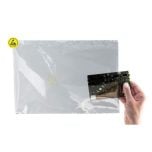
No. ESD-sensitive components belong in dissipative protective packaging first; the void fill only fixes and dampens on top of that.
Looking for the right void fill?
We supply paper cushioning, chips, air pillows and corrugated fill together with matching dispenser systems for the packing bench.
Four systems
Paper, chips, air pillows and corrugated from one source.
Sustainable
Paper solutions recycle cleanly with waste paper.
Right dosage
Dispenser systems for fast throughput at the bench.
Selection help
We help you choose the right products; technical details are clarified with the manufacturer.