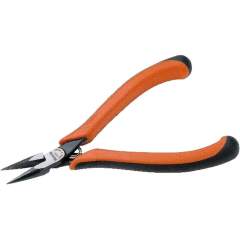
What are industrial hand tools and their primary applications in manufacturing environments?
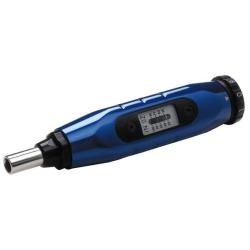
Industrial hand tools encompass precision-engineered implements designed for assembly, maintenance, and repair operations in manufacturing, electronics, aerospace, and process industries. These tools include torque wrenches like the Bahco NSB041-16-200 with adjustable torque settings and window scale, impact wrenches for heavy-duty applications, and specialized toolsets such as the 159-piece Bahco 4750RCHD01FF1 aviation toolcase. Primary applications span electronic component assembly, mechanical equipment maintenance, pipeline installations, and precision manufacturing where manual dexterity and controlled force application are critical for product quality and operational safety.
What technical criteria should engineers consider when selecting industrial hand tools for specific applications?
Key selection criteria for industrial hand tools include material composition such as copper-beryllium for spark-free environments, torque range specifications for precision applications, and dimensional parameters matching fastener requirements. Tools like the Bahco NSB502-12000-FB sledgehammer feature 12 kg copper-beryllium heads with fiberglass handles for high-impact applications, while adjustable pullers like the NSB810-350 accommodate 80-350mm diameter ranges. Material hardness ratings, handle ergonomics for extended use, and specialized coatings for corrosion resistance in chemical environments are equally critical factors determining tool performance and operator safety in industrial applications.
Which safety standards and certifications apply to industrial hand tools in hazardous environments?
Industrial hand tools must comply with ATEX Directive 2014/34/EU for explosive atmospheres, EN 13463-1 for equipment design principles, and ISO 13849 for safety-related parts of control systems. Spark-free tools manufactured from copper-beryllium alloys meet ATEX Zone 1 and Zone 2 requirements for gas and dust explosion prevention. Additional standards include DIN EN ISO 6789 for torque tools accuracy requirements, EN 61010 for electrical safety in measurement equipment, and IEC 60079 series for explosive atmosphere applications. Tools used in petrochemical facilities must additionally comply with API RP 2003 for protection against ignition of hydrocarbon vapors and gases.
What are the differences between spark-free and conventional industrial hand tools?
Spark-free tools utilize copper-beryllium or aluminum-bronze alloys that prevent ignition sources in explosive atmospheres, while conventional tools employ hardened steel construction for maximum durability and precision. The Bahco NSB series demonstrates this distinction with copper-beryllium striking wrenches rated for ATEX environments versus standard steel equivalents for general industrial use. Spark-free variants typically exhibit 25-30% lower tensile strength but provide essential safety margins in petrochemical, pharmaceutical, and grain handling facilities. Conventional tools offer superior wear resistance and tighter tolerances for precision assembly applications where explosive atmosphere risk is absent, making material selection dependent on specific operational hazard classifications.
What installation and compatibility requirements apply to industrial hand tool integration?
Industrial hand tools require compatibility assessment with existing fastener systems, workspace constraints, and operational procedures rather than traditional installation protocols. Torque tools must calibrate to facility-specific fastener specifications and quality control requirements, while tool dimensions must accommodate equipment access limitations and maintenance clearances. Comprehensive toolsets like the Bahco 4750RCHDW01FF3 all-purpose kit require designated storage systems meeting 5S workplace organization standards and tool accountability procedures. Integration considerations include operator training certification, calibration equipment availability for precision tools, and compatibility with facility-specific safety lockout procedures for maintenance operations.
What safety ratings and operating parameters define industrial hand tool performance limits?
Industrial hand tools operate within defined temperature ranges typically spanning -20°C to +60°C for standard applications, with specialized variants rated for extreme conditions up to 200°C in high-temperature industrial processes. Torque specifications range from precision micro-tools handling 0.5 Nm for electronics assembly to heavy-duty impact tools exceeding 1000 Nm for structural applications. IP54 protection ratings provide dust and splash resistance for most industrial environments, while IP67-rated tools withstand temporary immersion during cleaning procedures. Load capacity specifications such as the 12 kg rating on the Bahco NSB502-12000-FB sledgehammer define maximum operational forces, with safety factors typically 3:1 above working loads to prevent catastrophic failure during normal use.
What maintenance schedules and inspection requirements ensure industrial hand tool reliability?
Industrial hand tools require systematic calibration verification every 6-12 months for torque-critical applications, with precision tools like adjustable torque wrenches needing monthly accuracy checks in high-volume manufacturing environments. Visual inspection protocols include daily checks for handle integrity, striking surface wear, and jaw alignment on adjustable tools, while comprehensive annual inspections assess internal mechanism wear and replacement part requirements. Service life expectations range from 5-10 years for precision instruments under controlled use to 15-20 years for robust striking tools in moderate service conditions. Documentation requirements include calibration certificates, inspection logs, and traceability records meeting ISO 9001 quality management standards for aerospace and medical device manufacturing applications.
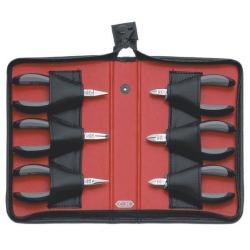
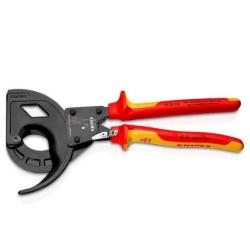
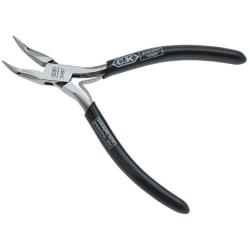
Professional hand tools for electronics manufacturing, assembly, and maintenance demand surface resistances of 10⁶-10⁹ Ω (IEC 61340-5-1) to protect ESD-sensitive components throughout the assembly process. From precision tweezers with tip forces below 20 g to torque screwdrivers calibrated to ±4% accuracy, and crimping tools rated for wire cross-sections of 0.08-16 mm², the right hand tool eliminates rework and protects components rated at <100 V Human Body Model sensitivity.
esd.equipment supplies 3,827 professional hand tools across 13 subcategories - sourced from leading manufacturers and covering ESD-safe, non-sparking, and standard variants. All ESD tools comply with IEC 61340-5-1 and DIN EN 61340-5-2, making this range suitable for EPA-certified workplaces in electronics, semiconductor, medical device, and aerospace production environments.
⚡ ESD surface resistance 10⁶-10⁹ Ω - all ESD tools comply with IEC 61340-5-1 for EPA-certified workplaces
🔍 Torque accuracy ±4% - calibrated torque tools per ISO 6789 for traceable fastening
🛠 3,827 tools across 13 categories - crimping, stripping, tweezers, pliers, cutters and more
⚙ Wire range 0.08-16 mm² - crimping and stripping tools for AWG 10-30 and metric cross-sections
🛡 Non-sparking ATEX zone 1/21 - Al-Cu and Be-Cu alloys per DIN EN 13237 for hazardous areas
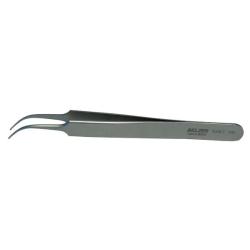
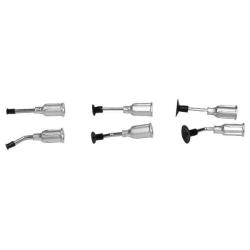
✓ SMD component handling from 0201 - vacuum pipettes and tweezers with tip force <20 g for micro-assembly
ESD-safe vs. Standard vs. Non-sparking - Hand Tool technical comparison
Criterion
ESD-safe tools
Standard tools
Non-sparking tools
Surface resistance
10⁶-10⁹ Ω (IEC 61340-5-1)
>10¹¹ Ω (insulating)
Conductive (metal alloy)
Discharge protection
HBM <100 V, CDM <200 V
None
Not applicable
Material (handles)
Carbon-filled polymer, dissipative
Standard plastic / rubber
Al-Cu or Be-Cu alloy
Applicable standard
IEC 61340-5-1, DIN EN 61340-5-2
DIN EN ISO 5745 (pliers)
DIN EN 13237, ATEX zone 1/21
Typical application
EPA, SMT, PCB assembly
General workshop use
Oil, gas, chemical plants
Spark risk
Controlled static discharge only
Possible (metal-on-metal)
None (alloy design)
Calibration / traceability
Periodic resistance test per IEC 61340-5-2
Not required
Material cert. required
Typical application areas:
Electronics manufacturing and SMT assembly (IPC-A-610, IEC 61340-5-1), semiconductor wafer handling (SEMI S1/S2), medical device production (ISO 13485), automotive electronics assembly (IATF 16949, VDA 6.3), aerospace and defense (AS9100D), oil, gas and chemical maintenance in ATEX zones (DIN EN 13237), precision mechanics and R&D laboratories
✓
3,827 tools in stockESD-safe, non-sparking and standard variants from leading manufacturers
🛡
IEC 61340-5-1 compliantAll ESD hand tools tested and certified for EPA workplace use
🔍
Torque & calibrationISO 6789 traceable torque tools with ±4% accuracy for audited production
This website uses cookies to improve your experience. By clicking “Accept”, you consent to the use of ALL the cookies. However you may visit Cookie Settings to provide a controlled consent.