
Cable cutter or side cutter - which tool should you pick?
Cable cutters and side cutters both sever conductors, but for different cross-sections and materials. This guide shows which tool cleanly cuts which size, when a ratchet mechanism is worth it and why copper and steel need different blades.
View cable cuttersContents
How do a cable cutter and a side cutter differ?
A side cutter is a plier-type tool with two ground cutting edges that pinch through the material. A cable cutter instead has two crescent-shaped, drawing blades that wrap around the conductor and shear it all the way round without crushing it.
A side cutter suits thin single wires and fine strands up to around 6 mm² of copper. As soon as you tackle multi-core round cables or large cross-sections, the side cutter deforms the cable and flattens the strands. The cable cutter produces a clean, round cross-section that is easy to process afterwards with ferrules or cable lugs.
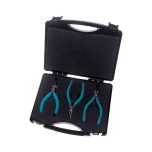 Tools & Workshop
From the side cutter to the hydraulic cable cutter - the full overview.
View productsWhich tool for which conductor cross-section?
The conductor cross-section in mm² decides the tool. Material matters too: cable cutters are made for soft copper and aluminium, not for hardened steel wire or steel rope - that is a job for bolt cutters.
- Copper and aluminium: classic cable cutter with crescent-shaped blades.
- Hardened steel or wire rope: never with a cable cutter - the blades chip.
- Insulated round cable: the cable cutter cuts the full section without deforming it.
- Fine-strand wire in the cabinet: a precise electronic side cutter.
When does a ratchet function pay off?
A ratchet cable cutter transfers your hand force in several small steps and so builds up a much higher cutting force. Instead of one squeeze you cut in several strokes, with the ratchet holding each position. This pays off from around 50 mm², where a plain cable cutter demands too much grip strength.
For the occasional cut on thin cable the ratchet brings no benefit and only makes the tool slower and more expensive. Anyone cutting large cross-sections daily tires quickly without one and risks ragged cuts. Many ratchet models have a release lever that reopens the blade after a mis-cut without severing the cable.
How do you keep the blades sharp for long?
Clean, oiled blades and the right use case decide the service life. Cable cutters are intended solely for copper and aluminium; a single cut into a steel nail or wire rope can chip the hardened edges.
- Clean the blades after use and oil them lightly so they do not rust.
- Grease the joint regularly, and on ratchet models the mechanism too.
- Cut only Cu and Al, no steel, no nails, no screws.
- When blades go blunt, many models take replacement blades instead of a new tool.
Frequently asked questions
Can I cut steel rope with a cable cutter?
No. Cable cutters are hardened for soft copper and aluminium. Steel rope or hardened wire will chip the blades. For that you need a bolt cutter or a dedicated wire-rope cutter.
From which cross-section is a ratchet cable cutter worth it?
From around 50 mm². Below that a simple mechanical cable cutter is enough. For daily cuts of large cross-sections the ratchet noticeably saves grip strength and gives clean results.
Why does my side cutter crush thick cable?
The side cutter has straight edges that squeeze the cable rather than shearing it round. For cross-sections above about 6 mm² you need a cable cutter with crescent-shaped blades.
Does a cable cutter need replacement blades?
With heavy use, yes. Many quality models have exchangeable blades so you renew only the edge, not the whole tool. That is cheaper and saves resources.
Looking for the right cable cutter?
From a fine side cutter to a ratchet cable cutter for 240 mm² - questions about the selection? Send us a message.
Matched to the section
Tools for every range from 1 to 240 mm².
Brand quality
Hardened blades and ergonomic handles.
Ratchet options
Low-effort models for large cross-sections.
Selection help
We help you choose the right products; technical details are clarified with the manufacturer.