
ESD Packaging: Shielding, Dissipative or Conductive?
Not every antistatic bag protects the same way. This guide explains the difference between shielding bags, dissipative and conductive packaging to IEC 61340-5-3 and shows which material suits which component.
View ESD packagingWhat ESD packaging types exist?
ESD packaging splits into three families: shielding, dissipative (static dissipative) and conductive materials. IEC 61340‑5‑3 defines the properties a package for electrostatic discharge sensitive (ESDS) devices must meet.
The key difference is dissipation versus shielding. Dissipative and conductive materials drain charges, but do not necessarily protect the contents from an external field or a discharge. A shielding bag, by contrast, forms a Faraday cage around the component.
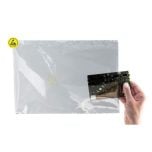
- Shielding: metallised multi-layer laminate, usually silvery-transparent, acts as a Faraday cage.
- Dissipative: pink or clear film, surface resistance 10⁶ to under 10¹¹ Ω, drains charge slowly.
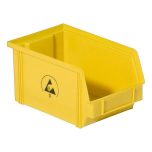
- Conductive: black, carbon-loaded film or boxes, surface resistance under 10⁴ to 10⁶ Ω.
What resistance values apply under IEC 61340-5-3?
Packaging materials are classified by surface or volume resistance. IEC 61340‑5‑3 distinguishes conductive, dissipative and insulative, and additionally defines the decisive shielding property (energy inside after a discharge).
Which packaging when? Practical selection
The choice depends on whether the packaging is used inside or outside the ESD protected area (EPA) and how sensitive the device is. Outside the EPA, shielding is decisive; inside, dissipative material is often enough.
- Shipping and transport of PCBs or components: shielding bag, heat-sealed or closed with ESD tape.
- Storage and handling inside the EPA: dissipative bags, foams or trays.
- Direct grounding and dissipation, robust reusable containers: conductive carbon-loaded boxes.
- Sensitive parts on tape or in tubes: conductive or dissipative trays depending on HBM/CDM sensitivity.
Frequently asked questions
What is the difference between dissipative and shielding?
Dissipative packaging drains charge in a controlled way but does not protect the contents from external fields. A shielding bag forms a Faraday cage and blocks discharges from outside. For transport beyond the EPA you need shielding.
Is a pink antistatic bag enough for shipping?
No. Pink polyethylene is dissipative and only prevents the bag itself from charging. It does not shield. Shipping sensitive components requires a metallised shielding bag to IEC 61340‑5‑3.
Why are conductive boxes black?
The black colour comes from the carbon loaded into the material, which makes it conductive (under 10⁴ to 10⁶ Ω). Charges drain quickly once the box is grounded.
Must ESD packaging carry a marking?
Yes. Compliant packaging carries the ESD protective symbol (the crossed-out lightning bolt in a triangle) and the standard reference. This makes it clear at goods-in that ESD handling is required.
Looking for the right ESD packaging?
We supply shielding bags, dissipative films and conductive boxes - tested to IEC 61340-5-3 and matched to your EPA.
Standard-tested
Materials compliant with IEC 61340-5-3.
Full range
Shielding, dissipative and conductive from one source.
Measurably safe
Resistance and shielding values documented.
Selection help
We help you choose the right products; technical details are clarified with the manufacturer.