
ESD packaging: shielding, conductive or dissipative?
ESD packaging protects sensitive components from charging and discharge. There are dissipative, conductive and shielding types. What matters is transport: outside the EPA only shielding packaging (a shielding bag) protects.
View ESD packagingWhich types of ESD packaging exist?
There are three basic types: dissipative (slow, controlled draining), conductive (fast draining, usually black) and shielding (a shielding bag with a metallised layer acting as a Faraday cage). Only shielding packaging also protects components from external discharges.
When shielding, conductive or dissipative?
The choice depends on place and purpose. Inside the EPA draining is enough; for transport and storage outside, only shielding protects.
| Packaging type | Principle / resistance | Use |
|---|---|---|
| Dissipative (pink) | 105-1011 Ω, slow draining | inside the EPA |
| Conductive (black) | < 104 Ω, fast draining | trays, magazines in the EPA |
| Shielding (shielding bag) | metallised layer, Faraday cage | shipping / storage outside EPA |
What do colour and marking mean?
Colour and symbol indicate the function. Pink usually means dissipative, black conductive, transparent-metallised shielding. The ESD protective symbol (triangle with a hand) marks compliant packaging.
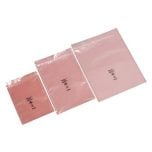 Pink (dissipative)
Bags and films for handling inside the EPA.
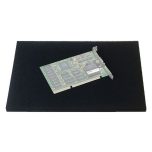 Black (conductive)
Trays, magazines, foam for direct component contact.
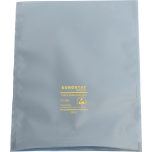 Shielding bag
Metallised bag with Faraday effect for shipping.
How do you test and choose ESD packaging?
The governing standard is IEC 61340‑5‑3. It sets requirements and test methods for ESD packaging - such as surface and volume resistance as well as the shielding attenuation of shielding bags.
Practical rule: choose the packaging by the component's route. If it stays in the EPA, dissipative or conductive is enough. If it leaves the EPA, it belongs in a shielding bag - ideally with a humidity indicator for moisture-sensitive devices (MSD).
Frequently asked questions
Is a pink antistatic bag enough for shipping?
No. Pink (dissipative) only prevents charging but does not shield. For shipping outside the EPA you need a shielding bag.
What is the difference between conductive and dissipative?
Conductive (< 104 Ω) drains charge very fast, dissipative (105‑1011 Ω) slowly and in a controlled way. For direct component contact dissipative is often preferred.
Can ESD packaging be reused?
Yes, as long as it is undamaged. Shielding bags with tears or a broken metal layer lose their Faraday effect and must be replaced.
The right ESD packaging for every route
Dissipative bags, conductive trays and shielding bags - compliant with IEC 61340-5-3.
Standard-compliant
Packaging to IEC 61340-5-3.
Reviewed
Content reviewed by ESD specialists.
Full range
Bags, trays, boxes and shielding bags.
Selection help
We help you choose the right products; technical details are clarified with the manufacturer.