
Choosing a Hardness Tester - Rockwell, Vickers or Leeb?
Rockwell, Vickers and Leeb measure hardness in very different ways. This guide shows which method fits your material and part size, and when a portable instrument sensibly complements or replaces a benchtop tester.
View hardness testersContents
Rockwell, Vickers or Leeb - what does each measure?
All three methods determine hardness, the resistance of a material to penetration by a harder body, but in fundamentally different ways. Rockwell (ISO 6508) measures the permanent indentation depth of a diamond cone or ball and gives a direct number. Vickers (ISO 6507) presses in a diamond pyramid and calculates hardness from the optically measured indent diagonal. Leeb (ISO 16859) is a dynamic rebound method used in portable instruments.
Rockwell is fast and easy to read and dominates in production and incoming inspection. Vickers is the most accurate method for small, thin or case-hardened surface layers, but it requires a polished surface and microscope evaluation. Leeb measures via the rebound velocity of an impact body and is the go-to method for large, heavy parts that do not fit in the lab.
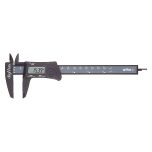 Measurement and Testing
From hardness tester to caliper - how to equip the inspection bench.
View productsWhich method suits your material and part size?
The choice depends on hardness range, wall thickness, surface and part mass. Soft metals, thin sheet and case-hardened layers need a fine method with low load, while large forgings or welds can only be tested sensibly with a portable unit.
- Hardened steel and series inspection: Rockwell HRC is fast and robust.
- Case layers, sheet under 2 mm, small parts: Vickers or low-load HV.
- Grey cast iron and coarse grain: Brinell with a large ball averages the structure.
- Massive castings, shafts, welds on site: portable Leeb instrument.
- The part must rest firmly - support thin parts when using the Leeb method.
Portable or benchtop - when is each worth it?
Benchtop units deliver the highest reproducibility and are the standard for acceptance and series testing in a climate-controlled room. Portable instruments (Leeb or handheld UCI) go to the part when it is too large, too heavy or already installed.
The UCI method (Ultrasonic Contact Impedance) is a portable alternative to Leeb: a Vickers diamond oscillates with ultrasound and measures the frequency shift as it penetrates. UCI also handles thin-walled parts and hard-to-reach spots where Leeb fails because of the mass it requires.
What else matters when buying and operating?
A hardness tester is only as good as its calibration and surface preparation. Hardness reference blocks per ISO 6508‑3 / 6507‑3 belong to the basic kit and are used for a check before every test series.
- Plan reference blocks that match the method and hardness range.
- Polish the surface for Vickers, at least grind it smooth for Leeb.
- Account for the impact direction with Leeb or choose units with position compensation.
- Ask for a traceable ISO/DAkkS calibration certificate for acceptance testing.
- Check interchangeable indenters (diamond/ball) and matching test forces.
Frequently asked questions
Rockwell or Vickers - which is more accurate?
Vickers is more accurate for thin layers and small parts because the load is freely selectable and the indent is measured optically. Rockwell is faster and more practical for series testing of hardened steel.
When do I need a portable Leeb instrument?
Whenever the part is too large or heavy for a benchtop unit, such as shafts, castings or installed components. For Leeb the part should weigh at least about 2 to 5 kg or be well supported.
Can I convert HLD values to HRC?
Approximately yes, per ISO 18265, but only for the matching material. Conversions are estimates and do not replace direct measurement in the required method.
What is UCI and what is it good for?
UCI is a portable method with an ultrasound-excited Vickers diamond. It measures thin-walled and light parts where the Leeb rebound method fails due to a lack of part mass.
Looking for the right hardness tester?
We stock benchtop Rockwell and Vickers testers plus portable Leeb and UCI instruments for your hardness testing.
To standard
Instruments per ISO 6508, 6507 and 16859.
Calibrated
Reference blocks and traceable calibration certificate.
Portable and benchtop
From the bench unit to the handy Leeb tester.
Selection help
We help you choose the right products; technical details are clarified with the manufacturer.