
How to choose a thread tap and die set correctly
A thread tap and die set cuts internal and external threads by hand and re-cuts damaged threads. This guide shows how to tell metric coarse from fine thread, which HSS grade suits your work, and which tap-wrench equipment you need for repairs.
View thread cutting toolsCoarse or fine thread - which do you need?
Metric threads to DIN 13 come as coarse (M) and fine (MF) pitch. On a coarse thread the pitch is fixed to the diameter, for example M8 with 1.25 mm pitch. Fine threads have a smaller pitch such as M8x1 and resist loosening under vibration better.
For repair work you first have to identify the existing thread. Measure the outside diameter with a caliper and the pitch with a thread gauge. Only then can you tell whether an M or MF tap and die is correct.
Which HSS grade is the right one?
Hand taps and dies are usually made of tool steel (WS), HSS or HSS-E. Tool steel is cheap and fine for soft materials. HSS is heat resistant and the standard for most repairs, while HSS-E contains about 5 % cobalt and cuts tough and alloyed steel with far better durability.
- WS (tool steel): for aluminium, brass and plastic, low life in steel.
- HSS: heat resistant to around 600 °C, a good all-round choice for mild steel and cast iron.
- HSS-E (with cobalt): for stainless, high-strength and alloyed steel, longer tool life.
- Check the tolerance class - for most fasteners class 6H is sufficient.
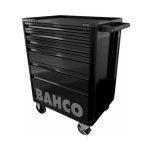 Workshop hand tools
An overview of matching hand tools and accessories for the workshop.
View productsWhich tap-wrench equipment belongs in the set?
The tap wrench guides the tap straight, while the die stock holds the round die. An adjustable tap wrench with two jaws covers a whole diameter range, whereas fixed wrenches are stiffer and more accurate per size.
For repairs a complete set of taps, dies, both holders and a matching drill set is the most practical. You can cut new threads and re-cut existing, dirty or slightly damaged threads without replacing parts.
Frequently asked questions
Which tapping drill do I need for M8?
For M8 coarse thread drill the tapping hole at 6.8 mm. As a rule of thumb the tapping drill equals the diameter minus the pitch, so 8 - 1.25 is roughly 6.8 mm.
HSS or HSS-E - which is better?
HSS covers most repairs on mild steel and cast iron. For stainless, alloyed and high-strength steel HSS-E with cobalt pays off because it is more heat resistant and stays sharp longer.
Can I cut a fine thread with a coarse-thread tap?
No. Coarse and fine threads have different pitches at the same diameter. You need an MF tap and die with the correct pitch, for example M8x1.
Why three taps per size?
The taper tap starts the thread, the plug tap deepens it and the bottoming tap forms the full profile down to a blind-hole base. This spreads the cutting force and gives a clean thread.
Looking for a tap and die set?
We supply hand taps and dies in HSS and HSS-E, together with tap wrenches and die stocks - ready for repair and new cutting.
Proven quality
HSS and HSS-E tools to DIN standards.
Complete sets
Taps, dies and wrenches in one set.
Metric M and MF
Coarse and fine thread from M3 to M12.
Selection help
We help you choose the right products; technical details are clarified with the manufacturer.