
Warehouse labelling: how do you mark storage locations with labels, barcodes and colour codes?
Clear warehouse labelling makes picking fast and error-free. Label holders, barcode and QR labels, colour codes and kanban cards guide every reach to the right place. A consistent location system keeps stock findable and supports the FIFO principle in daily operation.
View labellingWhy does clear labelling make picking faster?
Clear warehouse labelling leads every movement straight to the right place. When shelf, compartment and bin are marked unambiguously, staff reach rather than search. That saves time in picking and cuts wrong picks, because item and location match at a glance.
Labelling works on several levels: labels name the location, barcodes and QR codes make it machine-readable, colour codes separate areas visually, and kanban cards flag replenishment needs. Together they form a system that orders the material flow - from the storage bin to the flow rack.
Which labelling method suits which use?
Not every method fits every location. Label holders, adhesive labels, barcodes, colour codes and kanban cards each have their own strengths. The overview below matches the common methods to their typical use.
| Method | Use | Feature |
|---|---|---|
| Label holder | shelf, shelf level, bin edge | magnetic, C-profile or self-adhesive, label replaceable |
| Barcode or QR label | scanning for inventory and booking | machine-readable, links location to the system |
| Colour code | separate areas and zones | quick visual mapping without reading |
| Kanban card | trigger reordering | signals reorder point, controls replenishment |
| Location number | name the location uniquely | consistent scheme aisle-rack-level-bin |
Magnetic holders sit on steel shelving and reposition without residue. C-profile rails hold label strips, self-adhesive holders grip where magnets cannot. Barcode labels add the machine-readable layer for scanners and inventory on top of the printed marking.
How do you build a consistent location system?
A consistent location system is the basis of any labelling. Three building blocks carry it: a continuous numbering scheme, replaceable label carriers, and the machine-readable link by barcode. That keeps every item findable and lets the labelling grow with the warehouse.
Name aisle, rack, level and bin to a fixed pattern so every location is unique and sortable.
Label holders instead of fixed stickers - the marking can be swapped without residue when rearranging.
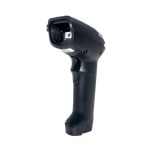 Barcode link
Every location and bin carries a code that ties stock and booking together in the system.
Colour codes and kanban cards add control to the system: colours separate zones, cards trigger replenishment at the reorder point and so support the FIFO principle. The right mix of holder profile, label format and colour scheme depends on shelving type and part range - questions? Send us a message.
Frequently asked questions
Which label holders are used for warehouse labelling?
Common types are magnetic holders for steel shelving, C-profile rails for inserting label strips, and self-adhesive holders for non-magnetic surfaces. All take replaceable labels, so the marking can be adjusted without residue.
What are barcode or QR labels used for in the warehouse?
They make location and bin machine-readable. With a scanner, put-away, picking, booking and inventory are captured quickly and error-free, because the code links location and item directly to the system.
How does labelling support the FIFO principle?
Colour codes and kanban cards make visible which stock should be used first and flag replenishment needs. Combined with a consistent location system, the oldest stock stays findable and is picked first.
Warehouse labelling for fast, error-free picking
Label holders, barcode labels, colour codes and kanban cards - matched to shelving type, part range and a consistent location system.
Unique
Every storage location clearly and consistently marked.
Reviewed
Content reviewed by storage specialists.
Scannable
Barcode and QR labels for inventory and booking.
Selection help
We help you choose the right products; technical details are clarified with the manufacturer.