
What is a load cell and how do you select one?
A load cell converts force or weight into an electrical signal and is the heart of every scale and many force test rigs. This guide explains the common designs, the decisive key figures such as rated capacity, accuracy class and protection rating, and helps you select the right cell.
Explore measurementHow does a load cell work?
A load cell converts a mechanical force into a proportional electrical signal. Most cells carry strain gauges bonded to a spring element made of aluminium or steel. Under load the element deforms minimally, the strain gauges change their resistance and a Wheatstone bridge delivers a millivolt-level output signal.
The signal is usually referenced to the supply voltage and stated in mV/V. A cell rated at 2 mV/V delivers roughly 20 mV at 10 V excitation and rated load. An amplifier or A/D converter turns this small signal into a displayable weight value.
Which types exist and what are they used for?
The design depends on how force is introduced and how the cell is mounted. Single-point cells carry a complete platform, bending beams and shear beams suit hoppers and platform scales, compression cells take very high loads in test rigs. The table below maps the common types to their use.
- Single-point: square aluminium cell, compensates off-centre load, ideal for small platforms
- Bending beam: rugged steel body, strong value for the mid load range
- Shear beam: high side-load tolerance, proven in silos and multi-cell weighing systems
- Compression cell: takes pure compressive force, designed for very high loads and force measurement
Which key figures decide the selection?
Four key figures drive the choice: the rated capacity must match the maximum load plus reserve, the accuracy class (such as OIML C3 with 3000 divisions) sets the resolution, the output signal in mV/V must match the amplifier, and the IP protection rating decides suitability for wet or dusty environments.
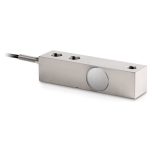 Rated capacity
Choose the maximum load with a safety reserve so the cell is not overloaded.
Learn more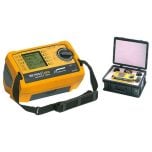 Accuracy class
OIML C3 or C6 defines the permitted divisions and thus legal-for-trade capability.
Learn more
Frequently asked questions
What does the mV/V figure on a load cell mean?
mV/V is the output signal referenced to the supply voltage. At 2 mV/V and 10 V excitation the cell delivers about 20 mV at rated load. The value must match the input range of the amplifier.
What does the accuracy class OIML C3 stand for?
OIML C3 designates a load cell with up to 3000 permitted divisions. The class is the basis for legal-for-trade scales in retail and industry; C6 with 6000 divisions is even finer.
How much reserve should the rated capacity have?
The rated capacity should exceed the maximum expected load plus the platform's own weight. A reserve protects against overload from shocks or off-centre loading and extends the cell's service life.
Find the right load cell
Design, rated capacity and protection rating matched to your scale or test rig - questions about the selection? Send us a message.
Verified key figures
Class and design data based on common OIML and IP standards.
Wide load range
From milligram precision to several hundred tonnes of compressive force.
Selection help
We help you choose the right products; technical details are clarified with the manufacturer.
For harsh environments
Designs with high protection ratings for wet and industrial areas.