
How to choose a pH meter for the lab or process line?
A pH meter is only as accurate as its electrode, its temperature compensation and its calibration. This guide compares combination electrodes, automatic temperature compensation (ATC) and calibration buffers to DIN 19266 so you can pick the right instrument for lab or process.
To the guidesContents
What does the combination electrode do?
The heart of every pH meter is the combination electrode, which unites the measuring and reference electrode in one glass body. The glass membrane produces a pH-dependent voltage that the meter converts to a pH value using the Nernst equation - at 25 °C this is theoretically 59.2 mV per pH unit.
The reference electrode supplies a stable potential through a diaphragm junction to the sample. Membrane shape, electrolyte and diaphragm differ by application - a common reason why an electrode that works in drinking water fails in wastewater or emulsions.
- Ceramic diaphragm: the standard for clean, aqueous samples.
- Ground-glass or sleeve junction: clog-resistant for dirt, suspensions and emulsions.
- Flat membrane: for surfaces, skin, paper and semi-solid samples.
- Spear tip: for meat, cheese and soils.
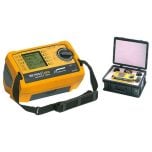 Measurement overview
From handheld meter to process analyser - how to pick the right instrument.
View productsWhy is temperature compensation critical?
Electrode slope depends directly on temperature: at 25 °C it is about 59.2 mV/pH, at 0 °C only around 54.2 mV/pH and at 50 °C about 64.1 mV/pH. Without correction, every temperature deviation causes a systematic error.
Automatic temperature compensation (ATC) measures the sample temperature with an integrated or separate sensor (usually Pt1000 or NTC) and corrects the Nernst slope in real time. Note that ATC only compensates the electrode effect, not the real change in sample pH with temperature - for that you need a documented reference temperature.
How do you calibrate with the right buffers?
A pH measurement is only as reliable as its calibration. Calibration buffers with traceable values to DIN 19266 or NIST define the reference points. Common technical buffers are 4.01 - 7.00 - 10.01; for acidic or alkaline ranges you select the matching values.
A two-point calibration with pH 7 (zero point) and a second buffer close to the measuring range is standard. From the calibration the meter derives the zero point (offset) and slope of the electrode - the two most important condition values.
- Use fresh, unused buffers - open bottles age, especially pH 10 through CO₂ uptake.
- Rinse the electrode between buffers with distilled water, do not wipe it.
- Set the calibration interval by workload: often daily in the lab, medium-dependent in the process.
- Read the buffer pH at the calibration temperature, do not assume the nominal 25 °C value.
Lab or process - which instrument fits?
For spot checks and changing samples a handheld or benchtop meter is ideal. For continuous monitoring of boilers, reactors or wastewater, a permanently installed process analyser with an immersion or flow fitting handles measurement around the clock.
Frequently asked questions
Is a one-point calibration enough?
For simple checks near pH 7 a one-point calibration can be sufficient. For reliable results across a wide range, a two-point calibration with pH 7 and a second buffer close to the reading is standard.
What does ATC mean on a pH meter?
ATC stands for automatic temperature compensation. A sensor measures the sample temperature and the meter corrects the temperature-dependent electrode slope so the displayed pH value is correct.
How long do calibration buffers last?
Unopened, usually 1 to 3 years. Once opened, buffers age quickly, especially pH 10 through CO₂. Calibrate with fresh buffers and never pour used solution back into the bottle.
When should I replace the electrode?
When the slope can no longer be calibrated above about 95 percent, the zero point drifts strongly or response time rises noticeably. Glass electrodes age and usually last 1 to 2 years depending on use.
Want to learn more about the right pH meter?
Learn more about handheld and benchtop meters, combination electrodes and calibration buffers to DIN 19266 for lab and process needs in our guide.
Traceable buffers
Calibration buffers with values to DIN 19266 and NIST.
With ATC
Meters with automatic temperature compensation in stock.
Lab and process
From handheld meter to online analyser.
Selection help
We help you choose the right products; technical details are clarified with the manufacturer.