
How to Read a Safety Data Sheet - the 16 Sections
A safety data sheet (SDS) follows a fixed structure of 16 sections under the REACH regulation. This guide shows which sections matter most in practice, how to decode H and P statements, and how to derive the correct personal protective equipment and technical controls.
View PPE and safety gearContents
How is a safety data sheet structured?
Every safety data sheet in the EU follows the same 16-section format set out in Annex II of the REACH regulation (EC) No 1907/2006. This fixed order lets you go straight to the information you need to handle a hazardous substance safely.
Sections 1 to 3 identify the product, supplier, hazards and ingredients. Sections 4 to 8 matter most for daily work: first aid, firefighting, accidental release, handling, storage and personal protective equipment. Sections 9 to 16 provide physical data, stability, toxicology, ecology, disposal and transport.
- Sections 1‑3: identification, hazards, composition.
- Sections 4‑6: first aid, firefighting, accidental release.
- Sections 7‑8: handling, storage, exposure controls and PPE.
- Sections 9‑12: physical data, stability, toxicology, ecology.
- Sections 13‑16: disposal, transport, regulations, other information.
What do H and P statements tell you?
Section 2 gives the classification under the CLP regulation (EC) No 1272/2008, with hazard pictograms, a signal word and the H and P statements. H statements (hazard) describe the danger; P statements (precaution) describe the protective and precautionary measures.
How do I derive the right PPE from Section 8?
Section 8 Exposure controls and personal protection is the core of occupational safety. It lists workplace exposure limits (WEL), biological limits and concrete recommendations for eye, hand, body and respiratory protection.
Follow the hierarchy of controls: first substitution and engineering measures such as extraction, then organisational rules, and only last the personal protective equipment. For hand protection a good SDS states the material (e.g. nitrile or butyl), the breakthrough time and the minimum thickness.
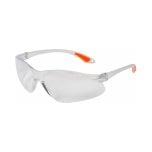
- Eye protection: safety glasses or goggles to EN 166 where splashing is possible.
- Hand protection: check material and breakthrough time to EN 374.
- Respiratory protection: derive filter type (A, B, E, K, P) and class from the limit value.
- Body protection: apron or chemical suit to EN 14605.
- Always compare the stated exposure limit with the actual exposure.
How do I turn an SDS into a work instruction?
The safety data sheet is the source; the workplace instruction is the applied result. Under hazardous-substance regulations and your risk assessment you must translate the SDS data to your specific task.
Frequently asked questions
How many sections does a safety data sheet have?
Exactly 16 sections in a fixed order set by Annex II of the REACH regulation. The structure is identical across the EU so you can find information quickly.
Which section lists the PPE?
Section 8, exposure controls and personal protection, gives limit values and eye, hand, body and respiratory protection. Section 2 adds guidance through the P statements.
What is the difference between H and P statements?
H statements (hazard) describe the danger of a substance; P statements (precaution) describe the recommended protective and precautionary measures. Both appear in Section 2.
How old can a safety data sheet be?
It must reflect the current classification and formulation. The date is in Section 16; when anything changes, the supplier must issue an updated SDS.
Looking for the right PPE for a hazardous substance?
We supply gloves, safety glasses, respirators and chemical protective clothing to match the requirements in Section 8 of the safety data sheet.
Standards-compliant
PPE to EN 166, EN 374 and EN 14605.
SDS know-how
Selection based on the 16 sections and limit values.
Proven quality
Certified protective gear from leading makers.
Selection help
We help you choose the right products; technical details are clarified with the manufacturer.