
Choosing solder wire: which alloy and diameter?
The right solder wire decides whether joints come out clean and reliable. Three factors matter: the alloy (lead-free SAC305 as standard or leaded, where still permitted), the wire diameter matched to the joint, and the flux core. This guide shows what counts.
To the guidesLead-free or leaded - which alloy?
For electronics, lead-free SAC305 (Sn96,5Ag3Cu0,5, melting point ~217 °C) is now the standard and mandatory under RoHS. Leaded solders such as Sn60Pb40 or Sn63Pb37 (~183‑190 °C) melt lower and flow more easily, but are only allowed where exemptions apply.
| Property | Lead-free SAC305 | Leaded Sn60Pb40 / Sn63Pb37 |
|---|---|---|
| Composition | Sn96,5Ag3Cu0,5 | Sn60Pb40 or Sn63Pb37 |
| Melting point | ~217 °C | ~183-190 °C |
| Approval | RoHS-compliant, standard | only where still permitted |
| Processing | needs higher temperature | flows easier, lower temp |
Which diameter suits the joint?
The wire diameter follows the size of the joint: fine 0.5 mm for SMD and small pads, 1.0 mm for larger joints and through-hole parts. A wire that is too thick doses poorly on fine pads, one too thin wastes time on large joints.
| Diameter | Use | Typical for |
|---|---|---|
| 0.3-0.5 mm | very fine | SMD, fine pads, rework |
| 0.7 mm | universal | mixed work |
| 1.0 mm | larger | THT, larger joints |
| 1.5 mm and up | coarse | ground planes, large contacts |
Which flux core do I need?
Solder wire contains a flux core that dissolves oxides and improves flow. Common types are rosin and no-clean. The flux content is typically ~2‑3 %. No-clean leaves little, mostly non-corrosive residue; rosin may require cleaning depending on the application.
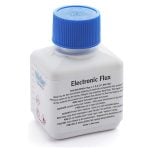
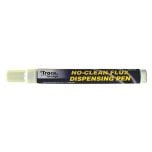
Which flux type suits your application is shown in the guide Flux types.
Frequently asked questions
Which solder wire is standard for electronics?
Lead-free SAC305 (Sn96,5Ag3Cu0,5) with a melting point of ~217 °C is now the standard and required under RoHS for most assemblies.
Which diameter should I choose?
Use 0.5 mm for SMD and fine pads, and 1.0 mm for larger joints and through-hole parts. The diameter should roughly match the size of the joint.
What does no-clean flux mean?
No-clean leaves only little, mostly non-corrosive residue that in many cases does not need cleaning. The flux content in the wire is typically 2‑3 %.
The right solder wire for your work
Lead-free and leaded, in all common diameters and with a suitable flux core: the basics are covered in our guides.
RoHS-compliant
Lead-free solders to the current standard.
Reviewed
Content reviewed by soldering specialists.
Wide choice
Alloys, diameters and flux cores in stock.
Selection help
We help you choose the right products; technical details are clarified with the manufacturer.