
How do you choose solder wire by alloy, diameter and flux?
Your choice of solder wire determines handling, melting point and joint quality. Three criteria matter: the alloy (lead-free SAC or restricted leaded SnPb), the wire diameter matched to the joint and the flux core. This guide places the options in a practical context.
Explore solderingLead-free or leaded - which alloy fits?
For new electronics manufacturing, lead-free solder is standard, usually SAC (tin-silver-copper, e.g. SnAgCu). Leaded Sn63Pb37 melts lower and flows more easily, but RoHS restricts it to exceptions such as repair and defined industrial fields. The alloy sets both melting point and handling.
Which wire diameter suits the joint?
Diameter follows the size of the joint. Thin wire meters precisely for SMD and fine pitch, thicker wire delivers volume quickly for large pads and cables. As a rule of thumb, the diameter roughly matches the width of the surface you need to wet.
- Thin wire: more control, less solder per feed
- Thicker wire: faster work on large connections
- One diameter rarely covers all - two reels are practical
Which flux core should you choose?
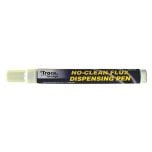
The flux core inside the wire removes oxides and improves wetting. Three types dominate: rosin for classic electronics, no-clean for low-residue work without cleaning and water-soluble for applications with subsequent cleaning. The choice depends on your cleaning concept.
Frequently asked questions
Is lead-free solder harder to work with?
No, it simply needs a higher temperature and yields duller joints. With the right soldering temperature and a suitable flux, reliable connections are easily achievable.
Which diameter is universal?
0,7 to 0,8 mm covers most THT and standard work. Add 0,3 to 0,5 mm for SMD and 1,0 mm or more for large joints.
Do I have to remove no-clean residues?
Usually not, as the residues are non-corrosive. For demanding visual or electrical requirements, cleaning can still be worthwhile.
Find the right solder wire and accessories
From alloy to flux core - find the right solder wire for your application.
Selection help
We help you choose the right products; technical details are clarified with the manufacturer.
RoHS compliant
Lead-free options for standards-based production.
Right selection
Diameter and alloy for every joint.
Selection help
We help you choose the right products; technical details are clarified with the manufacturer.