
Choosing a Sound Level Meter - Class 1 or 2?
A sound level meter records sound pressure in decibels and makes noise objectively measurable. This guide explains accuracy classes 1 and 2 to IEC 61672-1, dB(A) and dB(C) frequency weighting, time weighting and correct use in occupational safety.
View sound level metersContents
What do Class 1 and Class 2 mean?
Sound level meters are graded into two accuracy classes under IEC 61672‑1. Class 1 is the more precise grade for control measurements, expert reports and legally defensible results, while Class 2 is sufficient for indicative measurements and many in-house tasks.
The difference lies in the permitted tolerances and the usable frequency range. A Class 1 instrument holds a tolerance of about ±1.1 dB at 1 kHz and covers the range up to 20 kHz cleanly, whereas Class 2 allows around ±1.4 dB and a slightly narrower frequency response.
Why measure in dB(A) rather than dB?
The human ear does not hear all frequencies equally loud. The A-weighting filters the signal to match the sensitivity of hearing at moderate levels - the result is given in dB(A) and underpins nearly all occupational exposure limits.
The C-weighting attenuates low and high frequencies less and is used for peak levels, for example with impulse noise. The formerly used B- and D-weightings play almost no role today.
- dB(A): hearing-weighted, the standard for continuous level and exposure values.
- dB(C): for peak sound pressure level LC,peak, important for impulse and blast noise.
- dB(Z): unweighted (Zero), shows the physical level without a filter.
- Time weighting Fast (125 ms) or Slow (1 s) depending on signal character.
How do you measure workplace noise correctly?
Across the EU the Physical Agents (Noise) Directive sets the limits. The lower exposure action value is 80 dB(A) and the upper is 85 dB(A) as a daily exposure level; above the upper value hearing protection and noise-area marking become mandatory.
- Position the microphone at the person's head height, without the body acting as a reflector.
- Use a windscreen (foam ball) to prevent airflow distorting the reading.
- Choose a representative measuring period covering a typical work cycle.
- Apply a calibrator (94 dB / 1 kHz) before and after the measurement.
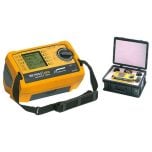
What matters for calibration and accessories?
A sound level meter must be calibrated regularly to keep its readings reliable. For legally defensible measurements a periodic calibration (often every two years) plus a daily on-site check with an acoustic calibrator is standard practice.
- Acoustic calibrator with 94 dB at 1 kHz for field adjustment.
- Data logger and USB interface to document exposure values.
- Third-octave or octave band analysis to select suitable hearing protection.
- Windscreen and tripod for stable, reproducible measurements.
Frequently asked questions
Do I need Class 1 or Class 2?
For legally defensible expert reports and environmental noise control Class 1 is required. For internal control measurements and workplace monitoring Class 2 is usually sufficient.
What does dB(A) mean?
dB(A) is the A-weighted sound pressure level. The filter matches the measurement to human hearing and is the basis for almost all occupational limits.
At what level is hearing protection mandatory?
Above the upper action value of 85 dB(A) as a daily exposure level, wearing hearing protection is mandatory and the noise area must be marked.
How often must a sound level meter be calibrated?
A periodic calibration every two years is common, plus a daily on-site check with an acoustic calibrator before and after the measuring run.
Looking for the right sound level meter?
We supply Class 1 and Class 2 sound level meters, tested to IEC 61672-1, for every measurement task.
Standard-tested
Instruments to IEC 61672-1 in Class 1 and 2.
Calibratable
Matching acoustic calibrators and test gear available.
Occupational safety
Values to the Noise Directive measurably documented.
Selection help
We help you choose the right products; technical details are clarified with the manufacturer.