What are hand tool accessories and what industrial applications do they serve?
Hand tool accessories encompass specialized supporting equipment including ESD-safe work surfaces, replacement components, protective covers, and tool extensions that enhance the functionality of primary hand tools in industrial environments. These accessories serve critical roles in electronics manufacturing, electrical installation, precision assembly, and maintenance operations where contamination control, tool longevity, and operational safety are paramount. Industries including automotive electronics, semiconductor manufacturing, aerospace assembly, and telecommunications infrastructure rely heavily on these accessories to maintain production quality standards and comply with electrostatic discharge protection requirements.
What are the key technical selection criteria for hand tool accessories?
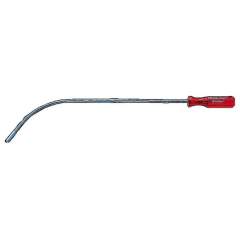
Selection of hand tool accessories requires evaluation of ESD protection levels, dimensional compatibility, material composition, and voltage resistance ratings based on specific application requirements. The Knipex 98 67 series rubber mats offer 10000 mm and 1000 mm lengths with DIN/EN IEC 61112 compliance for electrical safety applications, while replacement tips like the Knipex 46 19 100 series are available in 6 mm and 9 mm diameters for precise tool matching. Material grade selection must consider chemical resistance, temperature stability, and mechanical durability, with ESD-rated accessories requiring surface resistance values between 10^6 to 10^9 ohms for effective static dissipation in sensitive electronic work environments.
Which international standards apply to hand tool accessories and their certifications?
Hand tool accessories must comply with multiple international standards depending on their application, with DIN/EN IEC 61112 governing electrical safety requirements for insulating materials and work surfaces used in live electrical work. ESD protection accessories follow IEC 61340 series standards for electrostatic discharge control in electronics handling, while general tool accessories conform to ISO 9001 quality management standards and relevant CE marking directives. For hazardous area applications, accessories may require ATEX certification under Directive 2014/34/EU, and automotive industry applications often mandate additional compliance with ISO/TS 16949 quality standards to ensure consistent performance in critical assembly operations.
What are the main differences between rubber mat variants and ESD kit configurations?
Rubber mat accessories differ primarily in length specifications and compliance levels, with the Knipex 98 67 20 standmatte offering 1000 mm length for localized work areas while the 98 67 25 extends to 10000 mm for comprehensive floor coverage in larger workstations. Cover cloths like the 98 67 15 provide flexible protection for irregular surfaces compared to rigid standing mats, with the 98 67 10 variant specifically certified to DIN/EN IEC 61112 for electrical work applications. ESD kits such as the Weller 3900KC integrate multiple components including wrist straps, grounding cords, and surface treatments into complete static control systems, contrasting with individual accessory items that address single protection requirements.
What installation requirements and compatibility considerations apply to hand tool accessories?
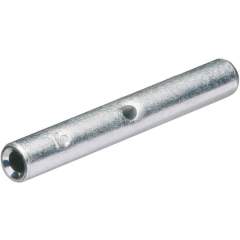
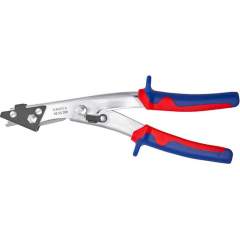
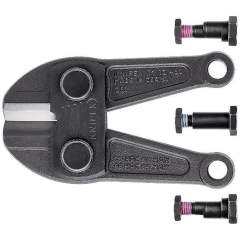
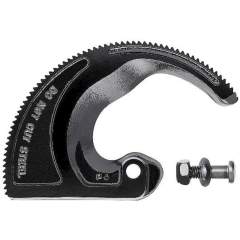
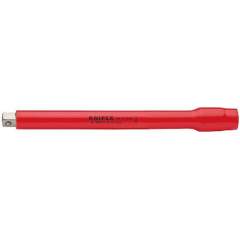
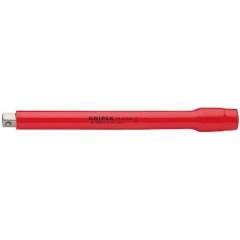
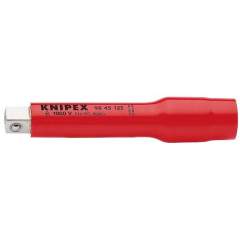
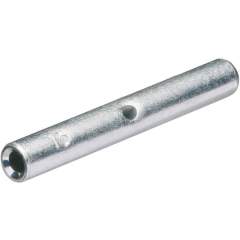
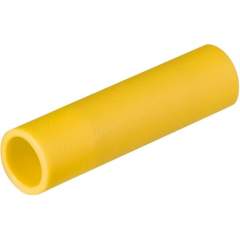
Installation of hand tool accessories requires proper grounding connections for ESD-rated items, with typical earth continuity resistance below 1 megohm and surface-to-ground resistance maintained between 7.5 x 10^5 to 1.0 x 10^9 ohms per IEC 61340-5-1 standards. Replacement components like the Knipex 71 79 910 and 71 89 950 knife heads require specific torque specifications during installation to maintain tool integrity and cutting performance. Ratchet accessories including the 98 31, 98 41, and 98 42 series feature standardized 3/8 and 1/2 inch square drive connections for universal compatibility with socket sets, while connector accessories like the 97 99 252 crimp terminals accommodate cable cross-sections from 4 to 6 mm² for electrical connection applications.
What safety ratings and environmental specifications govern hand tool accessory selection?
Safety ratings for hand tool accessories encompass voltage withstand capabilities up to 1000V AC for insulating materials per IEC 61112, surface resistance classifications from 10^4 to 10^12 ohms for ESD control applications, and mechanical strength ratings ensuring durability under repetitive loading conditions. Environmental specifications typically include operating temperature ranges from -20°C to +70°C for rubber-based accessories, with chemical resistance to common industrial solvents and cleaning agents. Ingress protection ratings vary by application, with enclosed tool storage achieving IP54 dust and water resistance, while open accessories like work mats focus on antistatic properties and slip resistance coefficients exceeding 0.4 for workplace safety compliance.
What maintenance schedules and inspection requirements apply to hand tool accessories?
Maintenance of hand tool accessories follows risk-based inspection intervals, with ESD-sensitive items requiring monthly resistance testing using calibrated meters to verify surface resistance remains within 10^6 to 10^9 ohm specifications per IEC 61340-5-1 guidelines. Replacement components including knife heads and tool tips should undergo visual inspection before each use for wear indicators such as edge dulling, crack formation, or dimensional changes exceeding manufacturer tolerances. Rubber mats and protective covers require quarterly cleaning with approved antistatic solutions and annual replacement in high-use environments, while mechanical accessories like ratchet mechanisms need semi-annual lubrication and torque verification to maintain specified operating parameters throughout their typical 5-year service life expectancy.