
ESD gloves and finger cots - when and which?
ESD gloves and finger cots keep skin oils and sweat off sensitive parts and help control charge on the hands. But they do not replace a wrist strap: on their own they do not ground the person. This guide covers which material fits which task.
View ESD glovesWhy wear ESD gloves?
ESD gloves do two things: they prevent contamination - skin oils, sweat and salts stay off sensitive parts - and their dissipative material helps control charge on the hand. They are an addition, not a stand-alone grounding method.
- protect parts from fingerprints, oils and moisture
- controlled draining of charge across the hand surface
- cleaner grip when handling printed circuit boards
Which material for which use?
Reusable gloves are usually nylon with woven-in carbon or copper fibre; for the cleanroom, dissipative nitrile or latex disposable gloves are used. Finger cots cover only the fingertips when the rest of the hand should stay free.
| Type | Material | Use |
|---|---|---|
| Knit glove | nylon with carbon fibre | handling boards, assembly |
| Coated | nylon with PU fingertips | better grip, fine handling |
| Disposable | dissipative nitrile / latex | cleanroom, contamination control |
| Finger cot | nylon / latex | spot protection of single fingers |
Dissipative or conductive - what is the difference?
Dissipative gloves drain charge slowly and in a controlled way - that is what you want at the bench. Conductive materials drain very fast; direct skin contact during handling is rarely wanted. For ESD protection at the hand, dissipative versions are the rule.
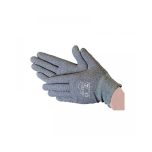 Dissipative
Controlled, slow charge draining - the standard for handling sensitive parts.
View products
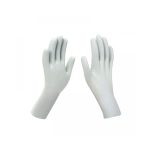 Cleanroom disposable
Dissipative nitrile or latex - combines contamination and ESD control.
View productsGloves are part of the system, not the whole protection. How grounding the person fits in is shown in Wrist strap or heel strap.
Frequently asked questions
Do ESD gloves replace the wrist strap?
No. Gloves help control charge on the hand and protect parts from contamination, but they do not ground the person. A wrist or heel strap is still required.
When are finger cots useful?
When only the fingertips touch the part and the rest of the hand should stay free - for example when placing components or probing single contacts.
Which gloves suit the cleanroom?
Dissipative disposable gloves in nitrile or latex. They combine contamination control with controlled charge draining and come in low-particle packaging.
The right ESD gloves for every task
Knit gloves, coated versions, cleanroom disposables and finger cots - dissipative and clean.
Dissipative
Materials with controlled charge draining.
Reviewed
Content reviewed by ESD specialists.
Full range
Gloves and finger cots from a single source.
Selection help
We help you choose the right products; technical details are clarified with the manufacturer.