
ESD wrist strap or heel strap - which when?
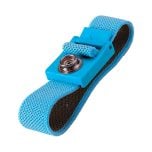
Wrist strap and heel strap both ground the person, but for different situations: the wrist strap suits seated, stationary work, the heel strap standing tasks with movement - and only works together with a dissipative floor.
View personnel groundingWhat is the difference between wrist and heel strap?
The wrist strap connects the person via a coil cord directly to the grounding point - independent of the floor. The heel strap drains the charge through the shoe sole into the floor and therefore only works on a dissipative floor covering.
Wrist strap or heel strap - the comparison
Both must meet the person-to-ground system resistance of < 3,5×10⁷ Ω. The choice depends on posture and movement:
| Feature | Wrist strap | Heel strap |
|---|---|---|
| Way of working | seated, stationary | standing, moving |
| Needs floor | no (direct cord) | yes, dissipative |
| Grounded via | coil cord to EBP | shoe - floor - earth |
| Testing | daily / constant monitor | daily with personnel tester |
How do you test personnel grounding?
Wrist and heel straps are tested every working day before starting - with a personnel tester or continuously via constant monitoring. The ground cord usually contains a 1 MΩ safety resistor.

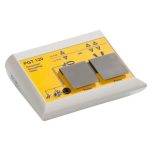
How personnel grounding fits into the whole protected area is shown in Setting up an EPA.
Frequently asked questions
Can you combine wrist and heel strap?
Yes. At sit-stand benches the combination makes sense: the heel strap while standing, the wrist strap while seated. Both must meet the limit value.
Why is a heel strap without a floor not enough?
The heel strap drains charge through the shoe sole into the floor. Without a dissipative floor there is no path to earth - the person stays charged.
How often must it be tested?
Every working day before starting, better continuously via constant monitoring. Each test is documented with reading and limit value.
The right personnel grounding for every bench
Wrist straps, heel straps and personnel testers - compliant with DIN EN 61340-5-1.
Standard-compliant
Personnel grounding to DIN EN 61340-5-1.
Reviewed
Content reviewed by ESD specialists.
Full range
Straps, cords and testers from a single source.
Selection help
We help you choose the right products; technical details are clarified with the manufacturer.