
How do I choose a lift table or height-adjustable table?
A lift table brings the workpiece to the right working height and saves bending and lifting. Four figures decide the choice: load capacity, lift range, table size and the drive. This guide explains each of them and shows what to watch for on mobile versus fixed and on safety.
To the guidesWhich key figures define the lift table?
A lift table, usually built as a scissor lift, raises loads to an ergonomic height in a controlled way. Choose it by four figures: load capacity from the heaviest load, lift range from the height difference you need, table size from the workpiece, and the design mobile or fixed from where it is used.
Load ratings apply to a centred, evenly distributed load. Off-centre or one-sided loads stress the scissor unevenly, so plan a reserve and load the platform as centrally as possible.
| Criterion | What to look for | Note |
|---|---|---|
| Load capacity | heaviest load plus reserve | applies to a centred load |
| Lift range / stroke | lowest to highest height | check the lowered height too |
| Table size | workpiece plus handling | load centred on the platform |
| Design | mobile on castors or fixed | choose lockable castors |
How does a lift table improve ergonomics?
The ergonomic benefit is the core: instead of bending or lifting loads, you bring the workpiece to a comfortable working height. That relieves the back and joints and eases material handling at the workstation and in order picking.
- Manual hydraulic: foot pump or hand lever, low cost, ideal for infrequent adjustment.
- Electro-hydraulic: motor lifts at the push of a button, for frequent adjustment and heavy loads.
- Fixed lift table: high stability at one place, often with higher load capacity.
- Mobile lift table: lockable castors for transport between stations.
- Controlled lowering: a lowering brake valve keeps the descent speed steady.
For repeated lifting the electro-hydraulic drive pays off: it holds the height without effort and fits into the work cycle. For occasional adjustment the manual version is enough and saves on purchase and maintenance.
What do I need to watch for on safety?
A scissor lift table has crush and shear points between the scissors and under the platform. Look for a surrounding safety frame (trip bar) that stops the descent when it meets an obstacle, and a lowering brake valve against sudden drop.
Never load the table above its rated capacity, and load it centrally. On mobile tables lock the castors before lifting. Check the hydraulics and safety frame regularly - that keeps the table safe to operate over time.
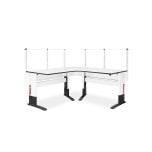
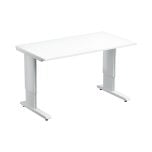 Choosing a workbench
Load capacity, worktop material and height for the right workstation.
View products
Frequently asked questions
How much load capacity should a lift table have?
Base it on the heaviest load plus a reserve. The rated capacity assumes a centred, evenly distributed load - off-centre loads reduce the usable capacity, so plan a buffer for these cases.
Manual or powered - which is better?
Manual hydraulic is low cost and enough for infrequent adjustment. Electro-hydraulic pays off with frequent lifting, heavy loads or when the lift is tied into the work cycle.
How do you make a scissor lift table safe?
With a surrounding safety frame that stops the descent when it meets an obstacle, and a lowering brake valve against sudden drop. Also load centrally, stay within the rated capacity, and lock the castors on mobile tables before lifting.
Lift tables for ergonomic handling
From the mobile scissor lift to the fixed electric lift table - with the right load capacity, lift range and safety features for back-friendly work.
High load capacity
Scissor lift tables for loads up to 2000 kg.
Reviewed
Content reviewed by workplace specialists.
Safe
Safety frame and lowering brake valve against crushing and sudden drop.
Selection help
We help you choose the right products; technical details are clarified with the manufacturer.