
Workplace ergonomics: what height, reach and posture?
An ergonomic workplace matches height, reach and posture to the task: precision work above elbow height, normal work at elbow height, heavy work below it. Height-adjustable benches, the right reach zones, a suitable chair and good lighting relieve the back, shoulders and eyes.
View workplacesWhich working height is right for which task?
The right working height is set by the person's elbow height and by the task. Precision and close-vision work sits above elbow height, normal assembly at elbow height, and force-intensive work below it. Height-adjustable and sit-stand benches adapt to the person and the task and allow switching between sitting and standing.
| Task | Example | Working height vs elbow height |
|---|---|---|
| Precision work | soldering, inspection, fine assembly | 5-10 cm above elbow height |
| Normal work | assembly, packing, hand work | at elbow height |
| Heavy work | force, material handling | 10-30 cm below elbow height |
| Posture change | sit-stand bench | adjustable, sit and stand |
How do I arrange the reach zones correctly?
Reach zones divide the work surface by how easily it is reached. Frequently used tools and parts belong in the primary zone - the area the forearm covers with the upper arm at the side. Less-used items move to the secondary and tertiary zones. That keeps twisting and long reaching the exception.
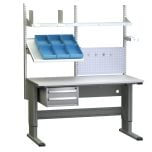 Primary zone
Arc of the forearm with the upper arm at the side. Keep tools and parts needed every cycle here.
ViewSecondary zoneOutstretched arm without turning the trunk. Material and aids for occasional access.
ViewWhat role do chair, monitor, lighting and mats play?
Height and reach only work together with the rest of the setup. An ergonomic chair with lumbar support, a correctly placed monitor, glare-free lighting and anti-fatigue mats at standing stations relieve the spine, neck, eyes and legs across the whole day.
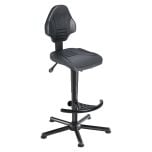 Chair and support
Height so the feet rest flat and thighs and lower legs sit near a right angle; the backrest supports the lumbar spine.
View productsMonitor and gazeTop edge at or just below eye level, gaze slightly down, about an arm's length away, screen side-on to the window.
View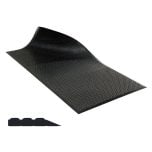 Anti-fatigue mat
At a standing station a mat cushions the stance, encourages small movements and relieves legs and back.
View productsGood light is part of ergonomics: bright enough, even and glare-free. How much lux and which light colour suit each task is covered in the guide on workplace lighting.
Frequently asked questions
How do I find the right working height?
Start from elbow height with the person relaxed and the elbow at a right angle. Precision work sits above it, normal assembly at elbow height, force-intensive work below. A height-adjustable bench lets you fine-tune per person and task.
What belongs in the primary zone?
Everything used constantly - the main tool, frequently fitted parts, test gear. The primary zone is the area the forearm reaches with the upper arm at the side and no trunk twist. Less-used items go to the outer zones.
Is a sit-stand workplace worth it?
Yes. Switching between sitting and standing relieves the spine and circulation and keeps the muscles active. A height-adjustable bench allows the change without rebuilding; at standing stations an anti-fatigue mat adds to the effect.
Set up an ergonomic workplace
Height-adjustable benches, ergonomic chairs, lighting and anti-fatigue mats - matched to your tasks.
Reviewed
Content reviewed by workplace specialists.
Ergonomic
Equipment based on recognised ergonomic principles.
Full range
Benches, chairs, lighting and mats from one source.
Selection help
We help you choose the right products; technical details are clarified with the manufacturer.