
How to set up an analytical balance for 0.1 mg weighing
An analytical balance resolves down to 0.1 mg and reacts to the slightest vibration, draught or temperature change. This guide explains how to choose the location and weighing table, calm the environment and use internal adjustment for reproducible results.
View analytical balancesWhere should an analytical balance stand?
The location decides half of your measurement quality. A corner on the ground floor, well away from doors, windows, air outlets and walkways, is ideal. Two solid walls damp vibration far better than the middle of a flexing floor.
The weighing table carries the balance decoupled from its surroundings. A heavy stone or granite slab on a free-standing frame absorbs footfall and building vibration without passing it to the balance. The table must not touch the wall or any shelving, so shocks cannot couple across.
- Room corner with two load-bearing walls instead of the centre.
- Dedicated weighing table with a stone slab, decoupled from wall and floor.
- Distance from doors, windows and air conditioning or ventilation outlets.
- No shared furniture with vibrating equipment.
How do you control draughts and temperature?
At 0.1 mg resolution even small air movements and temperature differences act like an extra weight. The draught shield must be fully closed while weighing, and the room temperature should stay stable over the whole measurement.
- Let the balance warm up on mains power for 30 to 60 minutes before the first reading.
- Handle samples with tweezers or tongs, not with warm fingers.
- If the air is very dry (below 40 % RH), remove static charge with an ioniser.
- Keep doors and ventilation closed during a weighing series.
What does internal adjustment do?
Internal adjustment sets the balance to current conditions using a built-in reference mass. It compensates for temperature, location and local gravity and is the basis for reproducible 0.1 mg results.
Modern analytical balances adjust automatically (often labelled adjust internal or isoCAL) whenever the temperature changes by a set amount or a time interval elapses. Leave this automatic adjustment enabled in the lab, because it corrects drift before it distorts the result.
- Keep automatic temperature and time adjustment enabled.
- Adjust manually after warm-up and before important weighing series.
- Always read the result from the stable display, not while it is settling.
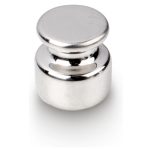
- Check regularly with an external class E2 test weight.
Frequently asked questions
Why does the last digit of my analytical balance fluctuate?
Usually vibration, draughts or a temperature difference of the sample are the cause. A low-vibration weighing table, a closed draught shield and acclimatised samples stabilise the reading.
How long does an analytical balance need to warm up?
Leave the balance on mains power for at least 30 to 60 minutes after switching on so the electronics and weighing cell stabilise thermally. Then run one internal adjustment.
What is the difference between adjustment and calibration?
Adjustment sets the balance correctly using a reference mass. Calibration measures and documents the remaining deviation with traceable test weights but does not change the balance.
Do I need a special weighing table?
For 0.1 mg weighing, yes. A heavy stone slab on a decoupled frame damps building and footfall vibration far better than a normal lab bench.
Looking for an analytical balance for your lab?
We supply analytical balances with 0.1 mg readability, internal adjustment and a matching draught shield for a low-vibration setup.
Precise to 0.1 mg
Balances with high resolution and a stable weighing cell.
Internal adjustment
Automatic adaptation to temperature and location.
Standards compliant
Tested to OIML R76 and traceably calibratable.
Selection help
We help you choose the right products; technical details are clarified with the manufacturer.