
How do you choose and ground an ESD bench mat correctly?
The ESD bench mat is the dissipative work surface that safely bleeds charge from parts and personnel to ground. This guide explains its construction, the correct dissipative resistance per DIN EN 61340-5-1, grounding via a cord with a 1 MΩ resistor, plus material choice, cleaning and care.
View ESD bench matsHow is an ESD bench mat built and how does it work?
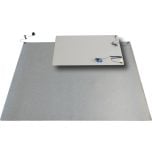
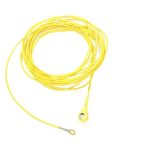
An ESD bench mat consists of two layers: a dissipative top surface where parts are placed safely, and a conductive base that quickly collects charge. Through snap studs and a ground cord with a 1 MΩ resistor, the charge flows in a controlled way to the common earth bonding point.
The dissipative top layer limits the discharge current so that sensitive parts are not drained abruptly. The conductive base layer distributes the potential evenly across the whole surface. This brings both the parts and the operator's hands to a single common ground potential.
What matters for material and dissipative resistance?
The decisive factors are the dissipative resistance Rg and the material. Per DIN EN 61340‑5‑1 the resistance to ground in the dissipative range should be roughly 10⁶ to 10⁹ Ω. Rubber mats resist heat and soldering better, vinyl mats are cheaper and softer - both must reliably meet the resistance values.
- Rubber (e.g. NBR): resistant to heat, solder splashes and solvents - ideal for soldering benches.
- Vinyl (PVC): softer, more affordable, comfortable for general assembly without a heat source.
- Always at least one ground cord per mat, ideally a second connection point for redundancy.
How are ESD bench mats cleaned and maintained?
ESD bench mats are cleaned with a dissipative ESD cleaner and a soft, lint-free cloth. Aggressive household or silicone cleaners are off limits because they form an insulating film that raises the dissipative resistance uncontrollably. Regular measurements ensure lasting function.
Important: the ESD bench mat is not to be confused with the ESD floor mat. The bench mat protects the work surface for parts and hands; the floor mat is mechanically more robust, forms the personnel discharge path together with ESD footwear, and is designed to be walked on. Both serve distinct roles within the same ESD protection concept.
Frequently asked questions
Why does the ground cord contain a 1 MΩ resistor?
The resistor limits current flow in case of accidental contact with a live voltage, protecting the person, while still letting static charge drain to ground fast enough.
What dissipative resistance should an ESD bench mat have?
Per DIN EN 61340‑5‑1 the resistance to ground should sit in the dissipative range, typically about 10⁶ to 10⁹ Ω. This ensures charge is drained in a controlled way rather than abruptly.
Rubber or vinyl - which mat is better?
Rubber is more resistant to heat and solvents and suits soldering benches. Vinyl is softer and cheaper and fits general assembly without a heat source. Both must meet the standard's resistance values.
Looking for the right ESD bench mat?
We supply dissipative bench mats in rubber and vinyl - tested to DIN EN 61340-5-1. Choose the right version for your workplace.
Standard-tested
All mats meet the requirements of DIN EN 61340-5-1.
Fully grounded
Grounding set with 1 MΩ cord and snap studs included.
Measurably safe
Dissipative resistance Rg documented and reproducibly testable.
Selection help
We help you choose the right products; technical details are clarified with the manufacturer.