JBC soldering technology
Soldering
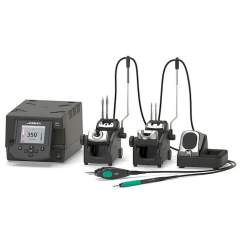
JBC soldering technology stands for temperature-controlled soldering irons and stations with rapid heat-up times and high thermal stability. The range covers compact and high-performance stations, soldering and desoldering irons, automated soldering equipment, and all accessories from tips to holders and extraction hoses. JBC systems are ESD-safe by design and meet the requirements of modern EPA workstations.
Categories
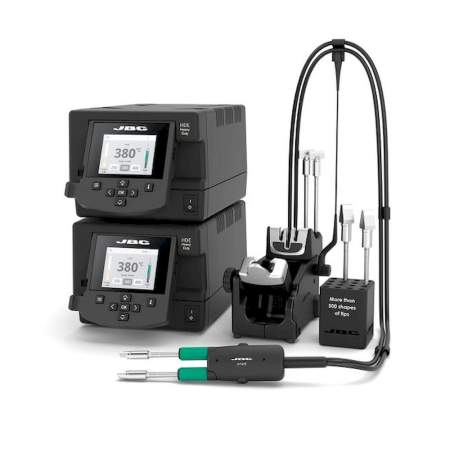 Soldering stationsCompact Line and advanced stations with digital and analogue control
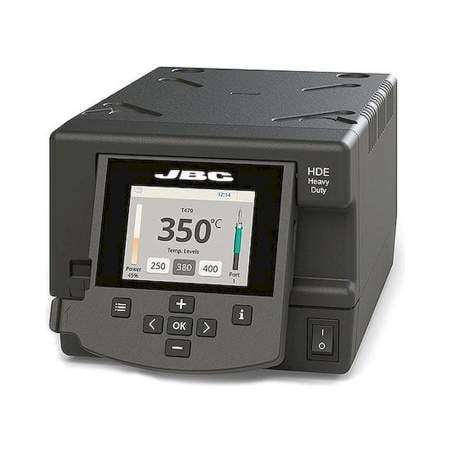 Supply unitsPower and control units for JBC multi-channel stations
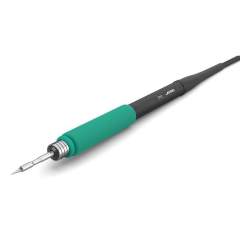
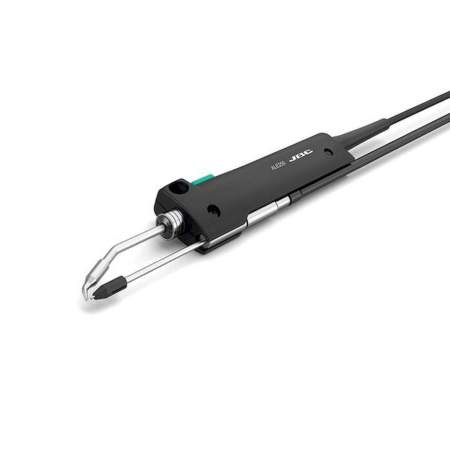 Soldering toolsHandpieces for JBC stations, ESD-safe, various heating capacities
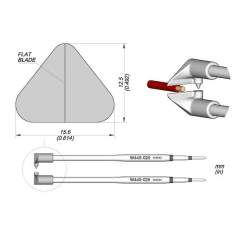
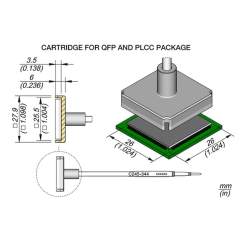
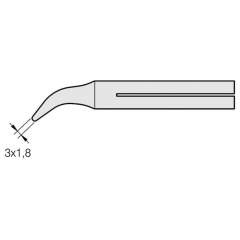
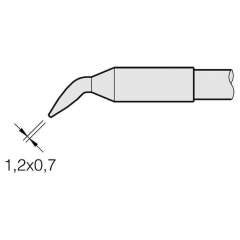
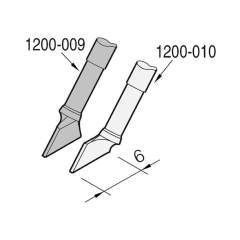
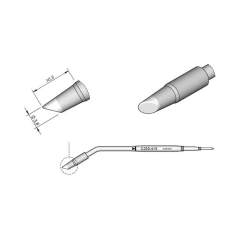
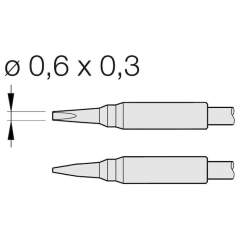
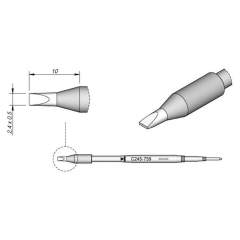
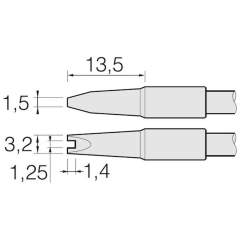
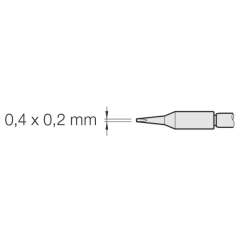
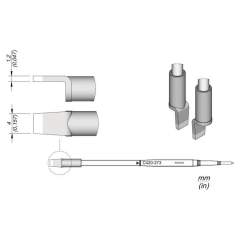
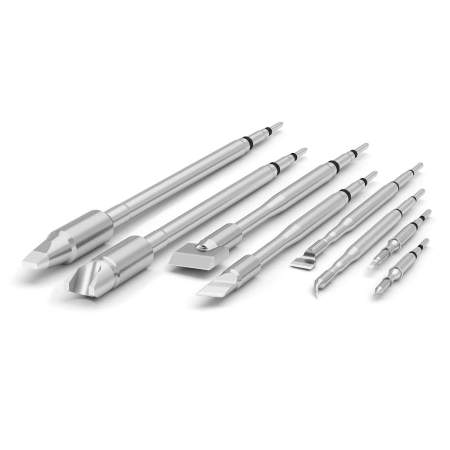 Soldering tipsC, T and PA tips for all JBC irons and stations
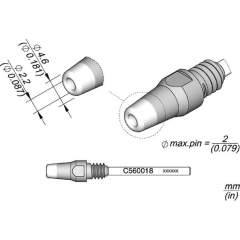
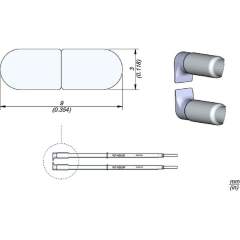
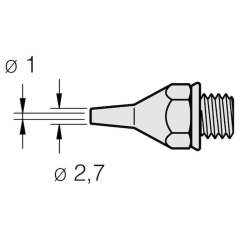
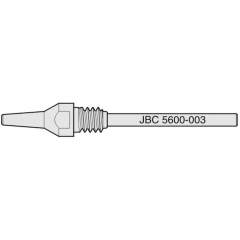
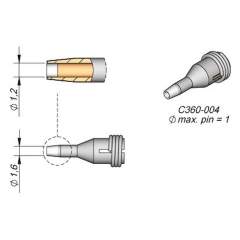
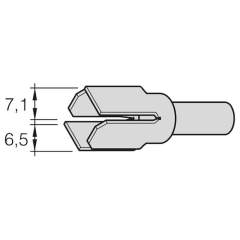
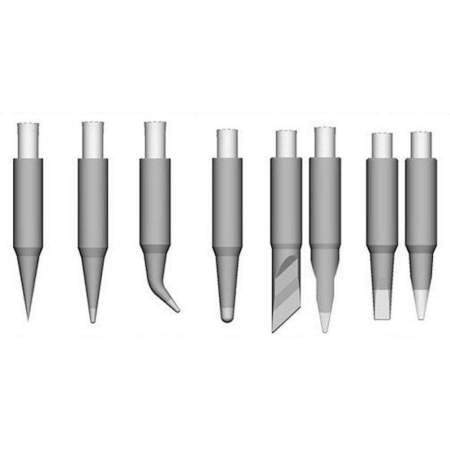 Desoldering tipsDesoldering nozzles and hollow tips for JBC desoldering stations
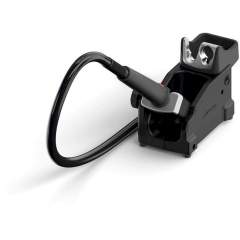
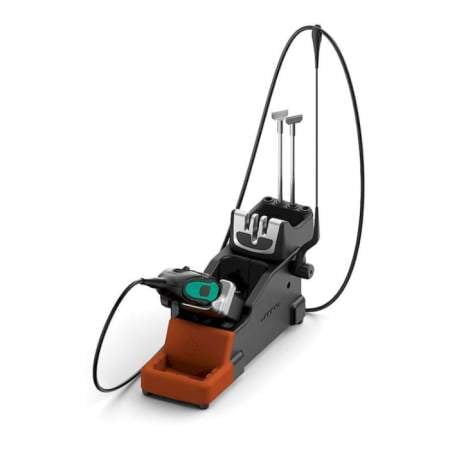 Stands for soldering stationsSafe holders for JBC soldering and desoldering irons
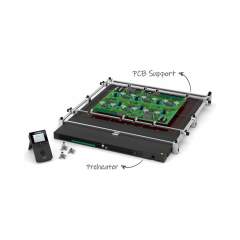
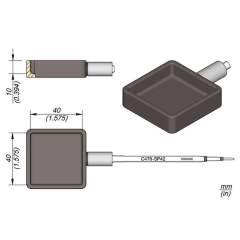
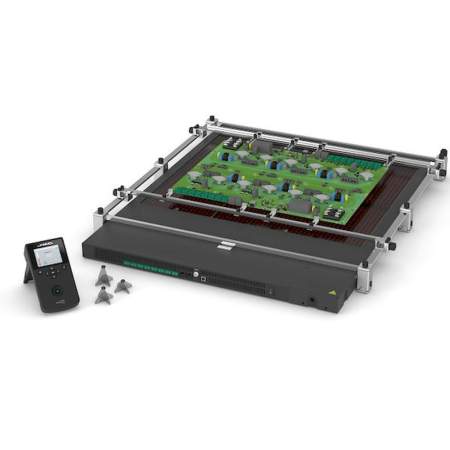 UnderheaterPreheating plates and underheat modules for rework and BGA work
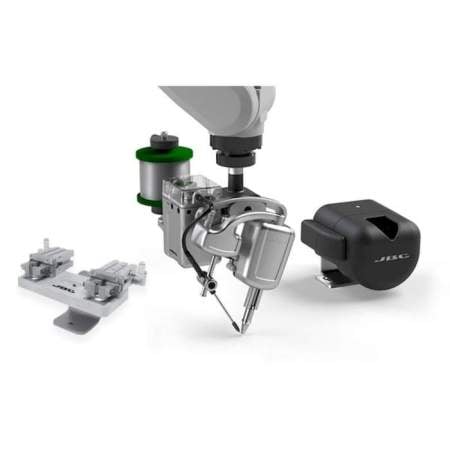 Automated processesRobot soldering systems and automated heads for series production
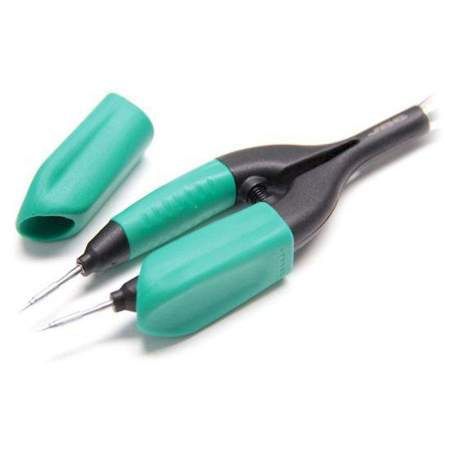 ConsumableSolder, flux, cleaning materials and filter inserts for JBC stations
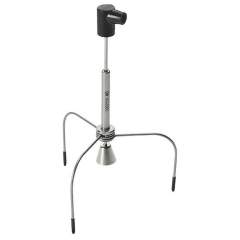
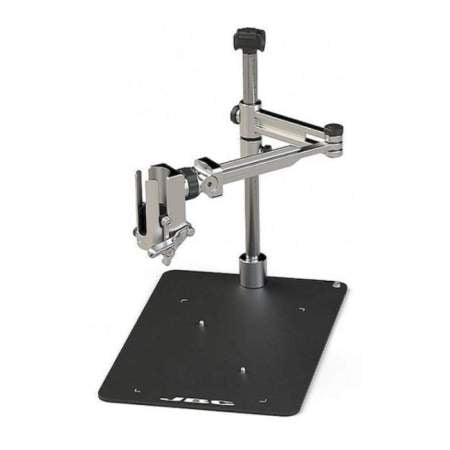 Accessories and spare partsHoses, clips, filters, cleaning accessories for JBC systems
Rapid heat-up - patented Sleep/Hibernation system for short standby times and extended tip life
ESD-safe design - all handpieces and stations per DIN EN 61340-5-1, suitable for EPA use
Compact and high-performance stations - from single station to multi-channel supply unit for production lines
Automated soldering - programmable heads for robot and production line integration
Tip compatibility - C, T and PA series cover standard through fine-pitch applications
| Product group | Application | Feature |
|---|---|---|
| Soldering stations | Repair, manufacturing | Digital and analogue control, Compact Line |
| Soldering irons | Manual soldering, ESD-safe | Handpieces for all JBC stations |
| Power supply units | Multi-channel industry | Central control for up to 4 tools |
| Automated soldering | Robot, series production | Programmable heads, process repeatability |
| Preheater | Rework, BGA | Preheating plates for even heat distribution |
Typical applications: SMT hand soldering and rework in electronics manufacturing, BGA rework with preheating, automated soldering at assembly lines, repair and maintenance in after-sales environments, and development and prototyping in EPA-certified laboratories.