
Workplace lighting
Ring lights and inspection lights
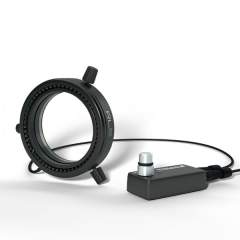
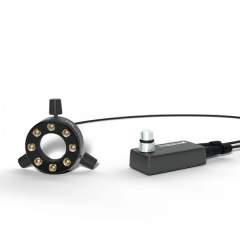
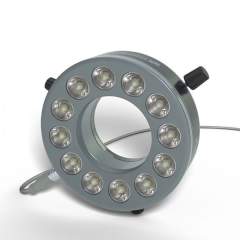
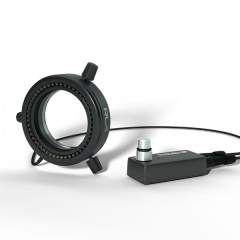
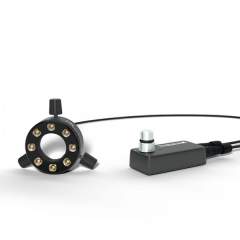
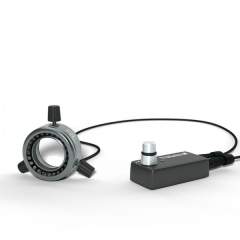
Ring lights and inspection lights sit around the optics and illuminate the object field of microscopes, measuring machines and industrial machine vision with little shadow. The category centres on Starlight, alongside ring lights from Zeiss, Vision, Euromex, 4H Jena, Eschenbach, Leica and Pulch & Lorenz. Power input ranges from 4 W to 66 W, colour temperatures from 3000 K to 6500 K and supply voltages from 10-24 V to 100-240 V. A ring light is chosen by its clamping or outer diameter, the usable working distance and the optics; besides LED rings there are fibre optic versions and ring slit lights.
These filters lead straight to the most common selection criteria in this category.
- 328 items
- 9 manufacturers
- Net prices plus VAT
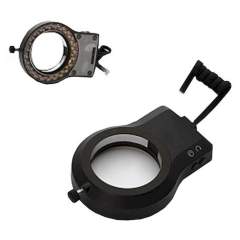
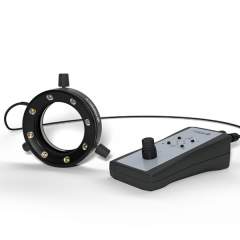
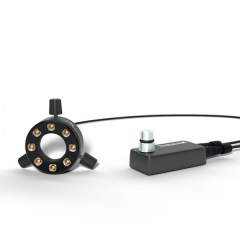
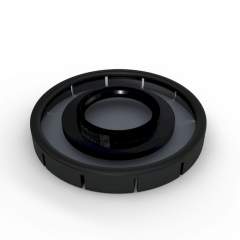
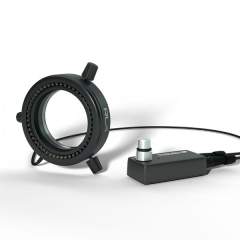
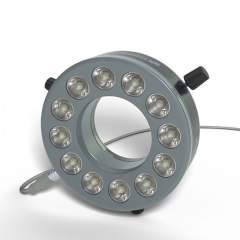
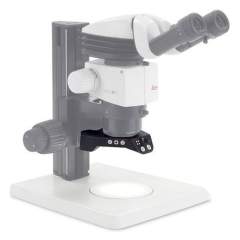
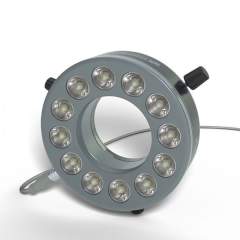
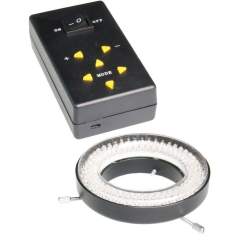
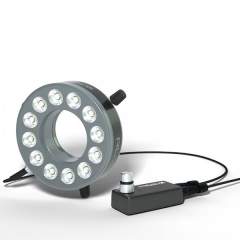
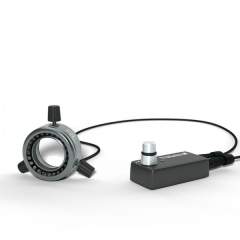
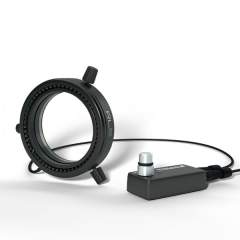
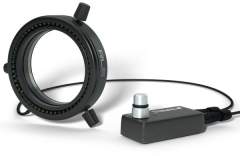
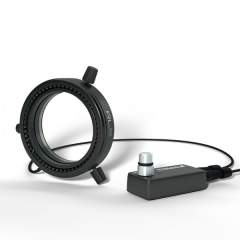
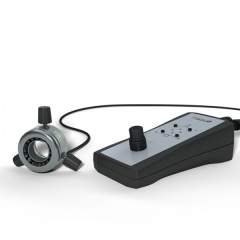
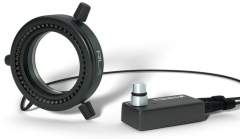
Buying guide
How to choose Ring lights and inspection lights
What matters when choosing: properties, comparison and typical applications.
Selection criteria
| Criterion | What to check | Available here |
|---|---|---|
| Clamping and outer diameter | The ring light has to fit over the objective tube without covering the field of view. | Stated per item, for example inner Ø 81 mm, outer Ø 99 mm or clamping Ø up to 80 mm |
| Working distance and optics | Spot optics concentrate light at short range, flood optics cover a wider area. | 45-260 mm with spot optics, 50-800 mm with flood optics |
| Colour temperature | Cool white emphasises edges and scratches, warm white is easier for judging colour. | 3000 K, 3500 K, 4000 K, 5600 K, 5800 K, 6000 K and 6500 K |
| Power | More power means more light at a longer working distance, but also more heat. | 4 W to 66 W, with 15 W as the most common class |
| Beam angle | The angle decides how wide the cone of light lands on the part. | 80° and 90° on the versions with a stated angle |
| Control | Switchable segments create directional grazing light, dimming reduces reflections. | Switchable (HF) and dimmable |
| Supply | Check whether the light is fed from the machine control or from its own power supply. | 24 V, 18-24 V and 10-24 V DC as well as 100-240 V |
| Manufacturer | Adapters and mounts depend on the make of the microscope. | Starlight as the main source, plus Zeiss, Vision, Euromex, 4H Jena, Eschenbach, Leica and Pulch & Lorenz |