


Cable and Utility Locating
Leica Geosystems Construction and Surveying
Cable and utility locating identifies buried cables, pipes and ducts before excavation, drilling or directional boring. The active method follows the transmitter and receiver principle: a signal transmitter applies a signal to the line, the locator picks it up and determines both route and depth. Passive locating adds power and radio frequency modes that work without any connection to the line. This branch covers the DD locators and locating sets, the ULTRA systems consisting of receiver and signal transmitter, and the accessories from sondes to signal clamps.
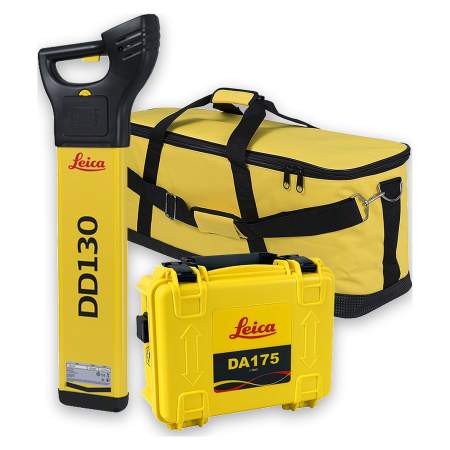 DD Locators and SetsLocators DD120 to DD300 Connect, as single units and as sets with transmitter
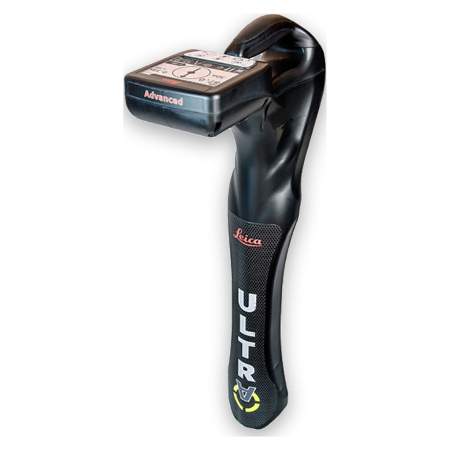 ULTRA Locating SystemsUltra receivers and 5 W or 12 W signal transmitters, complete systems
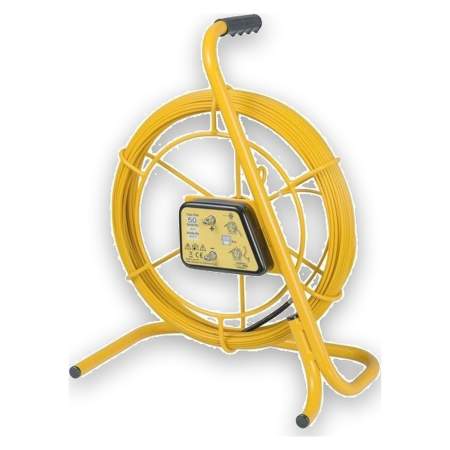 Accessories for LocatorsSondes, tracing rods, signal clamps, A-frames, bags and charging equipment
| Series | Use | Feature |
|---|---|---|
| DD120 | Basic locating | Depth estimate to 3 m, also as Plumbers Package with Midi Sonde |
| DD130 | Sonde locating | Depth Package with transmitter, sonde depth to 9.99 m |
| DD175 | Documented locating | GPS, Bluetooth and data logging, 50 Hz or 60 Hz version |
| DD300 Connect | Deep utilities | up to 7 m depth, colour display, GPS and Bluetooth |
| Ultra Standard and Advanced | Utilities, civil works | more than 100 frequencies, to 4.6 m, Advanced with AIM |
| DA signal transmitters | Signal injection | direct connection, signal clamp or induction |
Typical applications: Route surveys ahead of earthworks in civil and road construction, exposing service connections and cable distribution points, tracing non-metallic pipes with a sonde, and cable identification and fault finding in network operation.


