What are tolerance rings and ball transfer units in industrial linear technology applications?
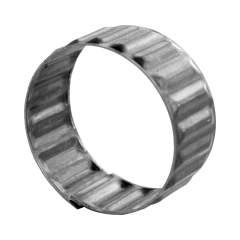
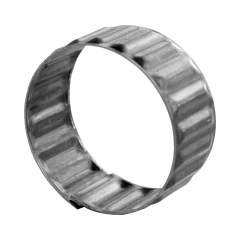
Tolerance rings and ball transfer units are precision mechanical components essential for frictionless linear motion systems in manufacturing automation, material handling, and assembly line applications. Ball transfer units enable omnidirectional movement of heavy or sensitive workpieces with minimal friction coefficients, while tolerance rings provide precise shaft-housing connections with controlled interference fits. These components are extensively used in automotive production lines, packaging machinery, semiconductor manufacturing equipment, and precision positioning systems where smooth linear guidance and accurate component alignment are critical for operational efficiency.
How do I select the correct tolerance ring size for my Bosch Rexroth linear system?
Tolerance ring selection depends on shaft diameter, housing bore diameter, and required interference fit specifications, with Bosch Rexroth offering sizes from AN80X39 to ANS160X26 configurations. The first number indicates the nominal shaft diameter in millimeters, while the second number represents the axial length, such as the AN100X25 providing 100mm shaft diameter compatibility with 25mm axial engagement. Selection criteria include maximum radial load capacity, operating temperature range typically from -40°C to +120°C, and required torque transmission capability which varies from 15 Nm for smaller AN85X19 units to over 200 Nm for larger ANS160X26 configurations.
What ISO standards and certifications apply to industrial tolerance rings and ball transfer systems?
Industrial tolerance rings must comply with ISO 286-2 for shaft and hole tolerances, DIN 7190 for interference fits, and ISO 9001 quality management standards for manufacturing consistency. Ball transfer units are governed by ISO 12100 for machinery safety requirements and DIN EN 619 for continuous handling equipment specifications. Bosch Rexroth components additionally meet ISO 14001 environmental management standards and are manufactured according to ISO 4762 for socket head cap screw compatibility, ensuring reliable integration with standard industrial mounting hardware and precise dimensional consistency across production batches.
What are the differences between AN, ANS, and BN series tolerance rings from Bosch Rexroth?
The AN series tolerance rings feature standard wall thickness for general industrial applications with medium torque transmission, while ANS series incorporate increased wall thickness for higher load capacity applications requiring enhanced radial strength. BN series tolerance rings are designed with specialized material compositions for applications demanding superior corrosion resistance and extended service life in harsh operating environments. The BN series, including models like BN120X28 and BN90X30, typically provide 25-30% higher torque transmission capacity compared to equivalent AN series units, making them suitable for heavy-duty conveyor systems and high-cycle automation equipment.
What are the installation requirements and system compatibility for Bosch Rexroth linear components?
Installation requires shaft surface roughness between Ra 0.8 to Ra 3.2 micrometers and housing bore tolerances according to ISO H7 standard for optimal interference fit engagement. Tolerance rings must be pressed into position using hydraulic or mechanical press equipment with controlled force application, typically requiring 50-150 bar installation pressure depending on component size. System compatibility includes standard metric threading M6 to M20, mounting hole patterns conforming to DIN 6912, and interface compatibility with Bosch Rexroth profile systems including 40x40mm and 45x45mm aluminum extrusion frameworks commonly used in industrial automation assemblies.
What are the operating temperature and pressure specifications for these linear motion components?
Bosch Rexroth tolerance rings operate reliably within temperature ranges from -40°C to +150°C with brief excursions to +180°C, maintaining dimensional stability and material properties throughout this range. Ball transfer units withstand continuous operating loads up to 500N per unit with peak loads reaching 750N, while tolerance rings provide radial load capacity ranging from 2000N for AN85X19 units to over 8000N for larger ANS160X26 configurations. These components maintain IP54 protection class against dust and water spray ingress, ensuring reliable operation in typical industrial environments including machining centers, assembly stations, and material handling systems.
What maintenance intervals and service life expectations apply to industrial tolerance rings and ball transfers?
Tolerance rings require visual inspection every 2000 operating hours for signs of wear, fretting, or dimensional changes, with complete replacement recommended after 8000-12000 hours depending on load conditions and operating environment. Ball transfer units should undergo lubrication maintenance every 1000 operating hours using ISO VG 32 synthetic lubricant, with ball bearing replacement intervals of 15000-20000 hours under normal load conditions. Service life expectancy reaches 25000-30000 hours for tolerance rings in standard industrial applications, while ball transfer units typically achieve 40000-50000 hours of continuous operation when properly maintained according to Bosch Rexroth specifications and operating within rated load parameters.
How do I determine the correct ball transfer unit load capacity for my material handling application?
Ball transfer unit load capacity calculation requires considering both static load weight and dynamic forces including acceleration, deceleration, and directional changes during material movement. Individual units typically support 50-500kg static loads depending on ball diameter and housing construction, with load distribution requiring minimum 3-4 units per transported item for stability. Safety factors of 2.5-3.0 should be applied to calculated loads, accounting for shock loading, uneven weight distribution, and potential impact forces, while spacing between units should not exceed 300mm center-to-center distance for rigid items or 200mm for flexible materials to prevent sagging and ensure smooth omnidirectional movement.
What lubrication and environmental protection features are standard in Bosch Rexroth linear components?
Bosch Rexroth ball transfer units incorporate sealed precision bearings with lifetime lubrication using synthetic grease rated for -30°C to +120°C operation, eliminating routine lubrication requirements in standard applications. Tolerance rings feature corrosion-resistant surface treatments including zinc plating or stainless steel construction for applications exposed to moisture, chemicals, or wash-down procedures. Environmental sealing achieves IP65 protection class in sealed ball transfer variants, protecting internal mechanisms from dust, cutting fluids, and water spray commonly encountered in machining and assembly operations while maintaining smooth operation and extended service intervals.