
Measuring and Testing Tools
Rules and Tape Measures
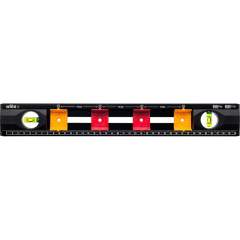
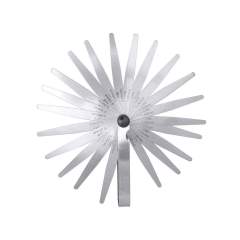
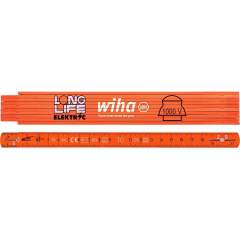
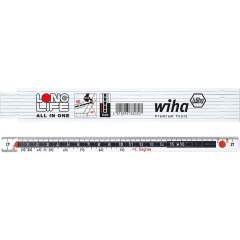
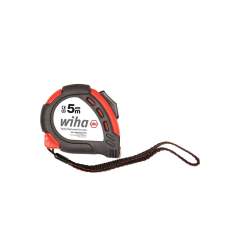
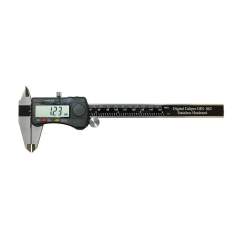
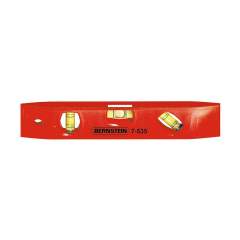
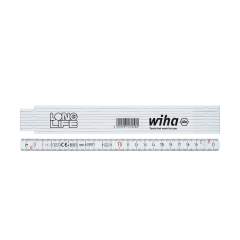
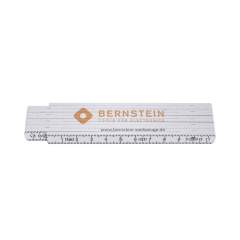
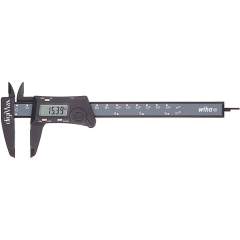
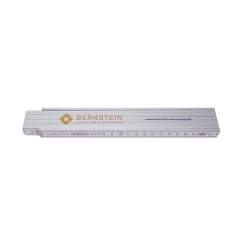
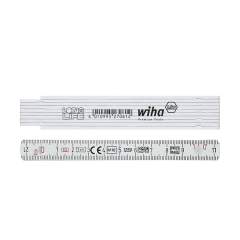
Rules and tape measures supply the length dimensions for marking out, cutting and assembly, and in electronics and industrial workshops they sit alongside finer dimensional checks with calipers and feeler gauges. Tape measures and folding rules carry an accuracy class under the EU Measuring Instruments Directive: class I has the tightest error limits, classes II and III allow larger deviations, and a beech folding rule in this range is class III. Steel rules with etched graduations stay legible where printed scales wear away in workshop use. Besides length measures the group holds calipers with a 150 mm range and 0.1 or 0.01 mm reading, including a dissipative ESD version for workstations to IEC 61340-5-1, along with feeler gauges from 0.05 to 2.0 mm and spirit levels from 210 to 400 mm. The category holds 33 articles from Wiha, C.K, Bernstein and Piergiacomi.
- 35 items
- 4 manufacturers
- Net prices plus VAT







Buying guide
How to choose Rules and Tape Measures
What matters when choosing: properties, comparison and typical applications.
Technical features
Types and measuring ranges
| Type | Measuring range | Graduation or reading | Application |
|---|---|---|---|
| Folding rule | 1 and 2 m | mm, 10 sections | on-site assembly and cutting |
| Tape measure | 2 to 8 m | mm | longer distances, cable and duct runs |
| Steel rule and straight edge | 300 mm | metric and imperial | marking out at the bench |
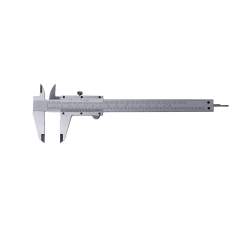
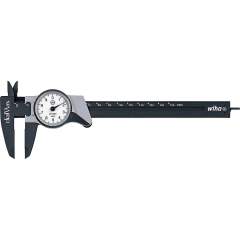
| Caliper | 150 mm | 0.1 or 0.01 mm | external, internal and depth measurements |
| Feeler gauge | 0.05 to 2.0 mm | blade thickness, 21 blades | checking gaps and clearances |
Typical applications
Typical applications: marking out and cutting sheet metal, sections and enclosures; measuring cable runs and duct routes during installation; checking component dimensions at goods inwards; verifying gaps on cabinet doors and covers with the feeler gauge; levelling mounting plates and assemblies with the spirit level; dimensional checks at ESD workstations with a dissipative caliper.