
Tweezers
Tweezer Sets
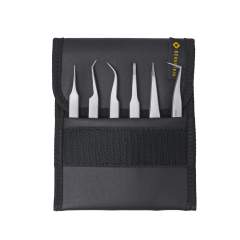
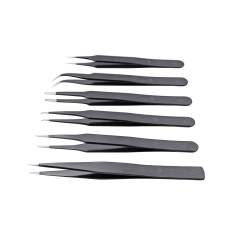
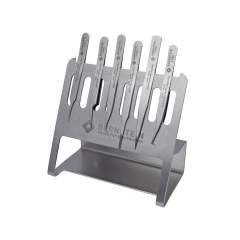
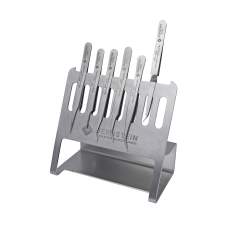
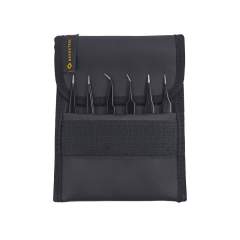
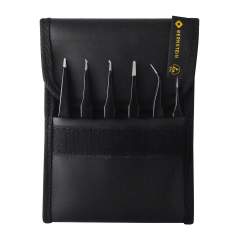
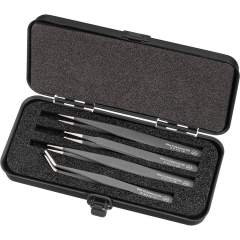
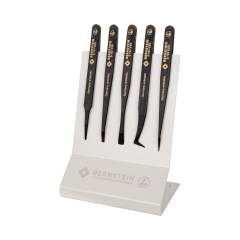
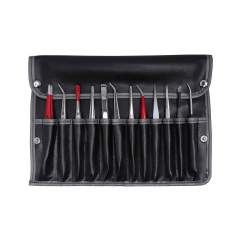
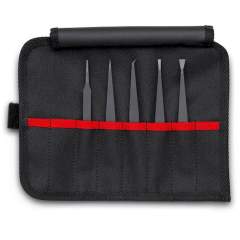
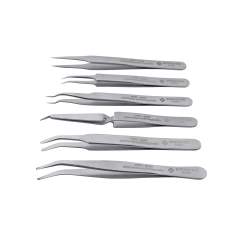
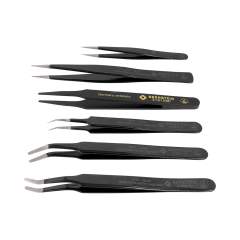
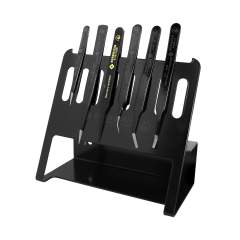
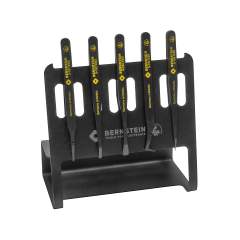
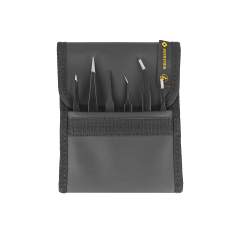
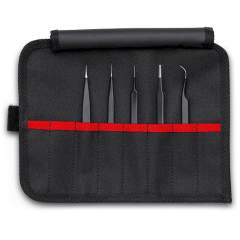
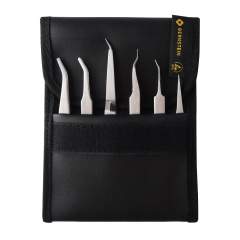
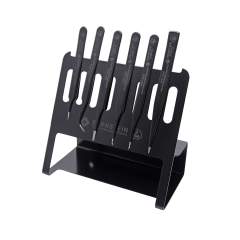
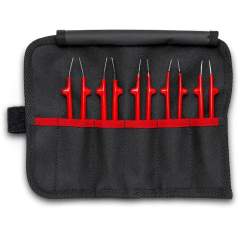
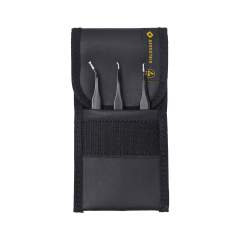
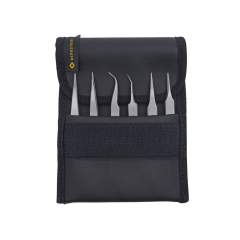
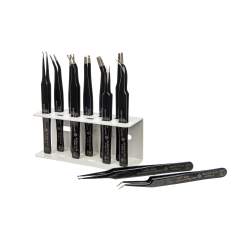
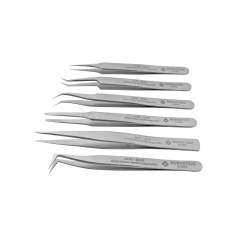
Tweezer sets combine several tip shapes into one matched working kit, so the right geometry is at hand for every component at the assembly or rework bench. Sets run from 2 to 12 pieces and usually contain the common SMD shapes plus universal, hooked and plastic tweezers. Storage is provided by dissipative imitation leather cases, metal boxes or tool holders such as VARIO tronics, TWEEZ and ZEE, which keep the set upright at the workplace. ESD sets are dissipative throughout to IEC 61340-5-1 at 10⁶ to 10⁹ Ω. The category holds 34 articles from Bernstein, Lindström, Knipex, Wiha and Bahco.
- 34 items
- 5 manufacturers
- Net prices plus VAT

Buying guide
How to choose Tweezer Sets
What matters when choosing: properties, comparison and typical applications.
Technical Features
Set sizes at a glance
| Set size | Contents | Storage |
|---|---|---|
| 2 pieces | fine or robust tips | without holder |
| 3 pieces | geometric shapes, stainless steel | imitation leather pouch |
| 4 pieces | titanium tweezers | pouch |
| 5 pieces | SMD or plastic precision tweezers | metal box or ZEE tool holder |
| 6 pieces | SMD shapes, also ultra fine 0.2 mm | ESD case or VARIO tronics holder |
| 11 and 12 pieces | universal and SMD shapes, desoldering lever | TWEEZ holder or leather case |
Typical Applications
Typical applications: Equipping rework and repair benches in electronics manufacturing; service cases for field work on machines; laboratory and test benches with changing component sizes; training and workshop equipment with a defined basic range; EPA workplaces where every tool must be dissipative; placement benches in prototype and small series production.