
Measuring and Testing Tools
Voltage Testers
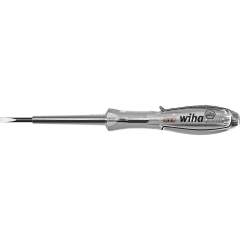
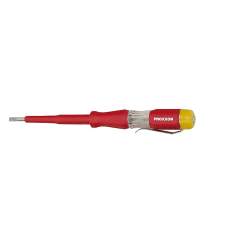
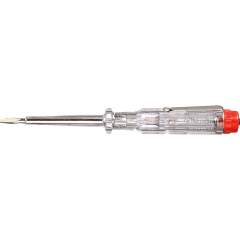
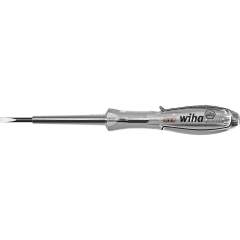
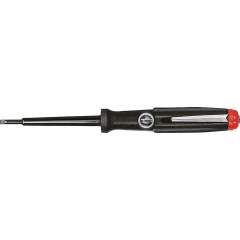
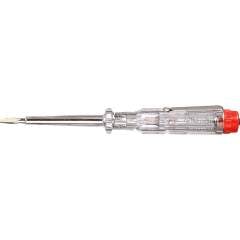
Voltage testers establish whether equipment is live and therefore form part of every preparation step on electrical installations. Single-pole testers to VDE 0680 indicate the phase only and do not replace a measurement; for verifying the absence of voltage a two-pole tester to DIN EN 61243-3 is the permitted device, and IEC 60900 additionally applies to insulated tools for live working. The range runs from the single-pole phase tester at 110-250 V with a 3 mm blade through non-contact detectors at 70-1,000 V to voltage and continuity testers at 12-1,000 V AC in measurement category CAT IV and protection class IP64. Digital multimeters up to 1,000 V AC/DC with true RMS and phase rotation indicators at 100-700 V AC complete the group. The category holds 24 articles from Wiha, C.K, Proxxon, Wera, Bernstein and Bahco.
- 24 items
- 6 manufacturers
- Net prices plus VAT






Buying guide
How to choose Voltage Testers
What matters when choosing: properties, comparison and typical applications.
Technical features
Tester types compared
| Tester type | Voltage range | Standard reference | What it tells you |
|---|---|---|---|
| Single-pole phase tester | 110 to 250 V | VDE 0680 | indicates the phase only, not a measurement |
| Two-pole voltage tester | 12 to 1,000 V AC | DIN EN 61243-3, CAT IV | verification of the absence of voltage |
| Non-contact detector | 70 to 1,000 V | CAT IV, Ex protected | preliminary check without contact |
| Digital multimeter | up to 1,000 V AC/DC | CAT IV, true RMS | reading in volts |
| Phase rotation indicator | 100 to 700 V AC | CAT IV | phase sequence in three-phase supplies |
Typical applications
Typical applications: verifying the absence of voltage before work on switchgear and distribution boards; identifying phase and neutral during electrical installation; checking phase rotation before connecting three-phase motors; continuity testing on cables, fuses and protective conductors; fault finding on machine controls and plant distribution; preliminary non-contact checks on cables without exposed contacts.