
Screwdrivers and Bits
Hex Keys and L-Wrenches
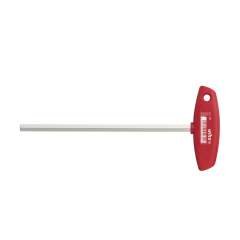
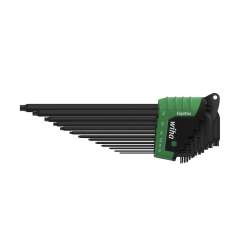
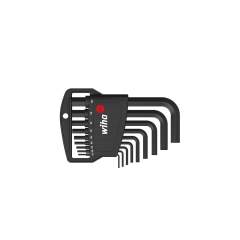
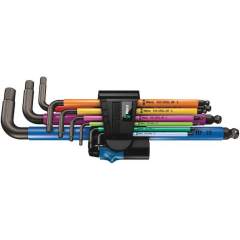
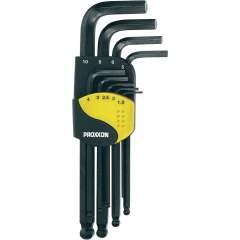
Hex keys and L-wrenches are angled keys made from round stock: the long leg applies torque through leverage, the short leg works in confined spaces. Dimensions and tolerances of the hex profile are set out in DIN ISO 2936; the range covers sizes across flats from 0.7 to 10 mm and imperial sizes from 3/64 inch. Besides the plain hex there are TORX versions, variants with a bore for pin type security screws and ball end legs for angled engagement, plus ESD versions with a dissipative rotating cap handle to IEC 61340-5-1. The category holds 603 items, the leading brands are Wiha, Bahco and Wera.
- 633 items
- 7 manufacturers
- Net prices plus VAT



Buying guide
How to choose Hex Keys and L-Wrenches
What matters when choosing: properties, comparison and typical applications.
Technical features
Overview of versions
| Version | Profile | Sizes | Feature |
|---|---|---|---|
| Plain L-wrench | hex | 0.7 to 10 mm | basic form to DIN ISO 2936 |
| Ball end L-wrench | hex | 1.5 to 10 mm | angled engagement up to roughly 25 degrees |
| TORX L-wrench | TORX | T6 to T40 | also with bore for pin type screws |
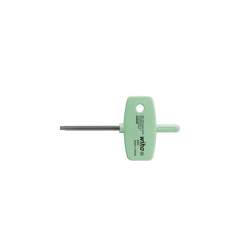
| Hex key with handle | hex | 0.7 to 2.5 mm | rotating cap handle, ESD version available |
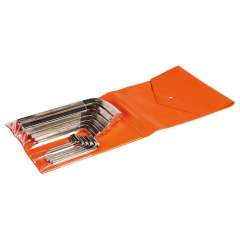
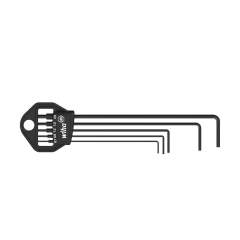
| Set in a holder | hex and TORX | 6 to 9 pieces | graded series with a fixed seat |
Typical applications
Typical applications: Aluminium profile systems and fixture construction with socket head screws; grub screws on shafts and shaft collars; retightening fastenings inside machines with narrow access; pin type security screws on housings and panelling; fine adjustment on assemblies with sizes below 2.5 mm across flats; work inside the EPA with a dissipative rotating cap handle.